


Bird Repellent Market: Growing Demand Across Commercial Applications
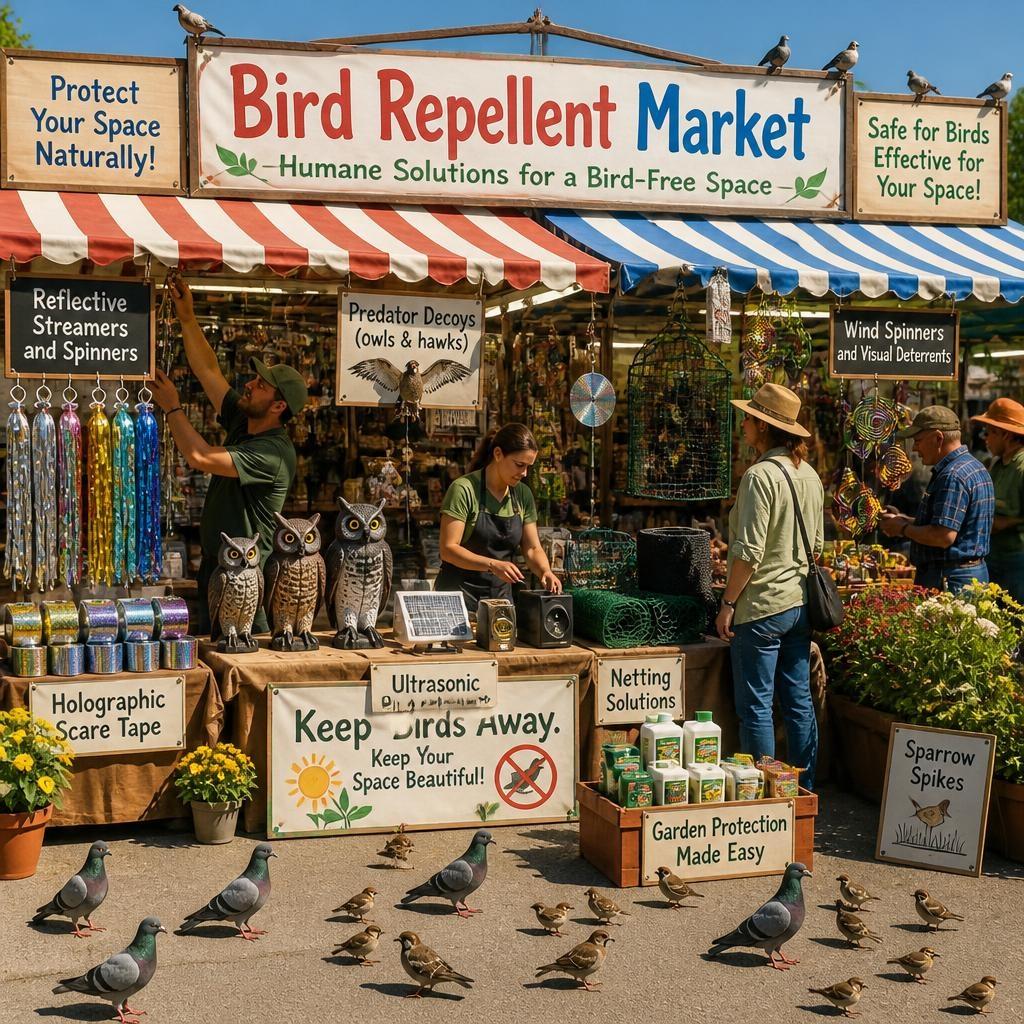
Managing unwanted bird activity has become an important consideration for businesses operating commercial properties, industrial facilities, agricultural locations, and transportation infrastructure. Birds can gather around rooftops, warehouses, loading areas, storage facilities, and other locations where food, shelter, and nesting opportunities are available. Their presence may create sanitation concerns, property maintenance requirements, and operational difficulties. Businesses are therefore exploring bird repellent products that help discourage birds from settling in sensitive areas. These requirements are supporting interest in commercial bird management solutions.
The growing demand for commercial bird exclusion systems and industrial bird deterrent solutions reflects the need to protect commercial infrastructure and maintain hygienic working environments. Businesses can choose from different solutions, including bird netting, spikes, repellent gels, visual deterrents, sound-based devices, and electronic systems. Product selection depends on building design, bird behavior, environmental conditions, and the operational requirements of the facility.
Importance of Bird Control in Commercial Buildings
Commercial buildings can provide suitable locations for birds to perch, nest, and gather.
Roof edges, signage, balconies, ventilation structures, and external ledges may attract unwanted bird activity.
Bird droppings can affect building appearance and create additional cleaning requirements.
Accumulated nesting materials may also interfere with maintenance activities.
Commercial property managers therefore consider bird control an important part of facility management.
Appropriate deterrent systems can help discourage birds from using frequently affected areas.
Applications in Warehouses and Storage Facilities
Warehouses and storage facilities require suitable sanitation and maintenance practices.
Birds entering or gathering around these locations may create contamination concerns, particularly where food products or sensitive materials are handled.
Physical barriers can help prevent birds from entering specific spaces.
Netting may be installed around selected openings, while suitable visual and other deterrents can discourage outdoor gathering.
Facility managers need to select solutions that do not interfere with ventilation, building access, or daily operations.
Regular inspections can help identify areas requiring additional protection.
Bird Management at Airports
Airports are sensitive environments where bird activity requires careful management.
Birds near runways and aircraft movement areas can create operational safety concerns.
Airport authorities may use integrated wildlife management programs that combine monitoring, habitat management, and appropriate deterrent systems.
Visual, acoustic, and other specialized technologies can support bird management activities.
The selection of suitable solutions requires consideration of bird species, local environmental conditions, and aviation safety procedures.
Professional wildlife management is important for maintaining appropriate operational standards.
Applications in Industrial Facilities
Industrial facilities may experience bird activity around roofs, equipment structures, storage areas, and outdoor production spaces.
Unwanted nesting and gathering can create cleaning and maintenance challenges.
Manufacturers may install physical barriers or use suitable deterrents to discourage birds from occupying sensitive areas.
Different facilities require different approaches according to their layout and operating conditions.
Industrial users may also consider products that are durable and suitable for outdoor environments.
Ease of maintenance is another important factor when selecting commercial bird control systems.
Role in Food Processing Environments
Food processing businesses must maintain suitable hygiene practices throughout their operations.
Bird activity around production buildings, storage facilities, and loading areas can create sanitation concerns.
Bird exclusion systems may help prevent birds from entering sensitive locations.
Physical barriers and suitable deterrent products can be incorporated into broader facility management programs.
Businesses should also maintain proper waste management and avoid leaving food materials exposed.
Combining sanitation practices with appropriate bird management can help improve facility conditions.
Growth in Commercial Property Maintenance
Property management companies are increasingly considering bird control as part of routine building maintenance.
Office buildings, shopping centers, hotels, and public facilities may experience unwanted bird activity.
Bird droppings can affect external surfaces, signage, walkways, and building appearance.
Repellent gels, physical barriers, and visual deterrents may be considered for different surfaces.
Professional installation can help ensure that products are suitable for the building structure and do not create unnecessary hazards.
Product Innovation for Commercial Customers
Manufacturers are exploring products that address the practical requirements of commercial property owners.
Weather-resistant materials, easy installation, low-maintenance designs, and specialized electronic systems are important development areas.
Some businesses may prefer integrated solutions combining multiple deterrent methods.
Product developers are also considering discreet designs that preserve the appearance of commercial buildings.
These innovations can help manufacturers serve different commercial customer groups.
Challenges in Commercial Bird Control
Commercial bird management can be complicated by building design, bird behavior, weather exposure, and maintenance requirements.
Some birds may become accustomed to repetitive deterrents.
Physical barriers may also require regular inspection to maintain their condition.
Businesses need to evaluate products according to the specific environment rather than relying on a single solution for every location.
Professional assessment can help identify suitable bird management strategies.
Future Market Outlook
The Bird Repellent Market has opportunities across commercial buildings, airports, warehouses, food processing facilities, industrial locations, and public infrastructure.
Growing attention to hygiene, building maintenance, and operational safety may encourage demand for specialized bird control products.
Manufacturers that offer reliable products, practical installation options, and technical assistance may strengthen their presence in commercial applications.
Frequently Asked Questions
Q1. Why do commercial buildings need bird repellent solutions?
Bird repellent solutions help discourage unwanted nesting and gathering, reduce cleaning requirements, and support building maintenance and sanitation practices.
Q2. Which bird control products are suitable for warehouses?
Depending on the facility, suitable options may include bird netting, physical barriers, visual deterrents, repellent gels, and professionally selected electronic systems.
 Romaian
 English
 Arabic
 French
 Spanish
 Portuguese
 Deutsch
 Turkish
 Dutch
 Italiano
 Russian
 Portuguese (Brazil)
 Greek