


Blanched Almond Flour Market: Trends, Uses and Future Growth Opportunities
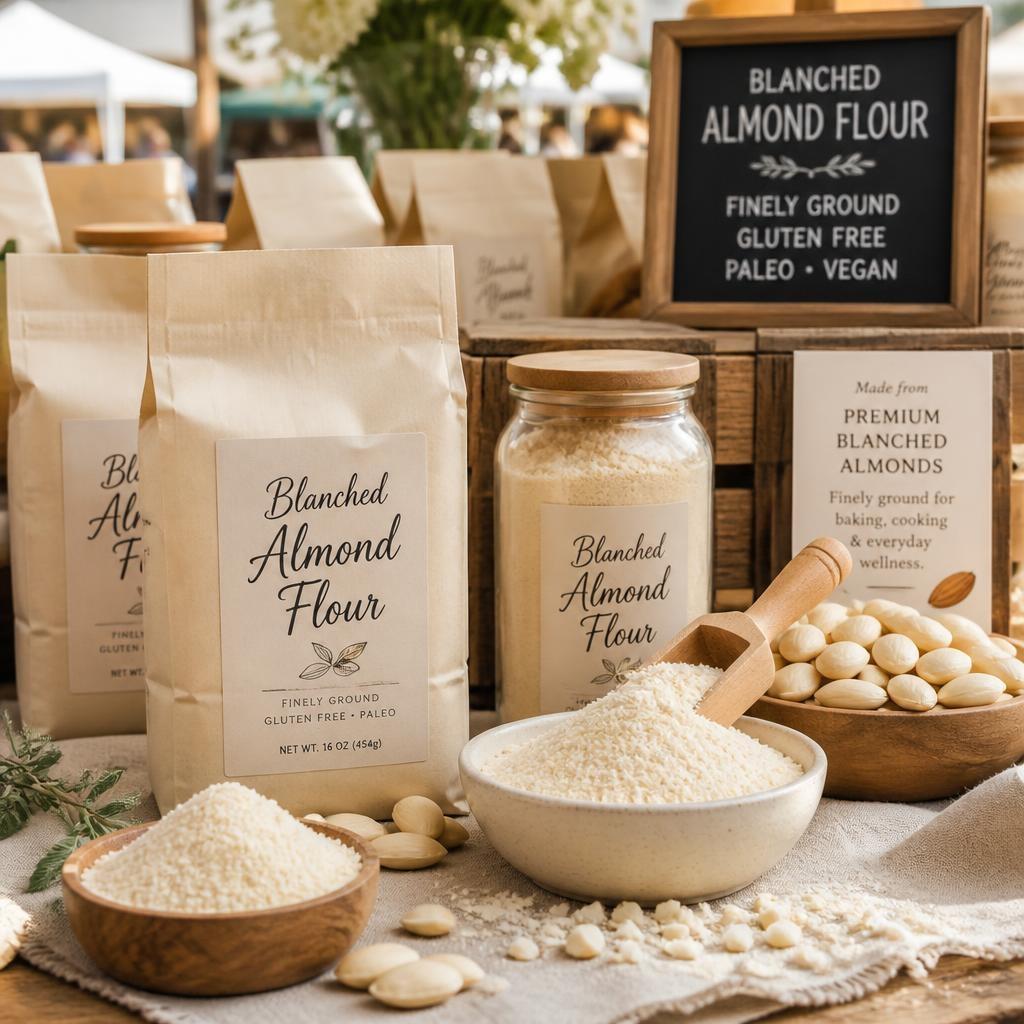
The blanched almond flour market is gaining attention within the food ingredients, bakery, and specialty nutrition industries. Blanched almond flour is produced by removing the outer skin of almonds before grinding the kernels into a fine powder. The finished ingredient generally has a light appearance, smooth texture, and mild nutty flavor. It is widely used in bakery products, confectionery, gluten-free recipes, specialty food preparations, and household cooking. Its versatility makes it an attractive ingredient for commercial food manufacturers, professional bakers, restaurants, and home baking enthusiasts.
The growing interest in gluten-free almond flour ingredients is encouraging food manufacturers to explore alternative flour formulations and innovative bakery products. Consumers are increasingly interested in ingredients that support different dietary preferences while maintaining appealing taste and texture. This preference is creating opportunities for almond processors, ingredient suppliers, bakery manufacturers, and specialty food retailers.
Growing Demand for Alternative Flour Ingredients
Changing consumer preferences are influencing the development of the blanched almond flour industry. Traditional wheat flour remains widely used, but consumers and food manufacturers are exploring alternative ingredients for specialized food products.
Blanched almond flour offers a distinctive ingredient option because of its fine texture and naturally mild flavor. It can be incorporated into different bakery recipes and specialty food formulations.
The increasing popularity of gluten-free baking is another important consideration. Consumers looking for alternatives to conventional wheat-based products often explore almond flour for preparing cakes, cookies, muffins, pastries, and other baked foods.
Food manufacturers are also developing flour blends that combine almond flour with other ingredients to achieve suitable baking performance.
Applications in Bakery and Confectionery Products
Bakery manufacturing represents an important application area for blanched almond flour. Its fine consistency makes it suitable for products where a smooth appearance and delicate texture are important.
Macarons are a well-known application because almond flour contributes to their characteristic structure and texture. It is also used in cookies, cakes, brownies, muffins, and specialty pastries.
Confectionery manufacturers may incorporate blanched almond flour into fillings, dessert bases, sweet preparations, and specialty baked treats.
Its mild flavor allows it to complement ingredients such as chocolate, vanilla, fruit, spices, and sweeteners.
The versatility of almond flour provides opportunities for manufacturers to develop premium bakery products and introduce creative recipes for different consumer groups.
Expansion of Gluten-Free Food Products
The development of gluten-free food products is creating additional opportunities for blanched almond flour suppliers.
Consumers following gluten-free diets often look for alternative ingredients that can provide suitable taste, texture, and functionality.
Almond flour can be incorporated into gluten-free baking recipes, including breads, cakes, cookies, crackers, and dessert preparations.
However, almond flour behaves differently from wheat flour because it does not contain the same gluten-forming proteins. Food developers therefore need to consider ingredient combinations, moisture levels, binding agents, and baking conditions when developing formulations.
Manufacturers may combine almond flour with other gluten-free flours and starches to achieve the desired product structure.
Product Quality and Processing Techniques
Product quality is an important consideration in the blanched almond flour market. The manufacturing process generally involves selecting suitable almonds, removing their skins, drying the kernels, grinding them, and processing the resulting powder to achieve the desired consistency.
The removal of almond skins contributes to the flour's lighter appearance and smoother characteristics.
Grinding and sieving operations influence particle size and product uniformity. Fine almond flour may be preferred for delicate pastries, while different textures may be suitable for cookies and other baked products.
Manufacturers must also pay attention to moisture management, hygienic processing, and suitable storage conditions.
Because almonds contain natural oils, exposure to heat, air, and unsuitable storage environments can affect flavor quality. Appropriate packaging and handling practices are therefore essential.
Growing Interest in Low-Carbohydrate and Specialty Diets
Blanched almond flour is increasingly relevant to food products developed for specialty dietary preferences.
Its naturally low carbohydrate content compared with conventional wheat flour makes it an ingredient of interest in certain low-carbohydrate and ketogenic recipes.
Consumers may use it to prepare pancakes, cookies, bread alternatives, pizza bases, and dessert products.
Food manufacturers can develop specialized baking mixes and ready-to-use flour blends that simplify preparation for customers following particular eating patterns.
This provides opportunities for brands to introduce convenient products through supermarkets, specialty food stores, and online retail platforms.
Packaging and Product Presentation
Packaging plays an important role in the commercial distribution of blanched almond flour.
Retail consumers often prefer convenient pouches, resealable bags, and containers that help protect the product after opening.
Industrial customers may require larger packaging formats suitable for bakery production and food manufacturing facilities.
Packaging materials should help limit exposure to moisture, air, and other conditions that could affect product quality.
Clear labeling is also important. Consumers may look for ingredient information, allergen declarations, storage recommendations, and suggested applications before purchasing.
Attractive packaging and informative product descriptions can help manufacturers differentiate their products in competitive retail environments.
Distribution Channels and Business Opportunities
Blanched almond flour reaches customers through supermarkets, grocery retailers, specialty food stores, online marketplaces, ingredient distributors, and wholesale suppliers.
Commercial bakeries and food manufacturers often depend on suppliers that can provide consistent quality and suitable product specifications.
Online retail is creating additional opportunities for brands to reach home bakers and consumers interested in specialty ingredients.
Manufacturers can strengthen their distribution strategies by offering different packaging formats, product grades, and customized ingredient solutions.
Partnerships with bakery businesses, foodservice companies, and specialty retailers can also support broader product accessibility.
Sustainability and Responsible Almond Processing
Sustainability is becoming an important consideration for almond ingredient manufacturers.
Almond cultivation and processing involve agricultural resources, water management, energy consumption, and packaging requirements.
Companies can explore responsible sourcing practices, efficient processing operations, and improved resource management.
The use of suitable almond processing by-products may also provide opportunities for additional value creation, depending on food safety and processing requirements.
Transparent communication about sourcing and manufacturing practices can help brands build stronger relationships with customers.
Future Outlook of the Blanched Almond Flour Market
The future of the blanched almond flour market will be influenced by gluten-free food development, specialty bakery demand, alternative flour innovation, and changing consumer preferences.
Manufacturers may continue introducing improved flour textures, convenient baking mixes, and application-specific ingredient formulations.
The expansion of online specialty food retail may also create opportunities for smaller brands and ingredient suppliers.
Overall, blanched almond flour has an important position in the alternative flour and specialty bakery industries. Its fine texture, mild flavor, and versatility provide opportunities for food processors, commercial bakeries, retailers, and product developers.
Frequently Asked Questions
Q1. What is blanched almond flour used for?
Blanched almond flour is commonly used in macarons, cookies, cakes, muffins, pastries, gluten-free breads, crackers, and specialty baking mixes.
Q2. What is the difference between blanched almond flour and regular almond meal?
Blanched almond flour is made from almonds with their skins removed, resulting in a lighter color and generally finer texture. Natural almond meal is commonly produced using almonds with their skins intact and may have a coarser texture.
 Greek
 English
 Arabic
 French
 Spanish
 Portuguese
 Deutsch
 Turkish
 Dutch
 Italiano
 Russian
 Romaian
 Portuguese (Brazil)