


Leak Detection and Repair Trends Improve Industrial Safety
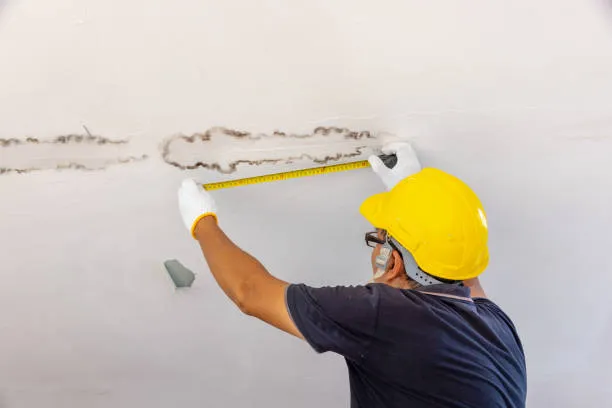
Industrial facilities are increasingly prioritizing leak prevention as operational safety, environmental responsibility, and equipment reliability become central to industrial management. Manufacturing plants, refineries, chemical processing units, power stations, and pipeline networks depend on complex equipment that can develop leaks over time. Undetected leakage can result in product losses, equipment damage, workplace hazards, and environmental contamination, making regular monitoring an essential operational requirement.
The Global Leak Detection and Repair Market represents the expanding ecosystem of detection equipment, monitoring technologies, software platforms, and inspection services designed to identify and control industrial leaks. Its development is closely connected to stricter environmental compliance requirements, infrastructure investments, and the growing adoption of automated inspection systems. According to the study published by Markntel Advisor, the industry was valued at USD 22.45 billion in 2025 and is projected to grow from USD 23.31 billion in 2026 to USD 30.13 billion by 2032, registering a CAGR of 4.37%. Further insights into industrial leak monitoring solutions highlight the increasing importance of technology-driven maintenance practices.
Environmental Regulations Strengthen Inspection Requirements
Environmental regulations are playing an important role in encouraging industrial operators to establish structured inspection and repair programs. Governments and regulatory authorities are introducing requirements to monitor methane emissions, volatile organic compounds (VOCs), and other hazardous industrial releases. These measures encourage companies to identify equipment leaks, maintain inspection records, and complete necessary repairs within specified timeframes.
In the United States, the Environmental Protection Agency has established monitoring and repair requirements for covered oil and natural gas facilities. The regulatory framework includes optical gas imaging and other inspection approaches, depending on facility categories and applicable standards. The EPA's emissions monitoring requirements illustrate how compliance obligations are influencing industrial inspection practices.
For industrial operators, compliance is increasingly connected to equipment reliability and resource management. Regular inspections can help identify small leaks before they develop into larger operational problems. Companies are also incorporating digital reporting platforms into maintenance processes to maintain inspection histories, document corrective actions, and improve visibility across multiple facilities.
Advanced Detection Technologies Transform Industrial Monitoring
Traditional inspection methods are increasingly being supplemented by advanced technologies that improve detection speed, accuracy, and coverage. Optical Gas Imaging (OGI), laser-based sensors, acoustic detection systems, and connected monitoring devices are helping operators identify potential leakage across complex industrial environments. These technologies are particularly useful in facilities where conventional inspection procedures may require considerable time and specialized personnel.
Optical Gas Imaging uses infrared cameras to visualize certain gas emissions that may otherwise remain invisible to the human eye. Laser-based detection systems identify specific gases through optical measurement techniques, while acoustic monitoring detects sound patterns associated with escaping fluids or gases. Drones equipped with specialized sensors can also inspect pipelines, storage facilities, and remote infrastructure without requiring personnel to access every inspection point directly.
Artificial intelligence and predictive analytics are adding another dimension to industrial monitoring. By analyzing sensor readings, inspection records, and equipment performance data, these systems can help identify abnormal operating patterns and prioritize maintenance activities. This approach supports a transition from reactive repairs toward more proactive equipment management.
Hardware and Monitoring Equipment Remain Essential
Despite growing interest in software-based monitoring, physical detection equipment remains fundamental to industrial inspection programs. Portable gas detectors, fixed monitoring systems, infrared cameras, handheld instruments, and specialized sensors provide the measurements required to identify leakage across different operating environments. Their importance is particularly evident in facilities handling combustible gases, hazardous chemicals, and high-pressure industrial fluids.
According to Markntel Advisor, hardware accounts for approximately 58% of industry revenue. This position reflects the continued requirement for physical detection instruments across industrial inspection activities. Handheld detectors support routine component-level checks, while fixed systems provide continuous monitoring around critical equipment and potentially hazardous locations.
Software platforms complement these devices by organizing inspection results, generating alerts, maintaining compliance documentation, and supporting maintenance decisions. Integrating detection hardware with centralized monitoring systems allows operators to establish more coordinated inspection processes across large industrial sites.
Oil and Gas Operations Drive Industrial Adoption
Oil and gas facilities remain an important application area because their operations involve extensive networks of pipelines, valves, pumps, compressors, storage tanks, and connectors. These components may experience wear, corrosion, pressure fluctuations, or mechanical failures that increase the possibility of leakage. Regular inspection is therefore important for protecting workers, reducing product losses, and limiting environmental exposure.
The demand for monitoring solutions is also extending into chemical manufacturing, water treatment, power generation, mining, and commercial infrastructure. Chemical facilities require monitoring systems to manage potentially hazardous process gases and liquids. Water treatment operations need reliable inspection practices to identify leakage across distribution networks and processing equipment. Similarly, power plants depend on equipment integrity to maintain operational continuity.
This broader industrial adoption demonstrates that leakage prevention is no longer limited to energy infrastructure. It has become an important consideration across industries where equipment reliability, workplace protection, and resource efficiency influence operational performance.
North America Maintains a Significant Regional Position
North America represents approximately 45% of global industry demand, according to the Markntel Advisor study. Its position is supported by established industrial infrastructure, extensive oil and gas operations, and regulatory requirements governing emissions monitoring. The presence of large-scale refineries, pipeline networks, and chemical processing facilities also creates recurring requirements for inspection equipment and maintenance services.
Meanwhile, industrial development across Asia-Pacific, the Middle East, and Latin America is creating additional opportunities for monitoring technologies. Investments in energy infrastructure, manufacturing capacity, transportation networks, and utility projects are increasing the number of industrial assets requiring regular inspection. As these facilities expand, reliable detection equipment and digital maintenance systems are becoming increasingly relevant to operational planning.
Digital Monitoring Shapes the Future of Industrial Safety
The future of industrial inspection is increasingly associated with connected sensors, automated detection systems, cloud-based analytics, and remote monitoring capabilities. These technologies allow operators to collect equipment performance information continuously and identify potential problems without depending exclusively on periodic manual inspections. Remote monitoring is particularly relevant for pipelines, offshore infrastructure, and facilities located in difficult-to-access environments.
However, successful implementation also depends on equipment compatibility, sensor calibration, data reliability, cybersecurity, and trained personnel. Industrial operators must ensure that automated alerts are supported by appropriate verification and repair procedures. Combining digital monitoring with established inspection practices can provide a more balanced approach to equipment management.
As environmental compliance requirements and industrial reliability expectations continue to evolve, advanced detection technologies are expected to remain important across multiple sectors. Investments in automation, predictive maintenance, and remote inspection are likely to influence how organizations identify and manage leakage. The broader direction points toward more connected, data-driven maintenance systems that support workplace safety, reduce resource losses, and strengthen long-term industrial resilience.
 Portuguese (Brazil)
 English
 Arabic
 French
 Spanish
 Portuguese
 Deutsch
 Turkish
 Dutch
 Italiano
 Russian
 Romaian
 Greek