


The Brooklyn Commercial Roofing Myth Lab: 9 Beliefs That Deserve a Second Look
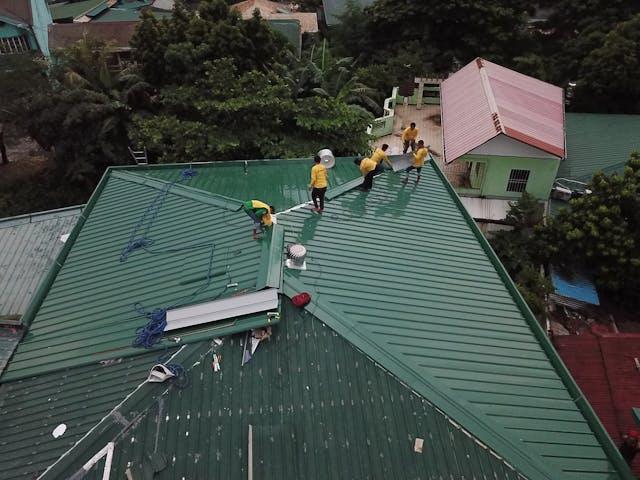
9 Things Property Owners Believe About Their Roofs — And What Actually Happens
A commercial roof has a strange relationship with attention.
When it's doing its job, nobody talks about it.
When it isn't, suddenly everyone has an opinion.
The property manager has one.
The tenant has another.
The maintenance team has a theory.
And after a quick look from the sidewalk, someone may confidently announce:
"It just needs a patch."
Or:
"The whole roof probably needs to be replaced."
Neither conclusion may be right.
Commercial roofing is rarely that simple.
Brooklyn's buildings range from warehouses and industrial properties to offices, retail spaces, apartment buildings, brownstones, and mixed-use structures. The roof above each one has a different history, different exposure, different drainage pattern, and different demands placed on it.
So let's put some of the most common roofing assumptions into the lab.
Myth No. 1: "If There's No Leak, the Roof Is Fine."
Test result: False.
A roof can have developing problems long before water reaches the ceiling.
Think about a commercial roof like a car.
You don't wait for the engine to stop before checking the oil.
The same principle applies overhead.
A professional inspection can identify deterioration around drainage areas, flashing, membrane surfaces, rooftop equipment, and other vulnerable points before they become interior water problems.
N.V. & Roman Commercial Roofing Brooklyn recommends regular inspections and specifically provides commercial, flat, low-slope, storm-damage, and leak assessments.
The lesson:
No leak today doesn't necessarily mean no problem tomorrow.
Myth No. 2: "A Flat Roof Is Completely Flat."
Test result: Misleading.
The word "flat" creates the wrong mental picture.
Commercial flat and low-slope roofing systems are designed around drainage. Water needs a controlled path toward drains or other drainage points.
That makes drainage one of the most important things to watch.
A blocked drain can turn an ordinary rainfall into a ponding problem.
And ponding water isn't simply an inconvenience.
It keeps the roofing system exposed to moisture for longer periods and can reveal weaknesses that might otherwise remain unnoticed.
This is one reason drainage is specifically evaluated during professional flat-roof inspections.
The lesson:
A flat roof still needs somewhere for water to go.
Myth No. 3: "The Leak Is Directly Above the Ceiling Stain."
Test result: Usually too simplistic.
This is one of the easiest mistakes to make.
You see a water stain.
You look directly above it.
You assume you've found the problem.
But water can travel before it becomes visible inside a building.
It may move beneath roofing materials, around penetrations, through insulation, or along structural components before finally appearing indoors.
That's why leak assessment is an investigative job rather than a game of matching stains to spots.
A proper roof inspection looks beyond the visible symptom to determine where moisture may actually be entering.
The lesson:
The ceiling tells you where water appeared. It doesn't necessarily tell you where water entered.
Myth No. 4: "One Small Leak Means the Entire Roof Is Finished."
Test result: Not necessarily.
A localized leak can come from a localized problem.
Flashing.
A roof penetration.
A seam.
Storm damage.
A damaged section.
The existence of one repairable defect doesn't automatically mean the entire roofing system has reached the end of its service life.
The opposite mistake is also possible.
Repeated repairs in different areas may indicate that the larger system deserves a more complete evaluation.
The smart question isn't:
"Repair or replace?"
It's:
"What does the overall condition of this roof tell us?"
That answer requires an inspection.
Myth No. 5: "The Cheapest Repair Is the Best Repair."
Test result: Dangerous assumption.
A $500 repair that solves the problem is valuable.
A $500 repair that needs to be repeated five times is a different story.
Commercial property owners have to look beyond the immediate invoice.
A roofing decision should also consider:
- The age and condition of the existing system
- Whether similar problems have occurred before
- The source of the damage
- The condition of surrounding areas
- Expected future maintenance
- Potential disruption to building operations
Sometimes a targeted repair is exactly what a property needs.
Sometimes repeated patching is simply delaying a larger decision.
The objective should be the right scope of work, not automatically the smallest invoice.
Myth No. 6: "Roof Maintenance Is Just Cleaning."
Test result: Incomplete.
Cleaning matters.
But maintenance is bigger than removing leaves and debris.
A commercial roof maintenance program can involve observing drainage, checking vulnerable details, documenting conditions, identifying developing defects, and planning repairs before problems escalate.
N.V. & Roman Commercial Roofing Brooklyn offers roof maintenance and inspection services specifically aimed at finding problems early and helping extend the service life of roofing systems.
Maintenance is less about making the roof look good.
It's about understanding how the roof is performing.
Myth No. 7: "Every Roofing Problem Can Wait Until Monday."
Test result: Not when the building is taking on water.
There is an important difference between a maintenance issue and an active roofing emergency.
If water is entering an occupied commercial building during severe weather, waiting can allow damage to spread beyond the roofing system.
Interior finishes, equipment, inventory, insulation, and business operations can all become part of the problem.
That's why emergency roofing exists.
N.V. & Roman Commercial Roofing Brooklyn provides storm and emergency repair services designed to respond when leaks or weather-related damage threaten a property.
The lesson:
Not every roofing issue is an emergency. But an active leak shouldn't be treated like routine maintenance.
Myth No. 8: "The Roof Only Matters to the Maintenance Department."
Test result: Absolutely false.
A commercial roof touches more parts of a business than most people realize.
Consider a warehouse.
A roof problem can affect inventory.
Consider an office building.
A leak can affect employees and tenants.
Consider a retail property.
Water intrusion can interrupt normal operations.
Consider an industrial facility.
Roof access and equipment can become part of the maintenance equation.
The roof is therefore not just a construction component.
It's part of the building's operational infrastructure.
That changes how it should be managed.
Myth No. 9: "You Need to Know the Roofing System Before You Call a Contractor."
Test result: Helpful, but not required.
Property owners don't need to become roofing technicians.
You don't need to identify every membrane.
You don't need to know the difference between every commercial roofing assembly.
And you certainly don't need to diagnose a hidden leak from the ground.
What you do need is useful information.
For example:
When did the problem begin?
Does it happen only during heavy rain?
Has the area leaked before?
Has anyone performed previous repairs?
Are there rooftop units or penetrations near the affected area?
Those details can help an experienced contractor understand the situation faster.
The rest belongs to the inspection.
THE LAB REPORT
After putting the nine myths through the test, one pattern becomes obvious.
Most roofing mistakes come from making a decision too early.
A leak appears.
Someone immediately orders a repair.
A roof looks old.
Someone immediately recommends replacement.
A drain looks blocked.
Someone treats the blockage without checking what else is happening around it.
Better decisions start with better information.
That's why N.V. & Roman Commercial Roofing Brooklyn's inspection process includes visual and structural assessment, drainage evaluation, detailed reporting, photos, and recommendations for repairs or preventive maintenance.
A Better Way to Think About Your Commercial Roof
Instead of asking:
"Does my roof need work?"
Ask:
"What is my roof telling me?"
Those are different questions.
The first looks for a yes-or-no answer.
The second encourages investigation.
And investigation is particularly important for Brooklyn commercial properties because buildings can differ dramatically in age, design, usage, roofing system, rooftop equipment, and maintenance history. N.V. & Roman notes its experience with flat roofing systems, brownstones, and larger commercial facilities throughout Brooklyn and the surrounding NYC market.
The 15-Minute Property Owner Roof Check
You don't need to climb onto the roof to start paying attention.
From your building records and interior observations, ask:
1. When was the last professional roof inspection?
2. Has the building experienced leaks recently?
3. Are there recurring leak locations?
4. Have emergency repairs become more frequent?
5. Do you have records of previous roofing work?
6. Is the roof approaching a planned capital improvement period?
7. Have major storms recently affected the property?
If several answers raise questions, an inspection can provide a much clearer picture than guessing.
What N.V. & Roman Commercial Roofing Brooklyn Brings to the Table
For Brooklyn property owners, the company provides a broad range of roofing services, including commercial roofing, flat and low-slope roofing, roof inspections, roof repair, roof replacement, industrial roofing, emergency repairs, maintenance, and roof upgrades or reinforcements.
The company also describes its Brooklyn experience as extending across different building types and roofing conditions, with an emphasis on understanding local structures, drainage requirements, and environmental conditions.
That matters because a commercial roofing solution should fit the building—not the other way around.
The Final Finding
A commercial roof doesn't usually fail because nobody cared.
It fails because something went unnoticed, misunderstood, or postponed.
That's why the most useful roofing advice isn't always a list of materials or a prediction about how many years a roof has left.
Sometimes it's much simpler:
Look closer.
Ask better questions.
Understand the condition before choosing the solution.
And don't confuse a visible symptom with the entire story.
For Brooklyn property owners, that mindset can turn roofing from a recurring surprise into something much easier to manage.
The roof is already giving you information.
You just have to know how to read it.

 English
 French
 Spanish
 Portuguese
 Deutsch
 Turkish
 Dutch
Dutch
 Italiano
 Russian
 Romaian
 Portuguese (Brazil)
 Greek
Greek