


Brooklyn Roof Owner's Field Manual: Repairs, Leaks & Inspections
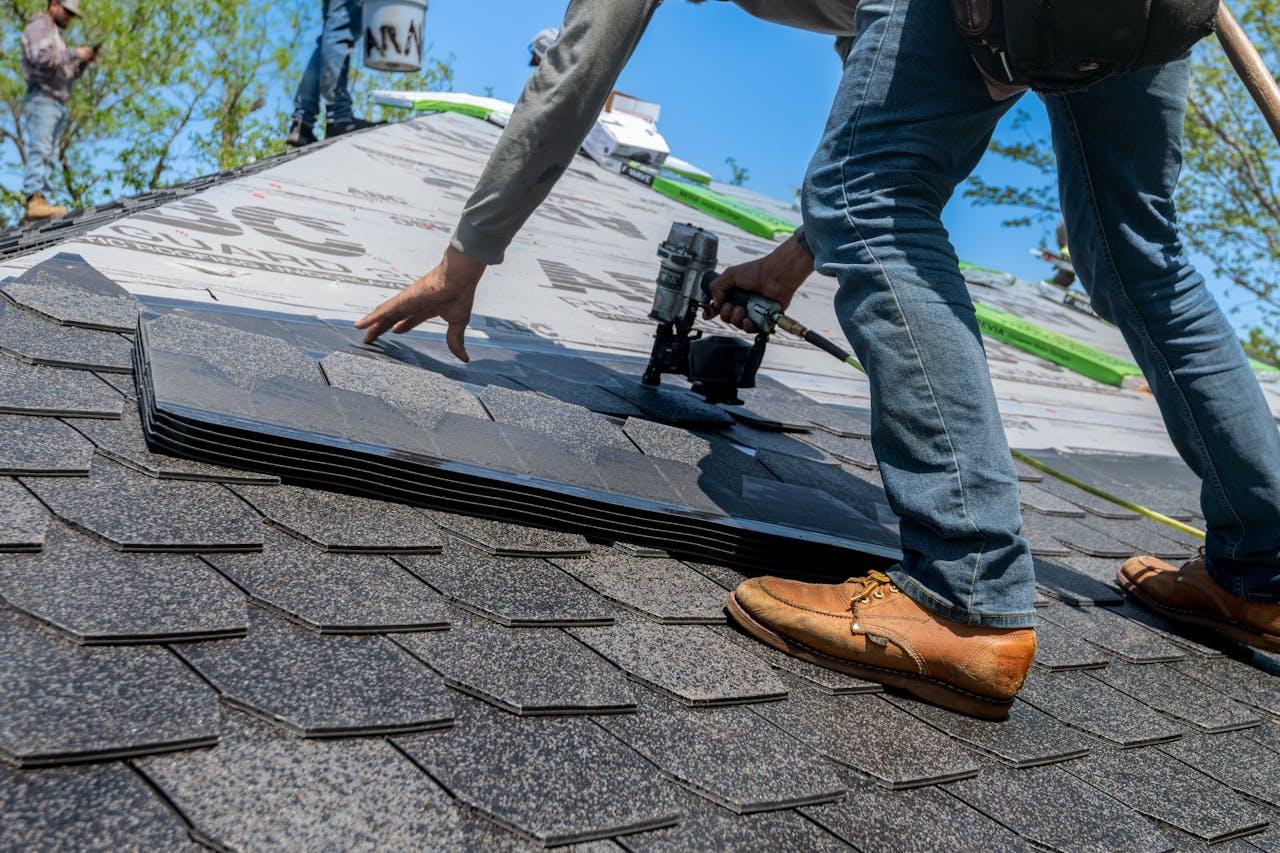
The Brooklyn Roof Owner's Field Manual
What to Check Before You Spend a Dollar on Roofing
There is a moment every property owner knows.
You notice the stain.
Maybe it's on the ceiling.
Maybe it's around a window.
Maybe there's a drip in the top-floor hallway after a night of heavy rain.
Then comes the question:
"How bad is this going to be?"
That's usually followed by another:
"Do I need a repair, or am I looking at a new roof?"
Before making either decision, slow down.
You don't need to become a roofing expert.
You simply need to know what information matters.
This field manual is designed for Brooklyn homeowners, landlords, property managers, and building owners who want to understand what their roof is telling them before approving roofing work.
FIELD NOTE 01
A Leak Is a Clue, Not a Diagnosis
A ceiling stain is easy to see.
The source of the water may not be.
Water can move before it becomes visible inside a building, which means the location of an interior stain isn't always the location of the roof defect.
That's why a proper roof inspection looks beyond the obvious spot.
N.V. Roofing Services describes its Brooklyn inspection process as an evaluation of roofing materials, structure, ventilation, drainage, leak points, and other areas that may reveal hidden problems. The company also provides reports with photos and recommendations.
Your field note:
If someone says, "I found the leak," ask:
"Did you identify where the water is entering, or only where it's showing up?"
Those are two different things.
FIELD NOTE 02
Don't Let the Word "Repair" End the Conversation
Repair is not automatically good.
Replacement is not automatically bad.
The correct answer depends on the condition of the roof.
A localized problem on a generally healthy roof may be suitable for repair.
But imagine a roof that has:
- Several recurring leaks
- Multiple old patches
- Worn roofing materials
- Drainage problems
- Deteriorated flashing
- Damage across several sections
At some point, repeatedly repairing individual symptoms may stop making financial sense.
The important question is not:
"Can this roof be repaired?"
Technically, many things can be repaired.
The better question is:
"Does repairing this roof make sense considering its overall condition?"
FIELD NOTE 03
The Drainage Test
If you own a Brooklyn property with a flat or low-slope roof, pay attention to drainage.
Not just after a storm.
All year.
Water needs a path away from the roofing system.
When drains, gutters, scuppers, or drainage pathways become obstructed, water can remain on the roof longer than intended.
That creates additional exposure for roofing materials.
Brooklyn roofing professionals commonly identify clogged drains, ponding water, flashing problems, and membrane deterioration among recurring concerns with flat roofs.
Your field note:
Ask when the roof's drainage system was last inspected and cleaned.
If nobody knows, that's useful information in itself.
FIELD NOTE 04
The "It Only Leaks in Heavy Rain" Trap
This sentence sounds reassuring:
"It only leaks when the rain is really heavy."
It shouldn't.
Heavy rain can expose weaknesses that aren't obvious during lighter weather.
Think of it as a stress test.
A roof that handles ordinary rainfall but struggles during intense storms may have an issue with drainage, flashing, seams, penetrations, or another vulnerable detail.
A heavy storm doesn't always create the problem.
Sometimes it reveals it.
FIELD NOTE 05
Check the Roof's History Before Judging Its Future
Two roofs can look similar while being in completely different situations.
Why?
History.
One may have been inspected regularly and repaired promptly.
The other may have accumulated years of temporary fixes.
Before deciding what to do next, find out:
When was the roof installed?
When was it last replaced?
What repairs have been completed?
Where have previous leaks occurred?
Has the roof experienced major storm damage?
Have inspections been documented?
This information can help turn a vague roofing problem into a much clearer decision.
FIELD NOTE 06
The Patch Count Matters
One repair doesn't tell you much.
Ten repairs in different places tell you something else.
If a roof keeps producing new problems, don't look only at the latest one.
Look at the pattern.
For example:
Year 1: One small leak.
Year 2: Flashing repair.
Year 3: Another interior leak.
Year 4: Several patches.
Year 5: New water intrusion after storms.
At that point, the question isn't simply how to repair the newest leak.
It's whether the roofing system itself deserves a comprehensive evaluation.
FIELD NOTE 07
Don't Judge a Roof From the Sidewalk
This sounds obvious.
Yet it's surprisingly common.
A property owner sees the roof from a neighboring building or from the street and decides it looks fine.
That doesn't tell you much.
The important details may be:
- Around penetrations
- At flashing transitions
- Near drainage points
- Beneath rooftop equipment
- Along seams
- At roof edges
- In areas where previous repairs were made
A professional inspection exists because roofing problems aren't always visible from ground level.
N.V. Roofing Services says its inspection process includes checking roofing materials, structure, ventilation, gutters, drainage, potential leak points, and storm-related damage.
FIELD NOTE 08
Brooklyn's Older Buildings Need Context
Brooklyn isn't made up of one building type.
You have modern construction next to century-old properties.
Multi-family buildings beside single-family homes.
Commercial spaces beside historic brownstones.
Each building brings its own roofing history.
N.V. Roofing Services specifically offers brownstone roofing services in Brooklyn, including inspections, repairs, flashing and vent work, drainage solutions, storm damage recovery, and replacement when required.
That matters because historic or distinctive properties shouldn't automatically be approached like ordinary modern construction.
The building's age and design belong in the conversation.
FIELD NOTE 09
Know the Difference Between Evidence and Assumptions
Here's a useful exercise.
Evidence:
"There is a ceiling stain."
Evidence:
"The roof has had three repairs in the last two years."
Evidence:
"Water appears after heavy rainfall."
Assumption:
"The whole roof needs replacement."
See the difference?
The first three are observations.
The last one is a conclusion.
A professional roofing process should move from:
Observation → Inspection → Diagnosis → Recommendation
Not:
Observation → Guess → Invoice
FIELD NOTE 10
Ask for Photos
Roofing can be difficult for property owners to evaluate because much of the work happens out of sight.
Photos help.
When an inspection or repair is performed, useful documentation can show:
- Where damage was found
- What condition the surrounding roof is in
- What was repaired
- Which areas require monitoring
- What recommendations were made
N.V. Roofing Services says its inspection reports include photos and professional recommendations, giving property owners documentation they can use when making roofing decisions.
Good documentation makes future decisions easier.
FIELD NOTE 11
Don't Ignore Brownstone Roofing Details
Brooklyn's brownstones deserve their own category.
Their architectural character is part of what makes the borough recognizable, but older properties can also bring specialized maintenance concerns.
Roofing problems can affect more than the roof itself.
Water intrusion can move into walls, ceilings, and other parts of the building.
That's why N.V. Roofing Services approaches brownstone roofing with services covering roof inspection, repair, flashing, vents, gutters, drainage, storm damage, and replacement.
For an older property, preserving the building isn't just about stopping today's leak.
It's about preventing tomorrow's damage.
FIELD NOTE 12
Ask This Question Before Approving Replacement
If someone recommends replacing your roof, don't automatically reject the recommendation.
Instead, ask:
"What specific conditions make replacement more appropriate than repair?"
A professional answer should be based on observable conditions.
For example:
- Widespread deterioration
- Recurring failures
- Extensive damage
- Poor overall condition
- Limited remaining serviceability
- Repairs no longer providing reasonable value
The point isn't to challenge every recommendation.
It's to understand it.
THE OWNER'S QUICK DECISION MAP
Use this as a starting point—not as a substitute for professional inspection.
ONE ISOLATED PROBLEM
Possible direction: Repair and monitor.
MULTIPLE SMALL PROBLEMS
Possible direction: Comprehensive inspection and maintenance planning.
RECURRING LEAKS
Possible direction: Investigate the entire roofing system rather than repeating isolated patches.
EXTENSIVE DETERIORATION
Possible direction: Compare repair costs and expected performance against replacement.
ACTIVE WATER INTRUSION
Possible direction: Address the immediate problem promptly and investigate the underlying source.
THE 7 QUESTIONS TO ASK YOUR ROOFER
Before work begins, ask:
1. What did you actually find?
Not just, "The roof is damaged."
Ask for specifics.
2. Where is the source of the problem?
Especially if you're dealing with a leak.
3. Is the issue localized or widespread?
This can change the entire recommendation.
4. What happens if I wait?
Understanding the likely consequence helps with timing.
5. What repair options exist?
You may have more than one practical path.
6. How does the existing roof's condition affect the recommendation?
Age and overall condition matter.
7. Can I have the inspection findings documented?
Photos and written recommendations can become valuable records.
THE N.V. APPROACH
N.V. Roofing Services presents its work around a simple idea:
Understand the roof before deciding what to do with it.
The company's Brooklyn services include roof inspections, roof repair, roof replacement, residential roofing, commercial roofing, industrial roofing, emergency roofing, brownstone roofing, and property-management roofing. Its inspection service specifically covers material condition, structure, ventilation, drainage, storm damage, and leak detection.
That broad service mix matters because a roof problem doesn't always fit neatly into one category.
A leak might require repair.
A repair might reveal a drainage issue.
A drainage issue might expose a maintenance problem.
A maintenance inspection might reveal that the system is approaching the end of its useful service life.
Good roofing decisions follow the evidence.
A BETTER WAY TO MANAGE THE ROOF
Don't wait for a ceiling stain to become your roof-management system.
Instead:
Inspect it.
Document it.
Maintain it.
Repair problems when appropriate.
Watch recurring issues.
Plan for replacement before it becomes an emergency.
That approach gives property owners something valuable:
Time.
Time to compare options.
Time to plan budgets.
Time to schedule work.
Time to protect the building before a small problem becomes a large one.
THE FIELD MANUAL'S FINAL RULE
Here's the one rule worth remembering:
Don't ask your roof to prove it's failing before you start paying attention to it.
A roof doesn't need to be leaking through the ceiling to deserve an inspection.
It doesn't need to be visibly collapsing before maintenance matters.
And it doesn't need to be replaced simply because someone sees one problem.
The smartest decision is usually somewhere between panic and neglect.
Inspect first. Understand the condition. Then decide.
For Brooklyn property owners, that simple sequence can make roofing decisions considerably easier—and can help keep a manageable roofing problem from becoming a much larger building problem.
Frequently Asked Questions
How often should a roof be inspected in Brooklyn?
N.V. Roofing Services recommends at least an annual inspection and additional evaluation after major storms or extreme weather. Some roofing professionals recommend more frequent inspections depending on the building, roof type, age, and exposure.
How can I tell whether my roof needs repair or replacement?
The decision should be based on the extent of damage, overall roof condition, age, repair history, and whether problems are localized or widespread. A professional inspection can provide the information needed to compare the two options.
Why do flat roofs develop ponding water?
Drainage problems, blocked drains, inadequate slope, and other roof conditions can contribute to water remaining on the surface. Regular inspection and drainage maintenance can help identify these issues.
Can a roof inspection find hidden leaks?
An inspection can identify potential leak paths, weak areas, moisture-related concerns, and other conditions that may not be obvious from inside the building. N.V. Roofing Services states that its Brooklyn inspection service includes leak detection and evaluation of potential water-entry points.
Does N.V. Roofing Services work on brownstone roofs?
Yes. N.V. Roofing Services offers specialized brownstone roofing services in Brooklyn, including inspection, repair, flashing and vent work, drainage solutions, storm damage recovery, and roof replacement.
What roofing services does N.V. Roofing Services provide?
Its listed services include roof inspection, roof repair, roof replacement, residential roofing, commercial roofing, industrial roofing, emergency roofing, brownstone roofing, and property-management roofing.
 English
 Arabic
 French
 Spanish
 Portuguese
 Deutsch
 Turkish
 Dutch
Dutch
 Italiano
 Russian
 Romaian
 Portuguese (Brazil)
 Greek
Greek