


Bronx Commercial Roofing: Where Small Roof Problems Become Big Costs
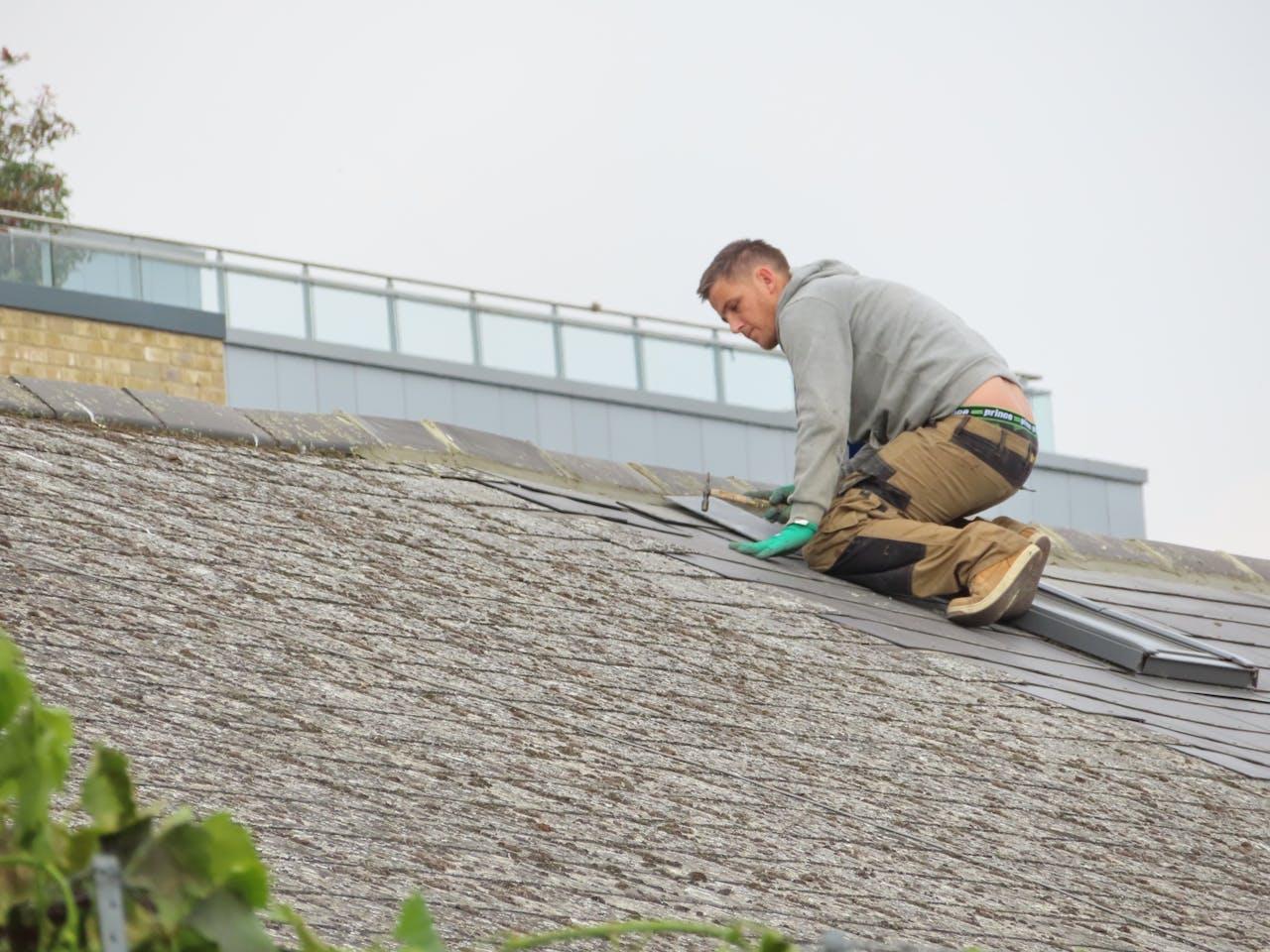
The Bronx Commercial Roof Budget Autopsy
A Small Leak Is Rarely Just a Small Line Item
A commercial property owner gets a call.
There's water coming through the ceiling.
The first question is usually:
"How much will it cost to fix?"
That's a reasonable question.
But it's often not the first question that should be asked.
A better one is:
"How long has the roof been heading toward this problem?"
Because the price of repairing a roof leak is rarely limited to the roofing work itself.
There can be damaged ceiling materials.
Wet insulation.
Interior finishes.
Equipment exposure.
Tenant complaints.
Interrupted business operations.
Emergency service.
And, in some cases, a much larger roofing project that could have been easier to plan months earlier.
This is why commercial roofing deserves to be looked at as a property-management expense, not simply a maintenance invoice.
For Bronx commercial buildings, that distinction matters even more because flat and low-slope roofs often contain drainage systems, rooftop equipment, penetrations, parapets, and multiple repair areas that require ongoing attention. Recent Bronx commercial roofing coverage identifies ponding water, flashing problems, drainage issues, membrane damage, and aging roof components among recurring inspection concerns.
So let's perform a budget autopsy.
Not to find someone to blame.
To find out where the money went—and where it could have been saved.
CASE FILE: THE $800 LEAK
Imagine a commercial building develops a leak.
The initial repair appears straightforward.
Roof repair: $800
Done.
Or so everyone thinks.
Three months later, another leak appears.
Another repair.
Then another.
The roof is now producing service calls instead of solving problems.
The individual invoices may not look alarming.
But add them together.
Repair #1
$800
Repair #2
$1,200
Repair #3
$950
Emergency response
$1,500
Interior repairs
Additional cost
Suddenly, the "cheap repair strategy" isn't looking so cheap.
The lesson isn't that repairs are bad.
Far from it.
A targeted repair can be exactly the right decision when the problem is localized and the surrounding roof remains in good condition.
The lesson is:
A repair should be evaluated in the context of the entire roof.
AUTOPSY FINDING #1
The Problem Wasn't the Leak
The leak was the evidence.
The underlying problem may have been:
- Aging roofing materials
- Deteriorated flashing
- Blocked drainage
- Failed seams
- Poorly maintained roof penetrations
- Previous temporary repairs
- Repeated rooftop traffic
- Water ponding
- General system deterioration
A roof inspection helps distinguish between an isolated defect and a broader roofing problem.
N.V. Commercial Roofing's Bronx service offering centers on commercial roofing and related inspection, repair, replacement, and maintenance needs, making the inspection step useful for determining what the property actually needs rather than assuming every leak has the same cause.
AUTOPSY FINDING #2
Drainage Was Treated Like a Detail
It isn't.
On a commercial flat roof, drainage is part of the system.
A roof needs to move water toward drains, scuppers, gutters, or other designated outlets.
When water remains on the surface, the consequences can accumulate.
Ponding can place prolonged moisture exposure on roofing materials.
Blocked drains can turn heavy rain into a much larger problem.
Low areas can become recurring trouble spots.
And a drainage problem can keep producing leaks even after individual defects have been repaired.
Recent Bronx commercial roofing guidance specifically highlights drainage inspection, clogged drains, ponding water, and poor slope as issues that can contribute to commercial flat-roof failures.
Budget lesson:
Don't budget only for the roof surface. Budget for the system that allows the roof to function.
AUTOPSY FINDING #3
The Roof Had a Memory
Every commercial roof has a history.
Some have excellent records.
Others have a folder full of invoices with no clear explanation of what happened.
That's a missed opportunity.
A roof file should ideally help answer:
When was the roof installed?
When was it last replaced?
What areas have leaked?
What repairs were completed?
Were there storm-related problems?
When was the last inspection?
What areas were identified for future attention?
Without that history, every contractor may be starting from zero.
With it, the building owner can see patterns.
THE REPAIR PATTERN TEST
Here's a simple exercise.
Imagine your property has had:
One leak in three years.
That might be an isolated maintenance issue.
Now imagine:
Six leaks in eighteen months.
That's different.
The number alone doesn't prove the roof needs replacement.
But it does justify asking a larger question:
"Why are failures becoming more frequent?"
Recurring repairs can indicate that the roof needs a broader evaluation.
AUTOPSY FINDING #4
Emergency Roofing Became the Maintenance Plan
This is one of the most expensive habits a property owner can develop.
Something leaks.
Call someone.
Patch it.
Forget it.
Until the next storm.
Then repeat.
Emergency roofing has an important role. When water is actively entering a commercial building, quick action can help limit further damage.
But emergency service should not become the property's long-term maintenance strategy.
A better sequence is:
Emergency response → permanent diagnosis → repair or replacement plan → preventive maintenance
That turns an emergency into information.
THE COST BEHIND THE CEILING
Here's where commercial roofing gets interesting.
The roof isn't the only thing exposed when water gets inside.
Consider a retail building.
Water reaches inventory.
Now the roofing issue is an inventory issue.
Consider an office.
Water reaches electrical or mechanical equipment.
Now it's an operational issue.
Consider an apartment or mixed-use property.
Water reaches a tenant's unit.
Now it's a property-management issue.
Consider a warehouse.
Water reaches stored materials.
Now the roof has become a business-risk issue.
The roofing invoice may be relatively small compared with the chain reaction that follows.
AUTOPSY FINDING #5
Nobody Planned for Replacement
Roof replacement is often treated as an unexpected expense.
But an aging commercial roof doesn't become old overnight.
Its condition changes gradually.
That's why replacement planning can be valuable.
It gives the property owner time to:
- Review the existing roof condition
- Compare repair and replacement options
- Budget for capital work
- Schedule around building operations
- Coordinate with tenants
- Address drainage or structural concerns
- Avoid making decisions during an active emergency
A roof doesn't have to be replaced tomorrow for replacement planning to begin today.
THE "REPAIR OR REPLACE?" MONEY TEST
Don't ask only:
"How much is replacement?"
Ask these questions too:
How much have we spent on repairs recently?
Are repairs becoming more frequent?
Are new leaks appearing in unrelated areas?
Is the roofing material showing widespread deterioration?
Is water reaching interior areas repeatedly?
How much useful service life might remain?
What would continued maintenance look like over the next few years?
Now you're comparing strategies instead of comparing two invoices.
AUTOPSY FINDING #6
The Roof Was Being Evaluated From the Ground
A commercial roof can look perfectly ordinary from the street.
That's not enough.
Many important conditions are located above eye level:
- Roof seams
- Flashing
- Drainage points
- Penetrations
- Coping
- Membrane damage
- Ponding areas
- Previous repair locations
- Rooftop equipment interfaces
A professional inspection provides information that simply looking upward from the sidewalk cannot.
For larger or complicated commercial properties, inspection may also involve detailed photographs or other documentation so property owners can understand what is actually happening on the roof. Current Bronx commercial roofing inspection guidance emphasizes documenting surface conditions, drainage, roof components, and potential leak areas.
AUTOPSY FINDING #7
The Rooftop Equipment Wasn't Part of the Roof Plan
Commercial roofs often have a lot happening above them.
HVAC equipment.
Exhaust systems.
Vents.
Pipes.
Electrical equipment.
Access points.
Other rooftop installations.
Each penetration or equipment interface introduces another detail that has to be properly maintained.
And here's the important part:
Another contractor working on rooftop equipment can affect the roofing system.
HVAC maintenance, electrical work, signage, telecommunications, and other rooftop activity can involve foot traffic or equipment movement.
That means roof condition isn't only a roofing contractor's concern.
It should be part of the property's overall maintenance coordination.
THE BRONX FACTOR
A commercial roof in the Bronx doesn't operate in a controlled environment.
It deals with seasonal changes.
Heavy rainfall.
Snow.
Ice.
Summer heat.
Wind.
Debris.
Rooftop equipment.
Urban exposure.
Freeze-thaw cycles.
These conditions don't necessarily destroy a roof overnight.
They add stress over time.
That is why preventive inspection and maintenance can be more valuable than waiting for a dramatic failure.
Recent Bronx-specific roofing research and industry content repeatedly focuses on seasonal exposure, drainage, aging roofing systems, rooftop equipment, and maintenance as major factors in commercial flat-roof performance.
THE BUDGET REPAIR: A DIFFERENT WAY TO THINK ABOUT MAINTENANCE
Maintenance is often viewed as another expense.
A better way to look at it:
Maintenance buys information.
An inspection can tell you:
What is failing?
Where is it failing?
How serious is it?
What should be repaired?
What should be monitored?
What may require replacement later?
That information gives property owners something valuable:
Planning time.
THE COMMERCIAL ROOF BUDGET CALENDAR
Instead of waiting for an emergency, divide roofing decisions into three buckets.
THIS MONTH
Address active leaks, obvious damage, blocked drainage, and urgent safety concerns.
THIS YEAR
Handle developing repairs, recurring problem areas, preventive maintenance, and inspection recommendations.
FUTURE CAPITAL PLAN
If the roof is aging or deteriorating broadly, begin planning for replacement before failure forces the decision.
This approach keeps every roofing issue from becoming a crisis.
WHAT A GOOD COMMERCIAL ROOF FILE SHOULD CONTAIN
Property owners and managers can make future roofing decisions much easier by keeping a simple record.
Include:
Roof installation date
Roof system information
Inspection reports
Repair invoices
Photos
Leak locations
Storm-related damage
Maintenance records
Replacement estimates
Warranty information, where applicable
Over time, this becomes a timeline.
And a timeline can reveal something a single inspection cannot:
how quickly the roof is changing.
THE N.V. COMMERCIAL ROOFING APPROACH
N.V. Commercial Roofing focuses on commercial roofing services in the Bronx, with services covering roof inspection, repair, replacement, maintenance, and other commercial roofing needs.
That service range matters because property owners rarely have one roofing problem forever.
A building may need:
An inspection today.
A repair next month.
Maintenance later in the year.
Replacement planning several years down the road.
The goal isn't to force every property into the same solution.
The goal is to match the work to the condition of the roof.
THE FIVE-MINUTE ROOF BUDGET AUDIT
Before your next roofing conversation, gather these five pieces of information:
1. Last inspection date
If nobody knows, start there.
2. Last major repair
Find the invoice if possible.
3. Recurring leak locations
Make a list.
4. Roof age
Even an approximate installation year helps.
5. Recent repair spending
Add it together.
Then ask:
"Are we maintaining this roof—or repeatedly rescuing it?"
That's a surprisingly useful question.
IF THE ANSWER IS "RESCUING IT"
Don't panic.
It doesn't automatically mean replacement is required.
It means the roof deserves a broader evaluation.
The next step may be:
Comprehensive inspection
followed by:
Repair
Maintenance
Restoration
or:
Replacement planning
depending on what the inspection actually finds.
THE FINAL BUDGET FINDING
The most expensive commercial roofing decision isn't always choosing the wrong material.
Sometimes it's failing to make a decision at all.
A small defect gets ignored.
A drain remains blocked.
A flashing problem gets patched repeatedly.
A repair history isn't documented.
A roof keeps aging without a plan.
Then a storm arrives.
The building owner is suddenly forced to make several decisions at once—and usually under pressure.
That's when roofing becomes expensive.
Not necessarily because the roof failed overnight.
Because the planning window disappeared.
THE BRONX ROOFING RULE
Here's the rule worth taking away:
Don't wait for the roof to send you an invoice before you start managing it.
Inspect it.
Keep records.
Track repairs.
Watch recurring problems.
Maintain drainage.
Coordinate rooftop work.
Plan capital expenses.
And when the evidence suggests that the existing system is reaching the end of its useful service life, start planning before the next emergency makes the decision for you.
For Bronx commercial property owners, that's what good roof management looks like.
Not reacting to every leak.
Understanding the roof well enough that the next decision isn't a surprise.
Frequently Asked Questions
How often should a commercial roof in the Bronx be inspected?
Inspection frequency depends on the roof's age, condition, building use, maintenance history, and exposure. Many commercial roofing professionals recommend routine inspections and additional checks after significant storms. Recent Bronx-specific guidance recommends regular inspection as a way to identify ponding, drainage problems, membrane damage, flashing issues, and other developing conditions.
What are the most common commercial flat-roof problems in the Bronx?
Common concerns include ponding water, clogged drainage, deteriorated flashing, membrane damage, open seams, punctures, roof penetration problems, and aging repair areas. Local weather and rooftop equipment can add further stress to the system.
Does a commercial roof leak always mean the roof needs to be replaced?
No. A localized defect may be repairable. Replacement becomes a consideration when problems are widespread, repairs are recurring, or the overall roofing system has deteriorated significantly.
Why is ponding water a concern on a commercial flat roof?
Persistent ponding keeps water in contact with roofing materials for extended periods and can indicate drainage or slope problems. It may contribute to deterioration and increase the risk of leaks.
What should a property owner do after a major storm?
Check for signs of interior water intrusion and arrange a professional roof assessment if damage is suspected. A roof can have developing problems even when the interior initially appears unaffected.
What commercial roofing services does N.V. Commercial Roofing provide?
N.V. Commercial Roofing's Bronx-focused service offering covers commercial roofing needs including inspections, repairs, replacement, maintenance, and related roofing work. The broader commercial roofing service category also includes assessment of drainage, roof components, and storm-related conditions.
 Greek
Greek
 English
 Arabic
 French
 Spanish
 Portuguese
 Deutsch
 Turkish
 Dutch
Dutch
 Italiano
 Russian
 Romaian
 Portuguese (Brazil)