


Local Law 11 NYC: A Building Owner's Façade Timeline
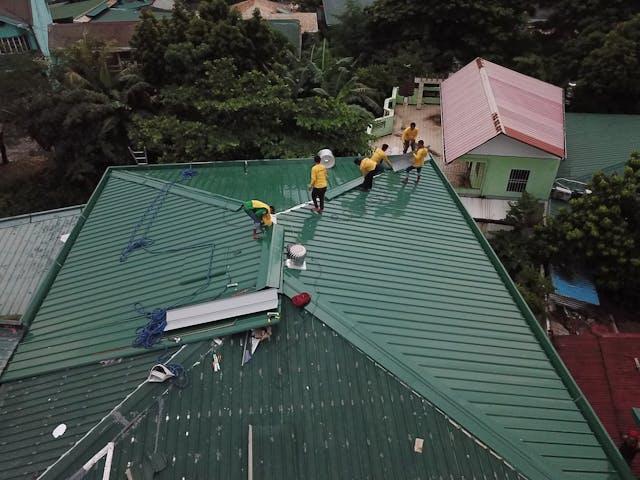
The Five-Year Façade Timeline
What Actually Happens Before, During, and After a Local Law 11 Inspection?
For many New York City building owners, Local Law 11 doesn't become a priority until a deadline gets close.
Then the questions start coming quickly.
Who needs to inspect the building?
What exactly gets inspected?
What happens if the façade is not classified Safe?
Who handles the repairs?
What happens to a sidewalk shed?
When does the building become compliant again?
These questions are understandable because façade compliance isn't simply one appointment with an inspector.
It's a process.
And the process has a timeline.
For buildings covered by the Façade Inspection & Safety Program, understanding that timeline can make the difference between planned façade work and a project that suddenly becomes an urgent problem.
According to the NYC Department of Buildings, buildings higher than six stories generally must have their exterior walls and appurtenances inspected every five years, with a technical façade report filed with the Department.
Roman Local Law 11 NYC Restoration works specifically in this space, providing façade inspections, repairs and restoration, SWARMP repairs, violation removal, and maintenance services for NYC properties.
So rather than another generic explanation of Local Law 11, let's follow the life of a façade through the process.
YEAR 0: THE BUILDING OWNER LOOKS UP
It starts with something small.
A crack.
Loose masonry.
Deteriorated mortar.
A damaged lintel.
Concrete deterioration.
A parapet concern.
Or perhaps nothing visible at all.
That's important.
A façade can have conditions that aren't obvious from the sidewalk.
The NYC Department of Buildings notes that façade work can involve brick and mortar, terra-cotta, stucco, tiles, glass, concrete cladding, lintels, architectural details, fire escapes, window sills, terraces, rooftops, and parapet walls.
So the first mistake a building owner can make is assuming:
"If I don't see anything from the street, the façade must be fine."
That's not an inspection.
It's an observation.
There is a difference.
THE FIRST QUESTION
"Does My Building Fall Under FISP?"
For buildings higher than six stories, NYC requires periodic façade inspections under FISP.
The inspection cycle is five years. The technical façade report is submitted electronically through DOB NOW: Safety.
This is where ownership should start paying attention.
Not when a deadline is almost here.
Earlier.
Why?
Because inspection findings can lead to repair work.
Repair work can require permits, plans, access arrangements, public protection, scheduling, and coordination.
Those things take time.
MONTH 1: THE QEWI ENTERS THE PICTURE
The next major step is the façade inspection itself.
A Qualified Exterior Wall Inspector, commonly referred to as a QEWI, performs the inspection.
The inspection isn't simply someone walking around the lobby and looking at the front entrance.
The purpose is to evaluate the exterior walls and relevant appurtenances for safety conditions.
The NYC Department of Buildings identifies the QEWI as the qualified professional responsible for the FISP inspection and technical reporting process.
Roman Local Law 11 NYC Restoration states that its façade inspection services include ground-level and close-up assessments performed by qualified professionals to identify safety concerns and compliance issues.
WHAT DOES THE INSPECTOR LOOK FOR?
Think about the façade as a collection of systems rather than one wall.
The inspection can involve conditions affecting:
- Brick
- Mortar
- Concrete
- Terra-cotta
- Stone
- Lintels
- Parapets
- Balconies
- Window surrounds
- Exterior architectural details
- Other façade appurtenances
The point isn't simply to find something that looks ugly.
The central question is:
"Does this condition present a safety concern, require repair and maintenance, or remain in acceptable condition?"
THE THREE WORDS THAT CHANGE THE PROJECT
After inspection, the building's condition is classified.
And three words matter enormously:
SAFE
The façade is considered safe.
That doesn't mean:
"Forget about the building for five years."
Owners still have an ongoing obligation to maintain their property safely.
But it means the inspection did not identify conditions requiring the other classifications.
SWARMP
Safe With a Repair and Maintenance Program.
This means the façade is considered safe at the time of inspection, but certain conditions need repair and maintenance within the prescribed period to prevent them from becoming unsafe.
NYC DOB states that the QEWI identifies a SWARMP completion date, which can fall within a defined period based on the inspection findings.
This is where the phrase "safe" can be misleading if a building owner interprets it as "nothing needs to be done."
SWARMP means:
You're safe now, but there is work to manage.
UNSAFE
This is the classification no building owner wants to ignore.
An unsafe condition means the façade has a condition that presents a current public-safety concern.
The DOB states that unsafe conditions must be corrected within 90 days, subject to applicable extension procedures.
That changes the project immediately.
Now the owner isn't simply planning maintenance.
The owner is managing a compliance and safety issue with deadlines attached.
THE 90-DAY CLOCK
This is where preparation becomes important.
Once an unsafe report is filed, the building owner can't simply put the project into the next budget cycle and forget about it.
NYC DOB states that unsafe conditions must be repaired within 90 days. If repairs cannot be completed within that period, the QEWI must file an appropriate extension request.
The Department also notes that owners can face civil penalties after the applicable 90-day period if the unsafe condition isn't corrected or properly covered by an acceptable extension request.
That's why a façade project should be treated as a timeline.
Not a single invoice.
THE SIDEWALK SHED QUESTION
This is where façade problems become visible to everyone.
If an unsafe condition requires public protection, scaffolding, sidewalk sheds, fencing, or other safeguards may become part of the project.
Suddenly, a façade issue isn't only happening on the building.
It's affecting:
The sidewalk.
Pedestrian movement.
Building access.
Tenants.
Neighbors.
Businesses.
Project logistics.
NYC DOB explains that sidewalk sheds and other forms of pedestrian protection may be installed when hazardous façade conditions are identified, remaining in place until the necessary repairs are completed and the appropriate status is restored.
That makes timely planning even more important.
THE REPAIR PHASE
Now the inspection is finished.
The report has identified what needs attention.
The next question becomes:
"Who is actually going to fix it?"
This is where façade inspection and façade restoration become two different parts of the project.
The inspection determines the condition.
The repair work addresses the condition.
Depending on the building and findings, repair work can involve masonry, brickwork, concrete, steel, lintels, parapets, architectural elements, or other exterior components. NYC DOB identifies these among the types of façade work commonly performed on buildings.
Roman Local Law 11 NYC Restoration lists façade repair and restoration services covering masonry, brickwork, concrete, and steel, along with SWARMP repairs and Local Law 11 violation removal.
WHY A COSMETIC FIX MAY NOT BE ENOUGH
Here's an important point from the NYC DOB's façade FAQ.
If a façade condition requires repair, the goal isn't simply to make the visible defect disappear.
The Department states that façade repairs must address the underlying causes, not merely provide a cosmetic repair to the deterioration that was observed.
That distinction matters.
Imagine a deteriorated masonry joint.
You could make the surface look better.
But if the underlying water intrusion, failed material, or related condition remains unresolved, the same problem may return.
The repair should address the reason the condition developed—not just its appearance.
THE PAPERWORK DOESN'T END WHEN THE WORK ENDS
This is another common misunderstanding.
A contractor finishes the physical repair.
Everyone packs up.
The owner assumes:
"We're done."
Not necessarily.
The compliance process still matters.
NYC DOB explains that once unsafe conditions have been corrected, an amended report must be filed, and public protection can be removed once the amended Safe or SWARMP report is accepted.
In other words:
Physical completion and compliance completion are not necessarily the same moment.
That distinction should be part of the project plan from the beginning.
THE OWNER'S PROJECT FILE
A smart building owner should keep more than invoices.
Create a façade file containing:
Inspection reports
Keep the official documentation.
Photographs
Before, during, and after repairs.
Repair scope
Know what work was actually performed.
Permits
Keep records of required approvals and filings.
Contractor documentation
Maintain project records.
QEWI documentation
Keep inspection and amended-report information together.
Violation records
Track what was open and what was resolved.
Future recommendations
If the inspector identifies conditions that need monitoring, document them.
This turns five years of façade history into something usable.
YEAR 2: NOTHING IS WRONG — SO WHY MAINTAIN IT?
Because that's exactly when maintenance is easiest.
Maintenance isn't only for buildings with active violations.
It can include monitoring:
- Masonry joints
- Parapets
- Flashing
- Lintels
- Concrete
- Exterior details
- Water intrusion
- Previously repaired areas
Roman Local Law 11 NYC Restoration lists routine façade maintenance programs as part of its service offering, with the goal of addressing developing issues before they become larger repair problems.
The objective is simple:
Don't let the next inspection discover five years of ignored maintenance.
YEAR 3: THE SMALL CRACK
A small crack appears.
Nobody panics.
Good.
But nobody should ignore it either.
The right response depends on what caused it.
Is it superficial?
Is it recurring?
Is nearby masonry deteriorating?
Is water getting behind the façade?
Is there movement?
Is the condition isolated?
The answer matters more than the size of the crack.
A small visible defect can sometimes be a clue to a larger issue.
YEAR 4: THE BUILDING OWNER STARTS PREPARING
This is a good time to look forward.
Not because the façade is necessarily failing.
Because the next inspection cycle is approaching.
Review:
Previous inspection
Previous repairs
Open maintenance items
Building changes
Known problem areas
Past water intrusion
Records of exterior work
Now the next inspection isn't a surprise.
It's another chapter in an ongoing building-maintenance plan.
YEAR 5: THE CYCLE STARTS AGAIN
Five years later, the process comes around again.
The building is inspected.
The façade is evaluated.
The report is filed.
Conditions are classified.
Repairs are addressed if necessary.
And the cycle continues.
That's the basic rhythm of FISP.
But there is an important difference between two types of building owners.
Owner A:
Waits until the deadline.
Scrambles to find an inspector.
Discovers major repair needs.
Starts looking for contractors.
Faces scheduling pressure.
Owner B:
Tracks the façade throughout the cycle.
Keeps records.
Addresses maintenance items.
Knows the building's history.
Starts planning before the inspection.
Same regulations.
Very different experience.
THE LOCAL LAW 11 "RED FLAG" FILE
If you're managing a NYC building, pay particular attention to these warning signs:
Water entering around exterior walls
Especially if it keeps happening.
Loose or deteriorated masonry
Never assume a loose exterior element is merely cosmetic.
Cracked concrete
Especially where deterioration appears to be progressing.
Damaged parapets
Parapets are exposed to weather and deserve regular attention.
Deteriorated lintels
These structural elements can require specialized assessment and repair.
Repeated façade repairs
A recurring problem deserves investigation rather than endless patching.
Previous SWARMP conditions
Don't allow them to become tomorrow's unsafe conditions.
An approaching FISP deadline
Compliance planning should begin before the deadline becomes urgent.
THE MOST IMPORTANT CHANGE IN MINDSET
Local Law 11 shouldn't be treated as:
"Something the city makes us do every five years."
Think of it differently.
It's a structured opportunity to ask:
"What condition is our building's exterior actually in?"
That question is valuable even without the regulation.
Because the façade protects:
People.
Tenants.
Visitors.
Property.
Building interiors.
And the building itself.
WHERE ROMAN LOCAL LAW 11 NYC RESTORATION FITS
Roman Local Law 11 NYC Restoration focuses specifically on NYC façade inspection, restoration, and compliance-related work.
Its listed services include:
- Local Law 11 façade inspections
- Façade repair and restoration
- SWARMP repairs
- Violation removal
- Compliance restoration
- Routine façade maintenance
- Masonry repair
- Brickwork
- Concrete repair
- Steel-related façade work
The company also states that it works with qualified exterior wall inspectors and licensed professionals through the inspection and restoration process.
For a building owner, that creates an important distinction:
You aren't simply looking for someone who can repair a wall.
You're looking for a team that understands the relationship between:
Inspection → Finding → Repair → Filing → Compliance → Maintenance.
THE FIVE QUESTIONS TO ASK BEFORE YOUR NEXT FISP PROJECT
Before signing off on façade work, ask:
1. What exactly did the inspection find?
Get specific conditions, not general descriptions.
2. What classification was assigned?
Safe?
SWARMP?
Unsafe?
3. What must be repaired, and by when?
Make the deadlines clear.
4. What approvals or permits are required?
Some façade projects require filings, permits, or other approvals depending on the scope. NYC DOB specifically notes that façade projects may require work permits and, in some circumstances, Landmark Preservation Commission approval.
5. What happens after the repairs are completed?
Make sure the amended-report and compliance steps are understood.
A SIMPLE WAY TO MANAGE THE NEXT FIVE YEARS
If you're a property owner or manager, think of the façade in four stages:
STAGE 1 — INSPECT
Understand the building's current condition.
↓
STAGE 2 — CLASSIFY
Determine whether the façade is Safe, SWARMP, or Unsafe.
↓
STAGE 3 — CORRECT
Address required repairs and underlying causes.
↓
STAGE 4 — MAINTAIN
Monitor and maintain the façade until the next inspection cycle.
That's the entire idea.
Simple in theory.
Much easier when planned early.
FREQUENTLY ASKED QUESTIONS
What is Local Law 11 in NYC?
Local Law 11 is commonly associated with NYC's Façade Inspection & Safety Program, or FISP. It requires buildings covered by the program to undergo periodic exterior façade inspections and submit technical reports to the NYC Department of Buildings. Buildings higher than six stories generally fall within the program and are inspected every five years.
Which NYC buildings need Local Law 11 inspections?
Generally, buildings higher than six stories are subject to FISP inspection requirements. The NYC Department of Buildings states that exterior walls and appurtenances must be inspected every five years and that a technical façade report must be filed with the Department.
What is a QEWI?
QEWI stands for Qualified Exterior Wall Inspector. A qualified registered design professional with the required credentials performs the FISP façade inspection and can file the technical report through DOB NOW: Safety.
What does SWARMP mean?
SWARMP means Safe With a Repair and Maintenance Program. It indicates that the façade is considered safe at the time of inspection but has conditions that require repair and maintenance within the applicable timeframe. NYC DOB requires the QEWI to identify the relevant completion date.
What happens if a façade is classified Unsafe?
Unsafe conditions must be corrected within 90 days, subject to applicable extension procedures. NYC DOB also states that civil penalties can apply after the applicable period if the condition isn't corrected or properly covered by an accepted extension request.
Can a Local Law 11 repair be purely cosmetic?
A cosmetic repair may not address the actual problem. NYC DOB specifically states that façade repairs must correct underlying causes rather than merely treating visible deterioration.
Does a building need another filing after unsafe repairs are completed?
Yes. Once unsafe conditions have been corrected, an amended report must be filed. NYC DOB states that public protection can be removed after the amended report is accepted and the building's status has been restored to Safe or SWARMP.
Does Roman Local Law 11 NYC Restoration provide façade repair?
Yes. The company's listed services include façade repair and restoration involving masonry, brickwork, concrete, and steel, along with SWARMP repairs, violation removal, compliance restoration, inspections, and routine maintenance.
 Russian
 English
 Arabic
 French
 Spanish
 Portuguese
 Deutsch
 Turkish
 Dutch
Dutch
 Italiano
 Romaian
 Portuguese (Brazil)
 Greek
Greek