


Custom Tracksuits for Professional Teams& Athletes
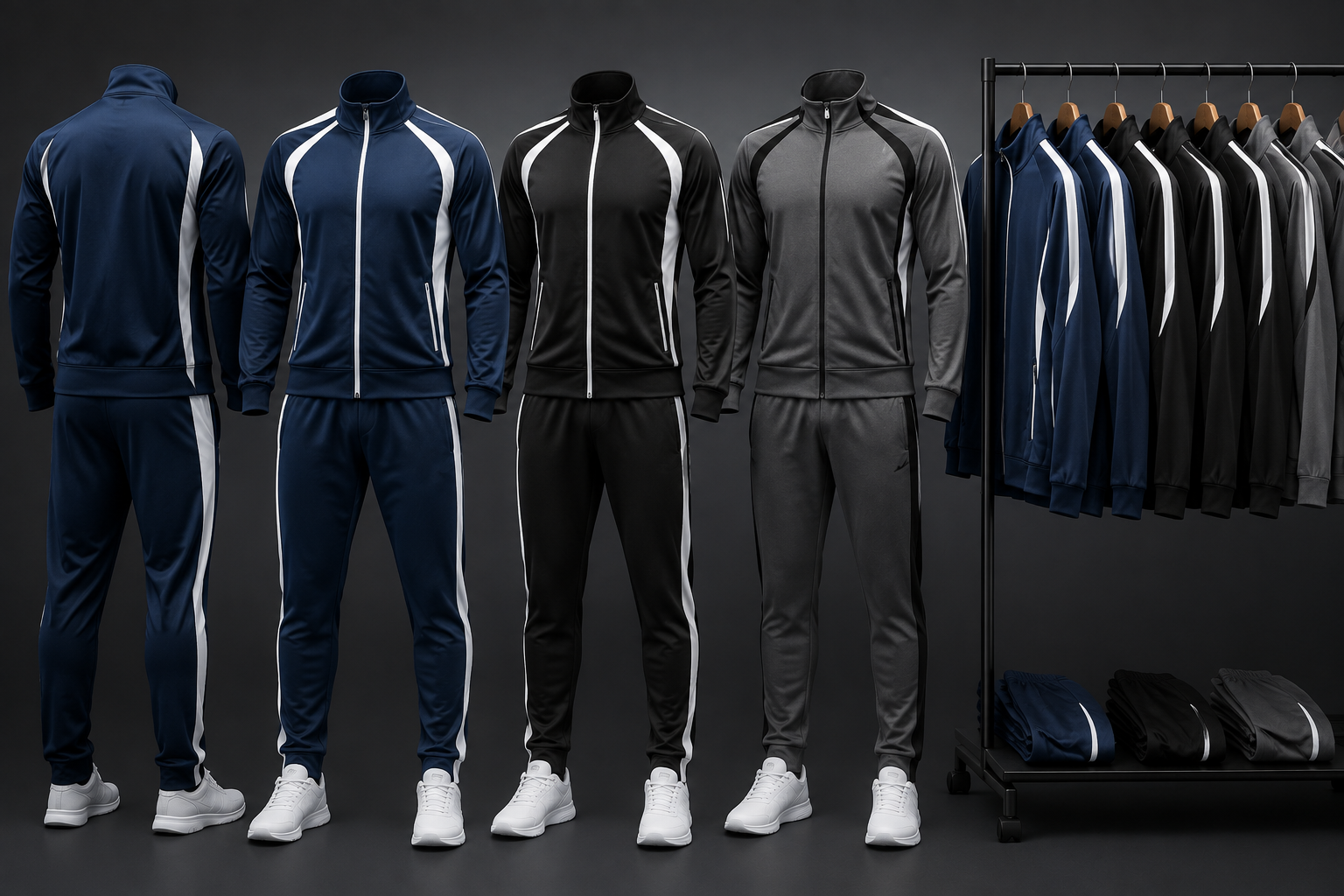
For professional teams and serious athletes, clothing often serves a purpose beyond appearance. It supports team identity, creates a consistent presentation, and provides practical comfort during travel, warm-ups, training, and pre-game activities. Custom tracksuits have become a popular option because they combine coordinated design with functional sportswear.
Unlike standard off-the-rack tracksuits, team-specific apparel can be designed around colors, logos, player requirements, and organizational identity. When selected carefully, a coordinated tracksuit can help athletes look professional while providing a versatile layer for different sporting environments.
Why Custom Tracksuits Matter for Modern Sports Teams
A professional team can have excellent jerseys and still lack consistency away from competition. Athletes may arrive at venues wearing different jackets, sweatshirts, or casual clothing, making the group appear less coordinated.
Custom tracksuits help solve that problem by creating a unified appearance.
They can support:
-
Team identity through consistent colors and branding
-
Professional presentation during travel and events
-
Athlete comfort during warm-ups and recovery
-
Brand visibility through logos and sponsor graphics
-
Versatility across training and non-game settings
-
Team recognition at tournaments and public appearances
For organizations, the value comes from combining practical apparel with visual consistency.
How Custom Tracksuits Create a Stronger Team Identity
Team identity is built through more than logos. Colors, typography, design elements, and apparel choices can create a recognizable visual system.
A well-designed tracksuit can complement custom jerseys, creating a consistent look across an entire team wardrobe.
For example, a soccer club might use its primary jersey colors on the tracksuit while incorporating a contrasting stripe along the sleeves and legs. A basketball organization could use a simplified version of its competitive uniform design for travel apparel.
The result is a cohesive appearance without making every garment identical in purpose.
Consistent Branding Across Team Apparel
Professional organizations often have multiple apparel categories, including:
-
Competition uniforms
-
Training shirts
-
Warm-up apparel
-
Travel clothing
-
Jackets
-
Tracksuits
-
Fan merchandise
When these pieces share common visual elements, the organization becomes easier to recognize. This can be particularly valuable when teams participate in tournaments, promotional events, or televised activities.
What Should Teams Consider When Designing a Custom Tracksuit?
Design decisions should begin with the intended use rather than appearance alone. A tracksuit designed for warm-ups may have different requirements from one primarily used for travel.
Several factors deserve consideration.
Fabric and Performance
Material selection influences comfort, flexibility, breathability, and durability.
Athletes may wear tracksuits before competition, during outdoor warm-ups, or while traveling between venues. Lightweight fabrics can work well for mild conditions, while warmer materials may be preferable in colder environments.
The material should also tolerate repeated washing because team apparel typically receives regular use.
Fit and Mobility
A professional tracksuit should allow athletes to move naturally.
Overly restrictive clothing can interfere with stretching or warm-up movements. Excessively loose garments may feel uncomfortable during activity.
A practical fit should provide enough room for movement while maintaining a clean, athletic silhouette.
Color Selection
Team colors should remain recognizable while working well across the entire garment.
Strong color combinations can improve visibility and brand recognition. However, design teams should also consider how colors appear alongside logos, sponsor marks, names, and other graphics.
Designing Sponsor Logo Placement Without Overcrowding
Sponsorship is an important consideration for many professional and amateur sports organizations. Apparel can provide valuable visibility, but excessive branding can make a tracksuit appear cluttered.
A better approach is to establish a visual hierarchy.
For example:
-
Team logo receives the primary position.
-
Sponsor logos receive clearly defined secondary placements.
-
Player or organization details remain readable.
-
Decorative elements support rather than compete with branding.
The same principle can apply across tracksuits and custom jerseys. Consistency in sponsor placement can make the entire apparel collection look more professional.
Custom Tracksuits vs. Standard Team Apparel
Standard tracksuits may provide convenience, but customization offers greater control over branding and presentation.
|
Feature |
Standard Tracksuit |
Custom Tracksuit |
|
Team colors |
Limited |
Fully customizable |
|
Logo placement |
Limited options |
Flexible |
|
Sponsor branding |
Usually unavailable |
Available |
|
Team identity |
Basic |
Highly personalized |
|
Sizing options |
Standard range |
Can offer team-specific requirements |
|
Design consistency |
Limited |
Designed around team branding |
For casual recreational use, standard apparel may be sufficient. Professional teams, clubs, academies, and competitive organizations often benefit more from customized options.
Why Matching Tracksuits and Custom Jerseys Work Together
A complete team apparel strategy should consider the entire player experience rather than one garment.
Custom jerseys typically represent competition. Tracksuits can extend that identity into warm-ups, travel, training, and public appearances.
When both use compatible colors, typography, and logos, teams can create a consistent visual identity.
This approach can also simplify apparel planning. Instead of selecting unrelated garments from different suppliers, organizations can establish a recognizable design system that applies across multiple products.
Practical Benefits for Professional Athletes
Athletes often spend significant time outside actual competition. They travel, attend team meetings, warm up, participate in media activities, and wait between matches.
A versatile tracksuit can serve several of these purposes.
Travel
Matching travel apparel can make large groups easier to identify in airports, hotels, and sporting venues.
Warm-Ups
A lightweight outer layer can help athletes stay comfortable before competition, particularly in cooler conditions.
Team Events
Coordinated apparel creates a professional appearance during ceremonies, community events, interviews, and promotional activities.
Training
Tracksuit separates can provide useful layering options before or after physical activity.
How Teams Can Build a Better Apparel Design Brief
Before ordering, team managers should create a clear design brief. This reduces confusion and makes communication with an apparel provider more efficient.
The brief can include:
-
Team name and organization
-
Official colors
-
Logo files
-
Sponsor requirements
-
Preferred garment style
-
Player size range
-
Quantity requirements
-
Intended use
-
Required delivery date
-
Budget expectations
-
Customization details
A detailed brief also helps identify potential issues before production begins.
Common Mistakes to Avoid
Even a well-funded team can make mistakes when planning customized sportswear.
Choosing Appearance Over Function
An attractive design is useful, but the garment still needs to perform. Fabric, fit, comfort, and durability should remain central considerations.
Using Too Many Design Elements
Multiple patterns, colors, sponsor marks, and graphics can compete for attention. Simplicity often creates a stronger professional appearance.
Ignoring Different Body Types
Teams include athletes with different heights, builds, and preferences. A practical size range can improve comfort and reduce avoidable exchanges.
Ordering Without Reviewing the Final Design
Digital mockups should be reviewed carefully before production. Logo placement, spelling, colors, and sponsor positioning should all be confirmed.
Treating Tracksuits as an Isolated Product
The best results usually come when tracksuits complement jerseys, training apparel, and other team clothing.
A Simple Checklist for Choosing Team Tracksuits
Before finalizing an order, organizations can review the following checklist:
Design
-
Does the design reflect the team's identity?
-
Are logos clearly visible?
-
Is sponsor placement balanced?
Performance
-
Is the fabric suitable for the intended environment?
-
Does the fit allow comfortable movement?
-
Can the apparel withstand frequent use?
Production
-
Are sizes clearly defined?
-
Has the final artwork been approved?
-
Is the required quantity confirmed?
Branding
-
Do the tracksuits coordinate with existing custom jerseys?
-
Are colors and typography consistent?
-
Does the design work across different team activities?
Budget
-
Does the order meet the organization's budget?
-
Are customization and production costs clearly understood?
-
Does the quantity match actual team requirements?
Making Tracksuits Part of a Long-Term Team Apparel Strategy
Sports organizations can gain more value when apparel is planned as a complete system.
Instead of redesigning every garment separately, teams can establish a consistent identity that carries across jerseys, tracksuits, training tops, jackets, and fan merchandise.
This can make future apparel decisions easier. New products can follow established colors, logos, typography, and design principles rather than starting from scratch.
For professional organizations, that consistency can strengthen recognition while reducing unnecessary design changes.
Final Thoughts
The best custom tracksuits combine performance, comfort, branding, and visual consistency. For professional teams and athletes, they can create a polished appearance during travel, training, warm-ups, and public events while extending the identity established through competition uniforms.
A thoughtful design process should consider fabric, fit, colors, sponsor placement, sizing, durability, and compatibility with existing custom jerseys. With these factors addressed early, teams can develop apparel that supports both athlete needs and organizational identity.
For teams seeking professionally coordinated sports apparel and customization options, Gear Team Apparel can be considered as a practical choice for building a cohesive team wardrobe.
 Portuguese
 English
 Arabic
 French
 Spanish
 Deutsch
 Turkish
 Dutch
Dutch
 Italiano
 Russian
 Romaian
 Portuguese (Brazil)
 Greek
Greek