


What Nobody Tells You About HVAC Line Sets Before You Buy or Install
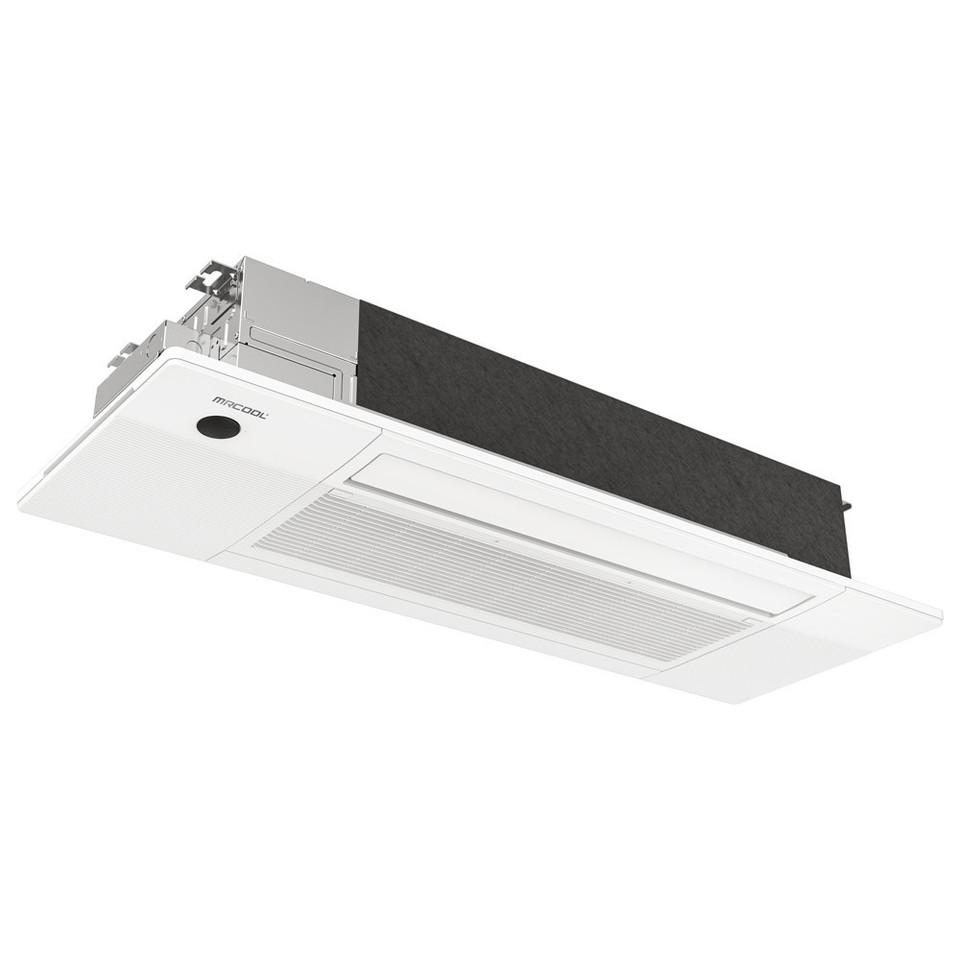
There is a moment in almost every split system HVAC project — residential or commercial, new installation or replacement — where the line set decision gets made in about ninety seconds. The equipment has been selected carefully. The installation date is scheduled. Someone looks at the diameter specifications in the installation manual, notes the required length, and places an order without giving the component much further thought.
This speed is understandable. Compared to the compressor selection, the efficiency rating comparison, and the capacity calculation that preceded it, the line set purchase feels like a logistics task rather than a technical decision. The copper comes in standard diameters and standard lengths. The insulation comes wrapped around it or purchased separately. What is there to deliberate about?
Quite a bit, it turns out. The hvac line sets choice and installation approach that gets made in ninety seconds affects every hour of system operation for the next fifteen to twenty years. The refrigerant moving through those lines does not forgive diameter selection that creates pressure drop outside the design parameters. The compressor does not recover from years of excess superheat caused by insufficient suction line insulation. The refrigerant circuit does not self-clean after contamination introduced by non-ACR copper. These consequences develop quietly and accumulate consistently, which is precisely why they are so easy to overlook until the service calls start adding up.
Separating the Two Lines in Your Understanding
One of the most useful things anyone learning about line sets hvac applications can do is stop thinking of the line set as a single component and start thinking of it as two distinct tubes with meaningfully different operating conditions, different performance requirements, and different failure modes.
The liquid line operates at high pressure carrying refrigerant that has already released its heat at the outdoor condenser. This line is warm relative to the refrigerant's coldest operating temperatures, and while insulating it properly matters for efficiency, the consequences of inadequate liquid line insulation are less immediately severe than what inadequate suction line insulation produces. Heat gain on the liquid line reduces subcooling and modestly affects metering device performance — real effects that accumulate over operating hours but do not stress components in the direct way that suction line heat gain does.
The suction line is where the more critical insulation story lives. Low-pressure refrigerant vapor traveling from the indoor evaporator to the outdoor compressor is operating at temperatures well below the ambient air surrounding it during cooling season operation. The temperature differential between the suction line contents and the surrounding air is not modest — it is substantial, and every degree of heat that crosses the insulation boundary adds superheat to the refrigerant that the compressor must handle at its inlet. Compressors are designed for refrigerant vapor arriving at a specific superheat level. Consistent excess superheat from inadequate insulation pushes the compressor outside this design envelope hour after hour, season after season, in ways that show up as efficiency degradation and accelerated wear rather than as a diagnostic code or a sudden failure.
This is why the suction line insulation specification deserves deliberate selection rather than defaulting to whatever the supply house has on the shelf.
Sizing Errors That Real Systems Experience
The hvac line sets diameter specifications in installation documentation exist because engineers at equipment manufacturers analyzed the refrigerant flow characteristics that their specific systems need to operate within design parameters. When installers treat these specifications as approximate guidance rather than precise requirements, the systems they install operate outside their design parameters in ways that the equipment ratings do not reflect.
Undersized lines create pressure drop that the compressor must overcome, increasing its work per unit of heat moved and reducing the delivered efficiency that the rated SEER2 or HSPF2 number assumes. The efficiency loss from undersized line sets is not dramatic in absolute terms for mild undersizing — it might be two or three percent in straightforward cases — but it is continuous across every operating hour and cumulative across every season of the system's service life.
Oversized suction lines introduce a failure mode that is specific to installations with vertical rises between indoor and outdoor units and that many installers with primarily horizontal installation experience have not encountered directly. Refrigerant vapor traveling upward in an oversized suction line moves at velocity too low to carry lubrication oil upward against gravity. The oil that should return to the compressor with the refrigerant instead accumulates in low points of the circuit. The compressor experiences reduced lubrication while the oil pooling in low points displaces refrigerant and affects circuit performance. This specific failure mode develops gradually enough that its origin in an oversized line set can be genuinely difficult to identify when the eventual consequences prompt a service call.
Long line set runs — particularly those approaching or exceeding the manufacturer's specified maximum — require charge adjustment that the standard installation charge does not automatically account for. The additional refrigerant volume that longer runs contain at operating pressure means the system operates with effective undercharge relative to what its refrigerant circuit needs when the line set is at the maximum specified length. Following the manufacturer's charge adjustment specifications for extended line set installations rather than assuming the standard charge is adequate regardless of length is the installation practice that maintains correct circuit performance across the full range of permitted installation lengths.
What the Copper Grade Question Is Really About
The question of whether ACR copper and plumbing copper are genuinely different in ways that matter for refrigerant applications comes up with some regularity, typically from someone who has found a cost savings opportunity by sourcing whatever copper is available rather than specifically ordering refrigerant-grade material.
The difference that matters most is not the copper's mechanical properties, which are similar enough between grades to make plumbing copper physically adequate for the pressure and temperature conditions of most residential refrigerant applications. The difference that matters is internal cleanliness — the condition of the surface that refrigerant and lubricating oil contact throughout the system's service life.
ACR copper is manufactured, dehydrated, and sealed with plugs or caps at both ends to maintain the clean, dry interior that refrigerant circuit integrity requires. The internal surface is free from the mineral oils, drawing lubricants, and moisture that manufacturing and open storage introduce to copper tubing that does not require this protection for its intended plumbing application.
When plumbing copper enters a refrigerant circuit, whatever is on its interior surface enters the circuit with it. These contaminants do not produce immediate obvious failure. The system starts and runs normally in its initial operation. The contamination affects lubrication oil performance, promotes acid formation in the presence of moisture, and contributes to the gradual compressor degradation that extends across years before manifesting as a failure that prompts replacement. At that point the connection between the original material choice and the eventual failure is not something standard diagnosis establishes — the evidence is long gone and the failure appears as an ordinary compressor failure rather than a consequence of a specific installation decision.
Insulation Thickness as a Climate Decision
The standard three-quarter inch wall closed-cell foam insulation that appears on most residential hvac line sets installations represents the minimum appropriate specification for moderate climates rather than the universal correct specification for all installation conditions. Using this standard universally regardless of climate produces adequate results in conditions close to the moderate baseline and inadequate results in conditions that meaningfully exceed it.
Hot humid climates create the conditions where standard insulation thickness most consistently falls short. High ambient temperatures increase the heat gain rate through any given insulation thickness. High humidity raises the local dew point against which the insulation must maintain the suction line's surface temperature to prevent condensation. When both factors are elevated simultaneously — as they are throughout summer cooling season in genuinely humid climates — the margin that three-quarter inch wall insulation provides between adequate and inadequate performance is smaller than comfortable long-term operation requires.
One-inch wall insulation addresses this margin deficit by providing additional thermal resistance that maintains adequate performance under the more demanding conditions that hot humid climates regularly produce. The cost difference between three-quarter and one-inch wall insulation across a typical residential line set run is modest relative to the efficiency losses and moisture management problems that undersized insulation produces across a fifteen to twenty year service life in demanding climate conditions.
Exterior line set sections require UV protection that the foam insulation does not inherently provide. UV exposure progressively degrades the closed-cell foam structure — hardening and cracking the outer surface while the internal cellular structure loses the properties that provide thermal resistance. This degradation is ongoing regardless of whether the foam surface appears intact to casual visual inspection. Line set covers that enclose exterior sections in UV-stable material provide durable protection that extends insulation service life dramatically compared to exposed foam that degrades under direct sun exposure year after year.
Pre-Charged Line Sets and the DIY Market
The factory pre-charged line sets that enable homeowner installation of DIY mini split systems represent a specific line sets hvac category whose selection and handling requirements differ meaningfully from conventional field-charged alternatives. Understanding these specific requirements produces better outcomes for the homeowners and smaller contractors who work with pre-charged systems.
Length selection for pre-charged line sets requires measuring the actual installation routing path rather than estimating from straight-line distance between planned unit locations. The routing path that the line set physically follows, through the wall penetration, along exterior surfaces, and to the outdoor unit connection — consistently exceeds the straight-line distance by amounts that vary with installation geometry. Selecting based on measured routing length rather than estimated straight-line distance prevents the mid-installation discovery that the selected line set cannot reach between the connection points.
Fitting integrity protection throughout the installation process is the handling requirement specific to pre-charged line sets that field-charged installations do not share. The proprietary quick-connect fittings that seal the factory refrigerant charge must remain capped and undamaged from the factory through the complete installation routing until the moment of intentional connection. Physical impact to the fitting ends, damage to sealing surfaces, or removal of protective caps before the connection moment can compromise the charge in ways that require professional refrigerant service to diagnose and address, transforming a DIY-accessible installation into one that requires professional intervention before it can operate correctly.
Connection sequence matters for pre-charged systems in ways it does not for conventional field-charged installations. The documented sequence for engaging quick-connect fittings reflects the specific way refrigerant should flow from the line set into the system circuit during connection. Following this sequence exactly produces correct refrigerant distribution. Departing from it based on what seems mechanically equivalent occasionally produces connection problems that manifest as performance issues requiring professional diagnosis.
FAQs About HVAC Line Sets and Line Sets HVAC
How often should line set insulation be inspected and what does adequate inspection involve?
Annual inspection during routine system maintenance provides appropriate frequency for residential installations. Adequate inspection involves more than visual surface assessment of accessible sections, it includes checking whether the suction line surface is sweating during cooling operation, which indicates that insulation is not maintaining adequate surface temperature against current ambient conditions regardless of how intact the foam appears. It also involves checking connection points between insulation sections for gaps that have developed as the foam aged and contracted, sealing any gaps found, and assessing UV degradation on exterior sections that may appear acceptable visually while having lost meaningful thermal resistance from structural foam degradation.
What is the minimum bend radius for residential HVAC copper line set tubing and why does it matter?
Minimum bend radius varies with tube diameter — larger diameter tubes require larger minimum bend radii to avoid cross-section deformation. As a general reference, residential suction line copper is typically bent to a minimum radius of three to five times its outer diameter, with the specific value determined by the tube's diameter and wall thickness. Bends tighter than the minimum radius deform the tube's circular cross-section toward oval, creating both flow restriction at the bend location and stress concentration in the deformed area. The deformation is permanent — the tube cannot be restored to its original geometry — making the moment of bending the only opportunity to maintain the circular cross-section that correct flow characteristics require.
Can I repair a section of damaged line set insulation rather than replacing the entire insulation run?
Localized insulation repair is appropriate when damage is confined to a specific section and the surrounding insulation is in sound condition. Effective repair involves cutting back the damaged section cleanly, preparing the exposed copper surface, and applying new insulation sections that overlap the existing intact insulation sufficiently to eliminate any thermal bridge at the repair joints. Sections where the foam has hardened from UV exposure adjacent to the repair area require honest assessment about whether their condition is adequate for continued service or whether the repair area should be extended to include the compromised adjacent sections as well. Piecemeal repairs that leave poor condition insulation adjacent to repaired sections address the most obvious problem without the underlying condition that will produce the next localized failure.
Why do some manufacturers specify different line set diameters for the same nominal system capacity in different product generations?
Line set diameter specifications sometimes change between product generations when refrigerant type changes, compressor technology changes, or refrigerant circuit design changes affect the flow characteristics that the system needs the line set to accommodate. A manufacturer who transitions from R-410A to R-32 or R-454B may specify different line set diameters for equivalent nominal capacity because the different refrigerant's physical properties — density, viscosity, heat transfer characteristics — produce different optimal flow velocities at the same mass flow rate that the capacity requires. Using the previous generation's line set specification with new generation equipment that specifies different diameters introduces the same operating condition mismatches that using any incorrect diameter produces, making verification of current specifications for the specific equipment being installed important even for contractors with extensive experience with previous generations of the same product line.
What happens when line sets hvac installations use compression fittings rather than brazed connections for refrigerant circuit joining?
Compression fittings in refrigerant circuits are generally discouraged in permanent installations because their long-term sealing reliability under the thermal cycling, vibration, and pressure variation that refrigerant systems experience is substantially lower than properly executed brazed connections. Compression fittings that seal adequately initially can develop leaks as the fitting components work against each other through thermal expansion and contraction cycles and vibration stress from compressor operation. The slow refrigerant leaks that compromised compression fittings produce are often difficult to locate precisely because the leak rate is too slow to produce obvious oil tracking or immediate performance degradation — they manifest instead as gradually declining performance that requires multiple service visits and refrigerant recharges before the fitting connection is identified as the source.
 Turkish
 English
 Arabic
 French
 Spanish
 Portuguese
 Deutsch
 Dutch
Dutch
 Italiano
 Russian
 Romaian
 Portuguese (Brazil)
 Greek
Greek