


How EDDM Marketing Helps Local Businesses Reach Nearby Customers
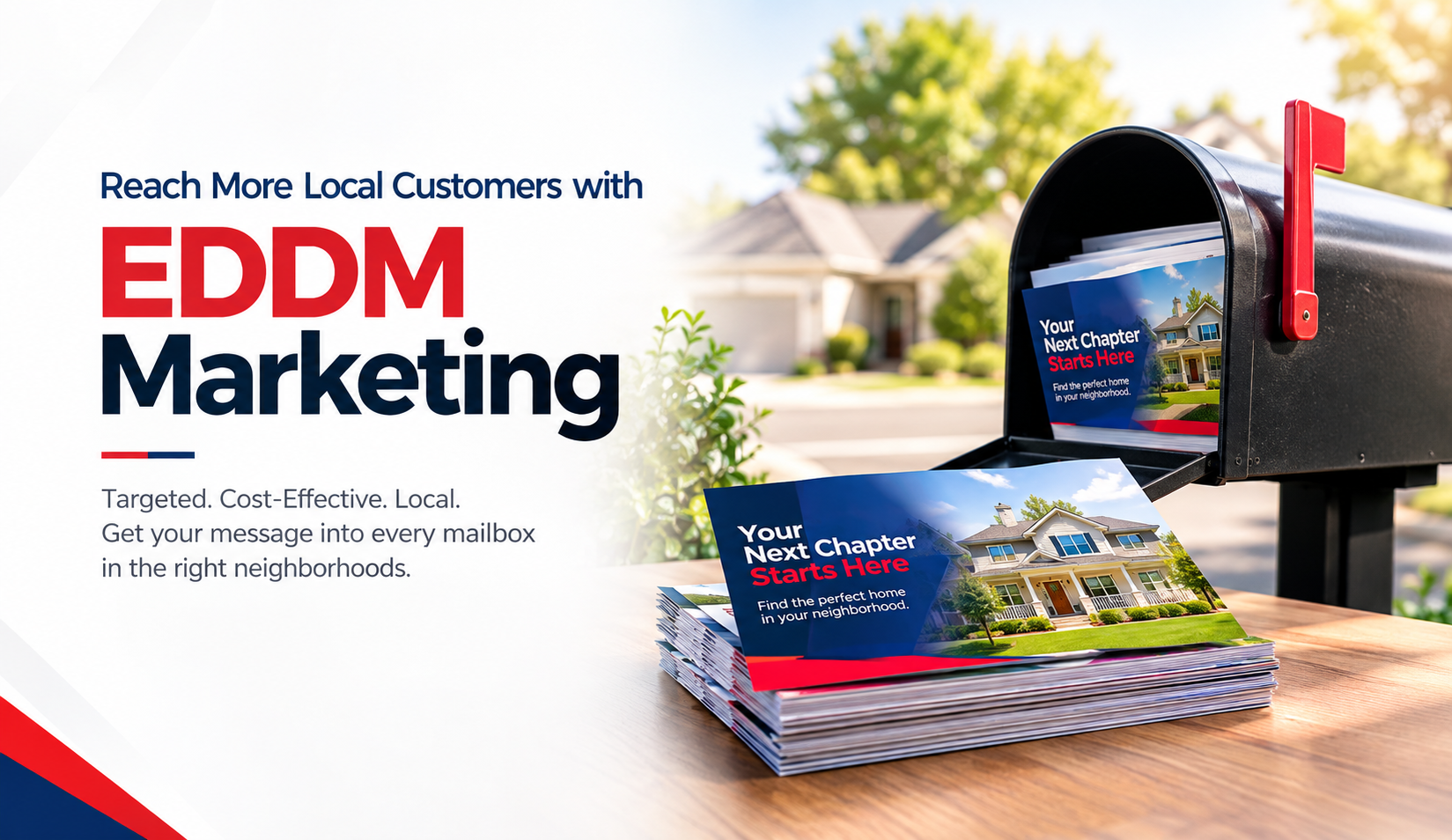
A local business can offer excellent service and still struggle to reach people who live only a few streets away. Digital advertising often sends owners into a cycle of changing audiences, watching click costs, and competing for attention on crowded screens. Meanwhile, many potential customers simply do not know that the business exists nearby.
That local awareness gap gives EDDM Marketing a practical role. Instead of relying on individual mailing addresses, businesses can select postal carrier routes around the areas they want to reach and place a physical mailpiece in households across those routes.
We look at EDDM as a neighborhood marketing tool rather than simply a postcard distribution method. The strongest campaigns connect three things: the right geographic area, a message that matters to that neighborhood, and a clear reason for the recipient to respond.
Why Local Businesses Often Struggle To Reach Nearby Customers
Many small businesses assume proximity automatically creates awareness. It does not. A homeowner may drive past a roofing company every week without remembering its name. Someone may live two miles from a dental office yet continue using a provider across town because that office already holds their attention.
Local search, social media, paid advertising, signage, referrals, and direct mail all compete for that same awareness.
The challenge grows when a business serves a specific radius. A restaurant does not need national exposure. A landscaping company usually wants homeowners within a realistic driving area. A neighborhood gym benefits more from nearby members than people who live 30 miles away.
EDDM helps businesses concentrate direct mail marketing around physical locations rather than sending pieces across an unnecessarily broad market. USPS lets mailers search neighborhoods by address, city, state, or ZIP Code and then review carrier routes within those areas.
Proximity Matters More For Some Businesses Than Others
Geographic targeting makes the most sense when location strongly influences the buying decision.
That often includes:
-
Restaurants and cafés
-
Dental and medical practices
-
Home improvement companies
-
HVAC contractors
-
Landscapers
-
Cleaning services
-
Real estate professionals
-
Fitness centers
-
Salons and spas
-
Auto service businesses
-
Local retailers
-
Community events
For these businesses, the marketing question often becomes less about reaching more people and more about reaching enough of the right households nearby.
How EDDM Marketing Reaches Entire Neighborhoods
Every Door Direct Mail works around postal carrier routes. A business chooses qualifying routes, prepares compliant mailpieces, and uses USPS delivery to reach addresses throughout those selected routes.
USPS also provides route-level information that can help businesses evaluate areas by factors such as residential or business address type, household size, age, and income.
That approach differs from traditional targeted direct mail, where a business builds or purchases a list of individual recipients based on specific characteristics.
Neither method fits every campaign.
If a roofing company wants homeowners throughout neighborhoods surrounding a recent project, broad route coverage may make sense. If a financial service wants only households that meet several precise demographic conditions, a targeted mailing list may provide better control.
Think In Neighborhoods, Not Just ZIP Codes
One mistake we often want businesses to avoid involves treating an entire ZIP Code as one audience.
A single ZIP Code can contain several very different neighborhoods. Housing values, household types, property age, density, and buying behavior can change significantly from one carrier route to another.
That makes route selection one of the most important planning decisions in an EDDM campaign.
Before committing the print quantity, businesses should review how the mailing area breaks into individual routes. Our overview of carrier route verification explains why confirming route information deserves attention before the campaign moves into production.
EDDM Works Best When Geography Matches The Offer
A mailing route alone does not create relevance. The offer still needs to make sense for the people receiving the mail.
Consider a local HVAC company.
A postcard that says, “We offer heating and cooling services,” gives the homeowner very little reason to act. A campaign timed before a period of heavy seasonal HVAC use can speak directly to maintenance, comfort, energy concerns, or appointment availability.
The second message connects the service to an immediate local need.
Match The Message To The Neighborhood
Local direct mail becomes stronger when businesses consider what makes one area different from another.
A home services company may look at:
-
Age of the homes
-
Property type
-
Typical household profile
-
Distance from the business
-
Seasonal maintenance needs
-
Recent construction activity
-
Service capacity
A restaurant may care more about:
-
Driving distance
-
Residential density
-
Nearby workplaces
-
Family concentration
-
Weekend traffic
-
Delivery boundaries
This does not mean every neighborhood needs a completely different postcard. It means the campaign should reflect the reality of the people who receive it.
Strong EDDM Campaigns Give People A Clear Reason To Respond
Business owners sometimes put too much information on a direct mail piece because they want to explain every service.
That usually weakens the message.
A household gives a postcard only a short amount of attention at first. The mailpiece needs to answer a few questions quickly:
-
What does this business offer?
-
Why does it matter to me?
-
Why should I act now or remember it?
-
What should I do next?
Focus On One Primary Action
A mailpiece can include a website, phone number, QR code, address, offer, and service list. However, the design should still guide the reader toward one primary next step.
For example:
“Schedule a spring AC tune-up.”
works more clearly than:
“Call, visit our website, scan this QR code, follow us online, browse our services, and request a free consultation.”
Too many competing actions create friction.
Build The Offer Around A Real Business Objective
A strong offer does not always require a discount.
Businesses can use EDDM to encourage:
-
Appointment bookings
-
Store visits
-
Restaurant orders
-
Estimates
-
Event attendance
-
Seasonal service scheduling
-
New location awareness
-
Free consultations
-
Website visits
-
QR-code scans
The campaign goal should shape the headline, design, call to action, mailing routes, and measurement plan.
Postcard Design Can Decide Whether The Mailpiece Gets Attention
EDDM gives businesses physical space in the mailbox, but that does not guarantee attention.
The design still has work to do.
We recommend treating the front of the postcard like a storefront window. It should communicate the main idea before the recipient needs to study the details.
Keep The Visual Hierarchy Simple
A practical hierarchy often looks like this:
Primary message: What matters most?
Supporting message: Why should the recipient care?
Visual: What helps the person understand the offer quickly?
Call to action: What should happen next?
Business information: Who is sending the mail?
Avoid filling every available inch with text.
White space can improve readability. A clear image can communicate faster than several extra sentences. A large headline often performs a more useful job than a long service list.
Timing Matters In Local Direct Mail Marketing
A good campaign mailed at the wrong time can produce disappointing results.
Businesses should connect mailing dates to purchasing behavior whenever possible.
A landscaper may want visibility before homeowners begin planning seasonal yard work. A tax professional needs different timing. A restaurant opening a new location may coordinate the mailing with its opening period.
The same principle applies to recurring demand.
Do Not Assume One Mailing Tells The Whole Story
A single mailing gives a business one opportunity to appear in the mailbox. That may work for a strong event, opening, or time-sensitive offer, but many local services depend on repeated recognition.
People often need a service only when a specific situation occurs.
A homeowner may ignore a plumber's postcard today and urgently need that company three months later.
Repeated neighborhood exposure can help a brand become familiar before that need appears.
That does not mean businesses should mail constantly. It means they should evaluate whether the buying cycle supports a planned sequence rather than expecting one drop to carry the entire strategy.
Measure More Than The Number Of Calls
Local businesses sometimes judge a campaign only by asking, “How many calls came in?”
Calls matter, but they do not tell the whole story.
A useful measurement plan starts before the mail drops.
Use Trackable Response Methods
Depending on the campaign, businesses can use:
-
A dedicated landing page
-
A unique QR code
-
A campaign-specific phone number
-
A promotional code
-
A unique offer
-
Website analytics
-
Appointment-source tracking
-
Point-of-sale questions
-
Customer matchback analysis
The goal is not to make tracking complicated. The goal is to create enough visibility to understand whether the mailing influenced customer behavior.
Compare Results By Route When Possible
If a business mails several neighborhoods, route-level comparison can reveal useful patterns.
One area may generate stronger inquiries than another. Another may produce more transactions but lower average order values. Some routes may not justify repeat investment.
Those observations help businesses improve the next direct mail campaign.
Instead of thinking, “EDDM worked” or “EDDM failed,” businesses can ask a better question:
“Which areas, messages, and offers produced the strongest response?”
That question leads to better decisions.
Common EDDM Mistakes That Waste Local Marketing Budget
EDDM looks simple because businesses do not need to address every piece individually. That simplicity can encourage rushed planning.
The printing and mailing process may feel straightforward, but strategy still determines whether the campaign reaches useful neighborhoods with a relevant message.
Choosing Routes Only Because They Are Close
The nearest route does not automatically contain the best prospects.
A business should consider customer fit, route composition, travel distance, service boundaries, and neighborhood characteristics before choosing coverage.
Designing Before Selecting The Audience
The audience should influence the message.
If a business designs the postcard first and chooses routes later, the campaign may end up with generic copy because the team never defined who should receive it.
Trying To Promote Every Service
A long list rarely creates a strong reason to respond.
Choose the service, need, problem, or offer that matters most for the campaign.
Ignoring The Next Step
A beautiful postcard still needs a clear action.
Tell recipients what they should do and make that action easy.
Forgetting Operational Capacity
Marketing can create a problem when the business cannot handle the response.
Before mailing, teams should confirm:
-
Appointment capacity
-
Inventory
-
Staffing
-
Phone coverage
-
Landing-page readiness
-
Service boundaries
-
Offer terms
Good marketing should connect smoothly with the operation that follows it.
Where EDDM Fits Within A Broader Local Marketing Strategy
EDDM does not need to replace digital marketing.
In many cases, it works better when the business coordinates physical and digital touchpoints.
A homeowner may receive a postcard, search the company name on Google, read reviews, visit the website, and call several days later. Another person may scan a QR code immediately.
The postcard starts the journey, but other channels often help complete it.
Combine Mail With Local Search Visibility
Before launching a neighborhood mailing campaign, businesses should review the customer experience that follows the mailpiece.
Check:
-
Google Business Profile information
-
Website mobile usability
-
Contact information
-
Service pages
-
Reviews
-
Location details
-
Calls to action
-
Online scheduling
-
Landing-page relevance
If the postcard creates interest but the website creates doubt, the campaign loses momentum.
How To Decide Whether EDDM Fits Your Local Business
EDDM usually deserves consideration when a business can define a meaningful geographic market and when broad neighborhood coverage makes economic sense.
Ask these questions before planning the campaign:
Do Nearby Households Represent Real Potential Customers?
If yes, route-based mailing may fit.
Can We Describe Our Ideal Service Area?
Businesses should know how far customers typically travel or how far the company can efficiently provide service.
Does Our Offer Appeal To A Broad Share Of The Route?
EDDM reaches addresses throughout selected routes. If only a tiny percentage of households qualify for the service, a more selective mailing list may make more sense.
Can We Measure The Response?
Even a simple campaign code or dedicated landing page can improve decision-making.
Can We Follow Up With Interested Prospects?
Marketing only creates the opportunity. The business still needs a strong customer experience after the response.
Frequently Asked Questions
What Is EDDM Marketing?
EDDM stands for Every Door Direct Mail. USPS allows businesses to select qualifying carrier routes and send mailpieces throughout those routes without creating a traditional individual-address mailing list. Local businesses often use it when geographic coverage matters more than person-level targeting.
Is EDDM Good For Small Local Businesses?
It can work well for businesses whose customers come from defined neighborhoods or service areas. Restaurants, home service companies, fitness businesses, healthcare practices, retailers, and similar local operations can use carrier routes to focus their direct mail around nearby communities.
How Do Businesses Choose Areas For An EDDM Campaign?
Businesses can start with an address, city, state, or ZIP Code in the USPS EDDM mapping tool and review available carrier routes. USPS also provides filters and route information that can help businesses compare potential mailing areas.
Should A Business Send EDDM More Than Once?
The answer depends on the campaign goal and buying cycle. A one-time mailing may make sense for an opening or event, while services that depend on recurring or unpredictable customer needs may benefit from planned repeat exposure. Businesses should track results from each mailing and use those findings to decide whether another drop makes financial sense.
Turning Neighborhood Reach Into Useful Local Awareness
EDDM gives local businesses a practical way to put their message into defined neighborhoods, but route coverage alone does not create a strong campaign. The business still needs to choose relevant areas, develop a clear offer, design a readable mailpiece, time the campaign carefully, and track what happens afterward.
We get the best strategic value from EDDM when we treat it as a local market-planning tool rather than simply a way to distribute more postcards. Geography tells us where to mail. Customer needs shape what we say. Tracking tells us what to improve next.
For businesses evaluating neighborhood direct mail, MailProsUSA can help connect route planning, print preparation, mailing requirements, and campaign execution without turning the process into something unnecessarily complicated.
A well-planned campaign does not need to reach everyone. It needs to reach enough of the right nearby customers with a message that makes sense when it arrives.
 French
 English
 Arabic
 Spanish
 Portuguese
 Deutsch
 Turkish
 Dutch
Dutch
 Italiano
 Russian
 Romaian
 Portuguese (Brazil)
 Greek
Greek