


How Can a Personal Financial Statement Help You Understand Your Financial Position?
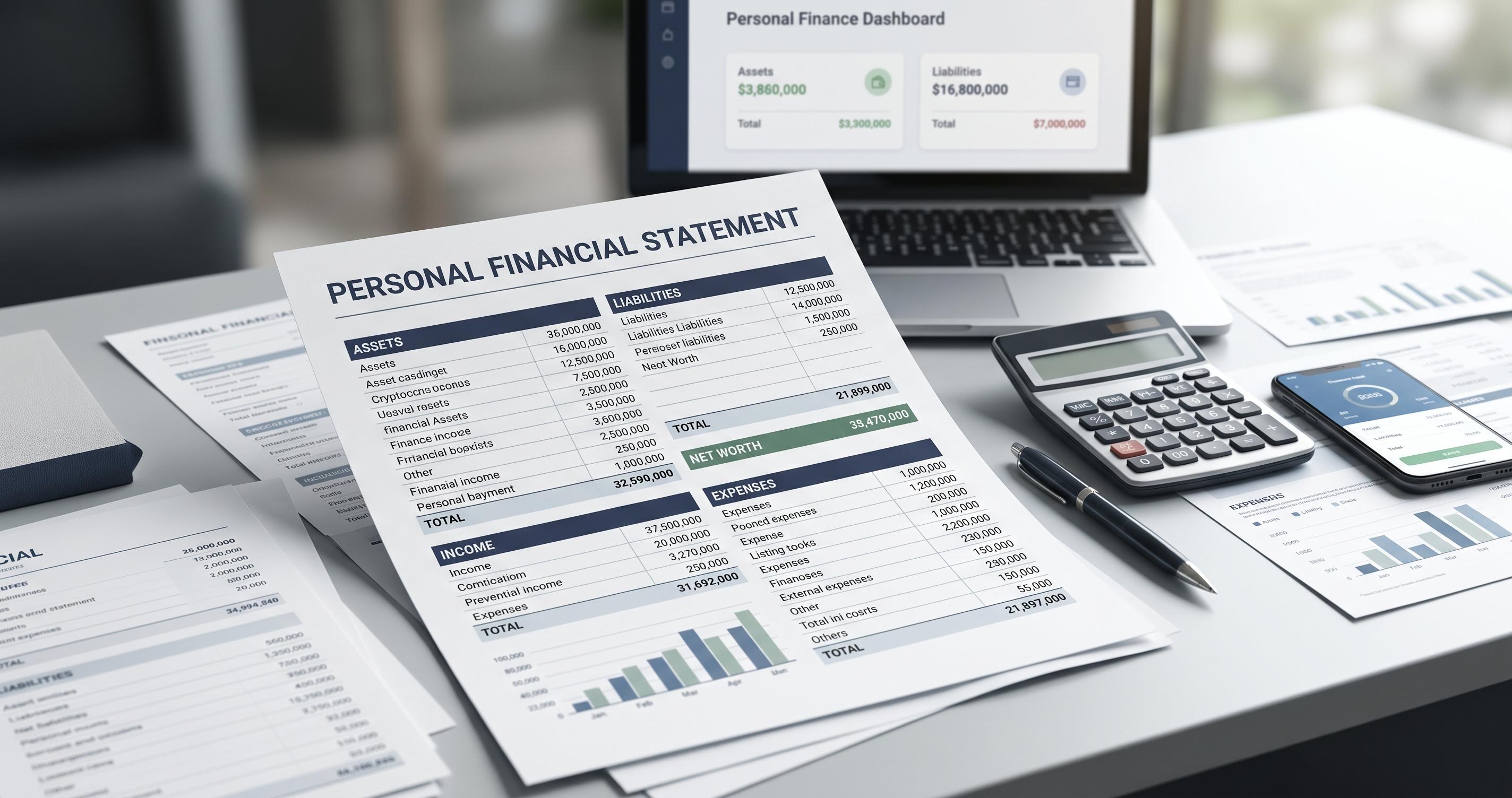
Managing your finances effectively starts with knowing exactly where you stand. A personal financial statement provides a clear overview of your assets, liabilities, income, and financial obligations, helping you understand your overall financial position. Whether you are planning for a major purchase, applying for financing, evaluating your net worth, or simply trying to improve your money management, having an accurate financial statement can make financial decisions easier and more informed.
What Is a Personal Financial Statement?
A personal financial statement is a document that summarizes an individual's financial position at a specific point in time. It generally provides information about what you own, what you owe, and, depending on the format, your income and expenses.
The document is commonly used by individuals, entrepreneurs, investors, lenders, and financial professionals to evaluate financial strength and stability.
A typical statement may include:
- Cash and bank account balances
- Investments and retirement accounts
- Real estate and other property
- Vehicles and valuable personal assets
- Credit card balances
- Personal and business loans
- Mortgages
- Other financial obligations
- Income sources
- Regular expenses
By organizing this information in one place, your financial situation can be reviewed more easily.
Why Is a Personal Financial Statement Important?
Financial decisions are often made based on incomplete information. Someone may know their monthly salary or bank balance but still have little understanding of their total financial position.
A properly prepared statement provides a broader picture.
It can help you identify whether your assets are growing faster than your debts and whether your current financial commitments are manageable. Financial information is also easier to compare when it has been organized into a consistent format.
For example, if your total assets increase while your liabilities decrease, your net worth is improving. On the other hand, increasing debt combined with stagnant assets may indicate that your financial strategy needs to be reviewed.
What Information Should Be Included?
The exact information included will depend on the purpose of the statement. However, several categories are commonly included.
Assets
Assets represent things that have financial value and are owned by you.
Common examples include:
- Money in checking and savings accounts
- Stocks, bonds, and mutual funds
- Retirement savings
- Residential or commercial property
- Vehicles
- Business ownership interests
- Valuable personal property
Assets should generally be recorded using reasonable and supportable values rather than inflated estimates.
Liabilities
Liabilities represent debts and financial obligations that you are responsible for paying.
These may include:
- Mortgage balances
- Auto loans
- Student loans
- Personal loans
- Credit card debt
- Business-related obligations
- Other outstanding balances
Accurate liability information is important because debt can significantly affect your overall financial position.
Income
Income represents money received from different sources. Depending on the purpose of the document, this may include employment income, business income, investment income, rental income, or other recurring sources.
Income information can help demonstrate your ability to meet financial obligations and support future financial goals.
Expenses
Expenses show where your money is being spent. Common expenses include housing, utilities, transportation, insurance, education, groceries, subscriptions, and debt payments.
Tracking expenses can reveal spending patterns that may otherwise be overlooked.
How Is Net Worth Calculated?
One of the most useful figures that can be determined from a financial statement is net worth.
The basic calculation is:
Net Worth = Total Assets − Total Liabilities
For example, suppose an individual has:
- $250,000 in total assets
- $100,000 in total liabilities
Their estimated net worth would be $150,000.
Net worth should not be viewed as the only measure of financial success. However, monitoring it over time can provide useful insight into whether wealth is being accumulated or reduced.
How Can It Help With Financial Planning?
Financial planning becomes more practical when decisions are based on accurate information.
A personal financial statement can be used as a starting point for creating short-term and long-term financial goals. Once your assets, debts, income, and expenses have been identified, it becomes easier to determine where improvements may be needed.
For example, the information may help you decide whether you should:
- Reduce high-interest debt
- Increase emergency savings
- Adjust monthly spending
- Increase retirement contributions
- Rebalance investments
- Prepare for a major purchase
- Review insurance coverage
- Develop a long-term wealth strategy
Financial goals should be reviewed periodically because income, expenses, assets, and liabilities can change.
When Might You Need One?
A financial statement can be useful in many situations. It is not limited to tax preparation or personal budgeting.
It may be requested or recommended when someone is:
Applying for a Loan
Lenders may want to understand an applicant's financial strength before approving certain types of financing. Information about assets, liabilities, income, and debt obligations can help demonstrate repayment capacity.
Starting or Expanding a Business
Business owners may need to provide personal financial information when seeking business financing, investment, or certain forms of credit.
Evaluating Investment Decisions
Investors can use financial information to understand how much capital they have available and how much financial risk they can reasonably take.
Planning Major Purchases
Buying a home, vehicle, or other significant asset can affect both cash flow and net worth. Reviewing your financial position beforehand can help you determine whether the purchase is financially appropriate.
Reviewing Long-Term Wealth
A financial statement can also be used as a personal financial health check. When updated regularly, previous statements can be compared to identify trends.
How Often Should You Update It?
There is no universal schedule that works for everyone. The appropriate frequency depends on your financial situation and the purpose of the document.
Some people may review their information monthly, while others may update it quarterly or annually.
An update may also be appropriate after a major financial event, such as:
- Buying or selling property
- Taking on significant debt
- Receiving an inheritance
- Changing employment
- Starting a business
- Making a major investment
- Paying off a substantial loan
- Experiencing a significant change in income
Keeping financial information current improves the usefulness of the statement.
Common Mistakes to Avoid
Even a simple financial document can become unreliable if information is incomplete or outdated.
Some common mistakes include:
Overvaluing Assets
Assets should be valued realistically. Using an unrealistic estimate can make your financial position appear stronger than it actually is.
Forgetting Small Debts
Credit cards, personal loans, subscriptions with outstanding balances, and other obligations should not be ignored simply because they are relatively small.
Using Outdated Information
A statement that contains old account balances or debt figures may no longer accurately represent your financial position.
Mixing Personal and Business Finances
Business owners should take particular care when documenting personal and business assets or liabilities. The two should be distinguished appropriately based on the purpose of the statement.
Failing to Keep Supporting Records
Bank statements, loan documents, investment statements, property records, and other relevant documents should be retained where appropriate. They can be used to verify figures when needed.
How to Prepare a Reliable Financial Statement
Preparing your financial information does not have to be complicated. Start by gathering your latest financial records.
A basic process can include:
- List all major assets.
- Determine reasonable current values.
- List outstanding debts and liabilities.
- Record relevant income sources.
- Calculate recurring expenses.
- Calculate total assets.
- Calculate total liabilities.
- Subtract liabilities from assets to determine net worth.
- Review the information for missing or inaccurate figures.
- Update the document when significant financial changes occur.
For more complicated financial situations, professional financial or accounting advice may be appropriate.
Personal Financial Statement vs. Budget
A financial statement and a budget serve different purposes.
A budget primarily focuses on cash flow, showing expected income and spending over a particular period. It helps you plan how money should be allocated.
A financial statement focuses more broadly on your overall financial position, including assets and liabilities.
Both can be valuable.
A budget can help answer:
“Where is my money going?”
A financial statement can help answer:
“What is my overall financial position?”
Using both documents together can provide a more complete view of personal finances.
How Technology Can Make Financial Tracking Easier
Financial information can be tracked using spreadsheets, accounting software, budgeting applications, or other digital tools.
Technology can make it easier to organize account balances and monitor changes over time. However, users should still review information carefully because automatically imported data may contain errors, duplicated transactions, or outdated values.
Security should also be considered when financial information is stored digitally. Strong passwords, multi-factor authentication, secure devices, and reputable financial platforms can help protect sensitive information.
The Role of Professional Financial Guidance
Some financial situations are relatively straightforward, while others involve investments, businesses, multiple properties, complex liabilities, or estate planning.
In more complicated cases, information may need to be reviewed by a qualified financial professional, accountant, or other appropriate adviser.
Professional guidance can be particularly useful when important financial decisions are being made. Advice should be based on the individual's circumstances, goals, risk tolerance, and applicable financial or tax rules.
No single financial strategy is appropriate for everyone.
Final Thought
A personal financial statement can be a valuable tool for understanding your financial position and making better-informed decisions. By documenting assets, liabilities, income, and expenses, you can gain a clearer picture of your net worth and identify areas that may require attention. When the information is updated regularly and supported by accurate records, it can become an important part of personal financial planning. Whether you are managing everyday finances, preparing for a major purchase, seeking financing, or working toward long-term wealth, knowing where you stand financially is an important first step.
 Russian
 English
 Arabic
 French
 Spanish
 Portuguese
 Deutsch
 Turkish
 Dutch
Dutch
 Italiano
 Romaian
 Portuguese (Brazil)
 Greek
Greek