


7 Smart Foods for Better Metabolic Health
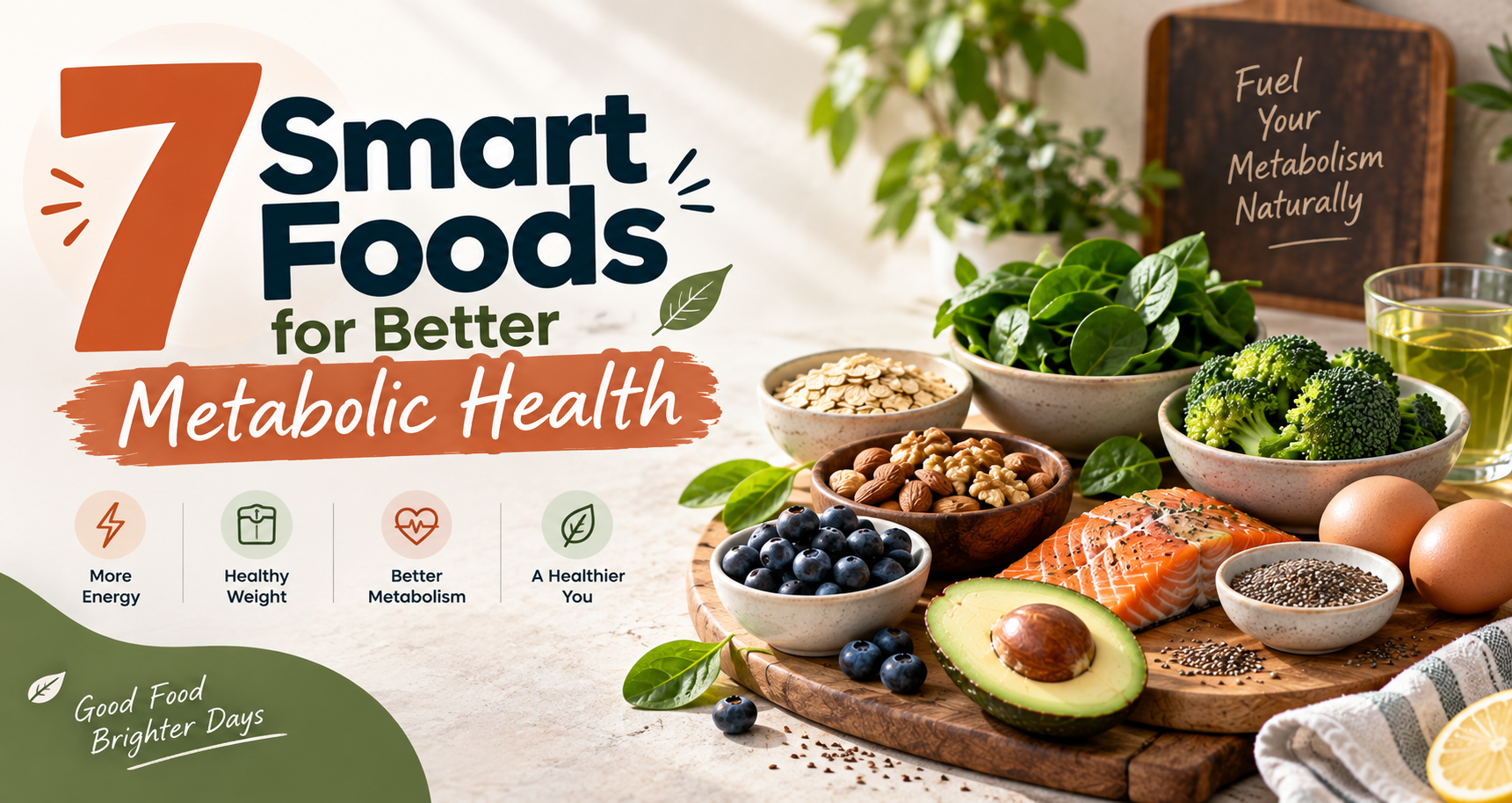
Your metabolism is working all day, even when you are sitting at your desk or sleeping at night. It helps your body turn food into energy and plays a role in blood sugar, cholesterol, body weight and overall health.
The good news is that you do not need expensive foods or complicated diet rules to support metabolic health. Many simple foods already available in an Indian kitchen can be useful.
From dal and vegetables to nuts and whole grains, the right choices can help you build balanced meals that provide fibre, protein, healthy fats and important nutrients.
So, which foods are worth adding to your regular meals?
Quick Answer
Some of the useful foods for better metabolic health include vegetables, whole grains, pulses, nuts and seeds, berries or whole fruits, curd, and fatty fish or plant-based alternatives. These foods provide nutrients such as fibre, protein and healthy fats that can support blood sugar control, heart health and healthy weight management.
The goal is not to eat seven “perfect” foods every day. It is to build a varied eating pattern that you can follow consistently.
What Is Metabolic Health?
Metabolic health refers to how well your body manages important processes such as blood sugar, blood pressure, cholesterol and body weight.
Poor metabolic health can increase the risk of conditions such as type 2 diabetes and cardiovascular disease.
You may also have metabolic problems without obvious symptoms. This is one reason regular medical check-ups and healthy lifestyle habits matter.
Food is only one part of the picture. Sleep, physical activity, stress, genetics, medications and existing health conditions can also affect metabolic health.
1. Leafy Green Vegetables
Spinach, methi, amaranth leaves and other leafy greens are simple foods with plenty to offer.
They provide fibre, vitamins, minerals and plant compounds while generally being low in calories.
For someone trying to improve their eating habits, leafy vegetables can make meals more filling without relying heavily on refined carbohydrates.
Easy ways to eat more greens
- Add spinach to dal.
- Make methi sabzi.
- Add chopped greens to omelettes.
- Mix vegetables into poha or upma.
- Add greens to soups.
A common mistake is thinking vegetables have to be eaten as salads. They don't.
A simple home-cooked sabzi works perfectly well.
2. Dal and Other Pulses
Dal is one of the easiest foods to include in an Indian diet.
Moong dal, masoor dal, chana dal, rajma and chickpeas provide protein and fibre. These nutrients can help make meals more satisfying and can support healthy blood sugar management as part of a balanced diet.
Think about a basic lunch of rice and pickle. It may leave you hungry sooner than a meal containing rice, dal, vegetables and curd.
The difference is not about completely avoiding rice. It is about building a more balanced plate.
Try this simple combination
Carbohydrate + protein + vegetables + healthy fat
For example:
- Brown or regular rice
- Dal
- Mixed vegetable sabzi
- Curd
- A small portion of nuts or seeds
You don't need to make every meal complicated.
3. Nuts and Seeds
Almonds, walnuts, peanuts, flaxseeds, chia seeds and pumpkin seeds contain healthy fats, fibre and other nutrients.
They can be useful as part of a balanced eating pattern.
But portion size matters.
Nuts are nutritious, but they are also energy-dense. Eating half a packet while working at your desk can add up quickly.
A small handful is usually more practical than eating them straight from a large container.
Simple ideas
- Add chia seeds to curd.
- Sprinkle flaxseed powder over breakfast.
- Keep a small portion of nuts for a snack.
- Add pumpkin seeds to salads or homemade meals.
4. Whole Grains
You don't necessarily need to remove carbohydrates to support metabolic health.
The better question is: Which carbohydrates are you eating, and how much?
Whole grains can provide more fibre than refined grains. Options include oats, whole wheat, barley and some traditional millets.
Millets such as ragi, jowar and bajra can also be included in a varied diet.
Try replacing some refined grain choices with whole grains rather than making an overnight switch.
For example, you could have:
- Vegetable oats for breakfast
- Multigrain roti with lunch
- Jowar roti with vegetables
- Barley added to soups
Your meals should still match your individual nutritional needs.
5. Whole Fruits
Fruit often gets unnecessary criticism when people talk about blood sugar and weight.
Whole fruits contain fibre, vitamins, minerals and naturally occurring sugars. They are different from sugary drinks or fruit-flavoured beverages.
An apple, guava, orange or bowl of berries can be a useful addition to a balanced eating pattern.
Whole fruit or juice?
For everyday eating, whole fruit is generally the more useful choice because you also get the fruit's fibre.
For example, eating an orange takes some time. Drinking orange juice can be much quicker and may make it easier to consume more fruit sugar without feeling as full.
That small difference can matter when you're trying to improve your overall diet.
6. Curd and Other Fermented Foods
Curd is a familiar food in many Indian households.
It provides protein and calcium, and some fermented dairy products contain live microorganisms. Research on fermented foods and the gut microbiome continues to grow, though not every fermented food has the same effects.
You can include plain curd with lunch, use it as a base for raita or have it with a suitable meal.
If dairy doesn't suit you, don't force yourself to eat it. Your diet can still contain plenty of other nutritious foods.
7. Fatty Fish and Plant-Based Alternatives
Fatty fish such as salmon, sardines and mackerel provide omega-3 fatty acids, which are linked with heart health.
For people who don't eat fish, plant foods such as walnuts, chia seeds and flaxseeds provide alpha-linolenic acid, a plant-based omega-3 fatty acid.
This doesn't mean you need to eat fish every day.
The larger point is to include a variety of healthy fat sources rather than relying mainly on foods high in saturated or trans fats.
How Should You Build a Metabolic-Friendly Plate?
Knowing which foods to eat is one thing. Putting them together is another.
A simple approach is to divide your plate roughly like this:
|
Food group |
Examples |
|
Vegetables |
Spinach, beans, carrots, cauliflower |
|
Protein |
Dal, beans, eggs, curd, fish, paneer |
|
Whole grains/carbohydrates |
Roti, rice, oats, millets |
|
Healthy fats |
Nuts, seeds, olive oil, groundnut oil |
|
Fruit |
Guava, apple, orange, berries |
The exact portions depend on your age, activity level, health goals and medical needs.
Common Mistakes to Avoid
Cutting out all carbohydrates
Carbohydrates are not automatically unhealthy. Portion size, food quality and the overall meal matter.
Drinking “detox” drinks
No special drink can replace a balanced diet, regular activity and medical care when needed.
Eating too many healthy snacks
Nuts, seeds and nut butters can be nutritious, but large portions can add substantial calories.
Following someone else's diet
A diet that works well for one person may not suit another.
Your food choices should consider your lifestyle, preferences and health needs.
When Should You Speak to a Nutritionist?
If you are dealing with weight concerns, blood sugar issues, high cholesterol or difficulty planning balanced meals, professional guidance can make the process easier.
A Nutritionist in Bangalore can help you understand your current eating pattern and identify realistic changes based on your needs.
You don't necessarily need a completely different diet.
Sometimes, a few practical adjustments to meals you already enjoy can make them more balanced.
For example, instead of removing your favourite breakfast, you may simply need to add protein, vegetables or fibre to it.
How Can You Start Today?
Don't try to change everything at once.
Start with these five steps:
- Add one extra serving of vegetables to your day.
- Include a protein source in your main meals.
- Choose whole fruit instead of juice more often.
- Add small portions of nuts or seeds.
- Reduce frequent intake of highly processed and sugary foods.
Then give yourself time to build the habit.
Healthy eating is not about having a perfect menu every day. It is about what you do most of the time.
Frequently Asked Questions
What are the best foods for better metabolic health?
There is no single best food for metabolic health. A varied diet containing vegetables, pulses, whole grains, fruits, nuts, seeds and suitable protein sources can provide fibre, protein and other nutrients that support overall metabolic health. Your food choices should also consider your individual health conditions and nutritional needs.
Can these foods help with blood sugar control?
Foods rich in fibre and protein can be part of a meal pattern that supports healthy blood sugar management. The effect depends on the whole meal, portion size and individual health status. People with diabetes or prediabetes should follow advice from their healthcare team rather than changing medication or treatment based only on diet.
Are millets good for metabolic health?
Millets can be part of a balanced diet and provide carbohydrates, fibre and various nutrients. They are not a special treatment for metabolic problems. Portion size and the foods eaten alongside them also matter. A millet roti with vegetables and protein, for example, can form part of a balanced meal.
Should I avoid rice for better metabolic health?
Not necessarily. Rice can fit into a balanced diet. What matters is the portion, the type of rice, and what you eat with it. Combining rice with dal, vegetables, and a protein source can create a more balanced meal than eating a large portion of rice on its own.
Can a Nutritionist in Bangalore help with metabolic health?
A qualified nutrition professional can help you create an eating pattern based on your health goals, food preferences and lifestyle. If you have diabetes, high cholesterol, hypertension or another medical condition, nutrition advice should work alongside guidance from your doctor.
Final Thoughts
Good metabolic health does not require a complicated diet.
Start with foods you already know. Add more vegetables. Include pulses and other protein sources. Choose whole fruits, whole grains and sensible portions of nuts and seeds.
Most importantly, look at your diet as a whole.
One food will not fix your health, just as one occasional treat will not ruin it.
If you are unsure where to start, a personalised approach with a qualified Nutritionist in Bangalore can help you make changes that fit your routine rather than forcing you into a diet you cannot maintain.
 French
 English
 Arabic
 Spanish
 Portuguese
 Deutsch
 Turkish
 Dutch
Dutch
 Italiano
 Russian
 Romaian
 Portuguese (Brazil)
 Greek
Greek