


For Investors Expanding Pharmaceutical Production in Africa: What Gets Overlooked When the Real Challenge Is Making the Plant Work?
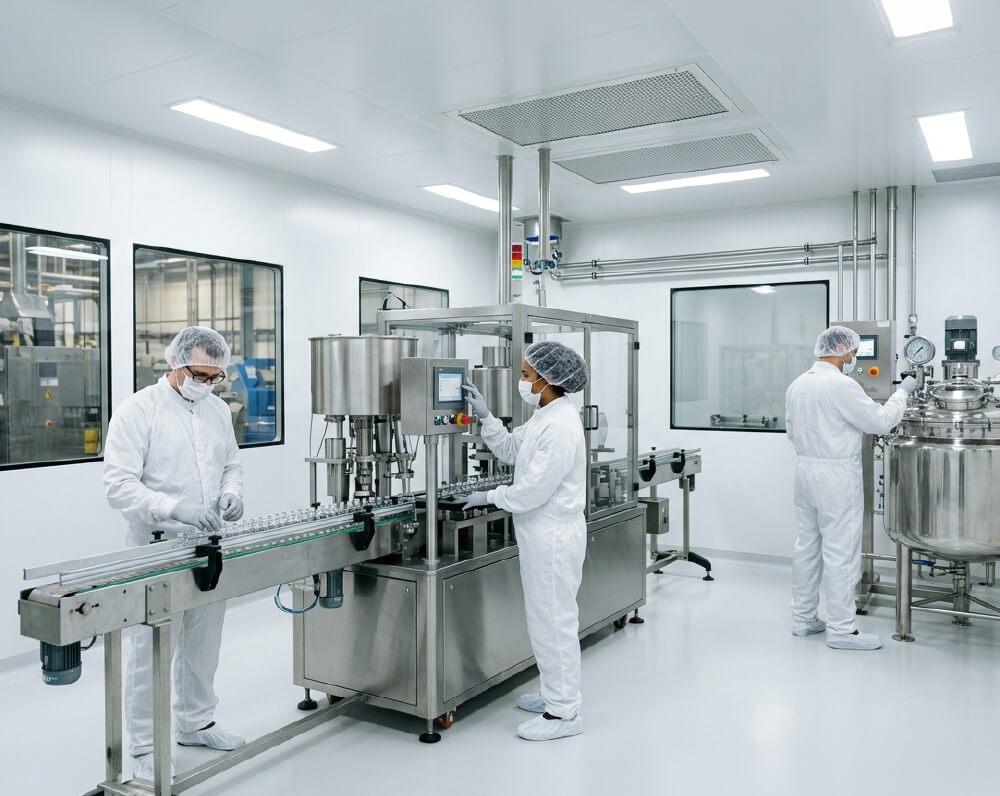
A pharmaceutical investor completes a manufacturing project in Africa after years of planning. The land has been selected, construction is finished, production equipment has been installed, and the facility appears ready to start producing medicines.
From the outside, everything looks successful.
But once operations begin, the real challenges appear.
The production line may not reach the expected output immediately. Employees may need additional training. Regulatory approvals may take longer than expected. Equipment may require further adjustments. Raw material supply may not always move according to the original business plan.
This situation highlights an important reality in pharmaceutical manufacturing.
Building a pharmaceutical plant and making that plant work successfully are two different achievements.
Africa has a growing need for stronger pharmaceutical manufacturing capacity. Many countries still depend heavily on imported medicines, creating a major opportunity for investors who can develop reliable local production systems.
Research from UN Trade and Development (UNCTAD) shows that more than 70% of pharmaceuticals consumed in Africa are imported. This dependence creates both a challenge and an opportunity. Local manufacturing can improve medicine availability, but only when facilities are designed with the right operational systems.
The success of a pharmaceutical investment is not decided only by the size of the factory or the quality of the equipment.
It depends on what happens after construction.
A successful pharmaceutical plant requires skilled employees, strong quality systems, reliable supply chains, regulatory preparation, and experienced operational management.
Many investors understand how to build a facility.
The investors who succeed understand how to build a manufacturing operation.
Why Building a Pharmaceutical Plant Is Only the First Step
In many industries, completing a factory and installing machinery means production can begin quickly.
Pharmaceutical manufacturing follows a different path.
A medicine production facility must operate under strict quality requirements. Every process needs to be controlled, documented, tested, and repeated consistently. A small mistake in production, testing, or documentation can affect the entire operation.
This is why investors entering local pharmaceutical manufacturing africa projects must look beyond the physical structure of the plant.
The building is only the foundation.
The real manufacturing system depends on several connected areas:
-
Production capability: The facility must have processes that allow medicines to be produced consistently with the required quality standards.
-
Skilled workforce: Employees must understand pharmaceutical production, equipment operation, and compliance requirements.
-
Quality management: The company needs systems that prevent problems instead of discovering failures after production.
-
Reliable supply chains: Raw materials, packaging materials, and technical support must be available when required.
-
Regulatory readiness: The facility must meet pharmaceutical regulations before products can enter the market.
-
Operational leadership: Experienced managers must coordinate production, quality, maintenance, and business decisions.
If one part of this system is weak, the entire plant can face difficulties.
For example, an investor may purchase advanced manufacturing equipment from an international supplier. However, if the local team does not have enough technical knowledge to operate and maintain that equipment, production delays can quickly increase costs.
The equipment itself is not the complete solution.
The real value comes from combining technology with trained people and strong operating systems.
Africa Has a Major Opportunity, But Every Market Is Different
Africa’s pharmaceutical market is expanding because of population growth, increasing healthcare needs, and rising demand for reliable access to medicines.
This creates a strong opportunity for investors.
However, Africa is not one single pharmaceutical market.
Each country has different healthcare systems, regulations, infrastructure conditions, and manufacturing capabilities.
South Africa has one of the continent’s most developed pharmaceutical industries. Egypt has a strong manufacturing base with decades of pharmaceutical experience. Nigeria has one of Africa’s largest healthcare markets. Kenya has developed into an important pharmaceutical hub in East Africa, while Ethiopia is attracting attention for healthcare manufacturing investment.
These differences matter.
A strategy that works in one country may not work in another.
Investors must evaluate:
-
Local medicine demand
-
Regulatory requirements
-
Workforce availability
-
Infrastructure reliability
-
Healthcare purchasing systems
-
Regional export opportunities
According to UNCTAD, Africa has around 690 pharmaceutical manufacturing facilities, but production capability remains concentrated. Around eight countries account for approximately 85% of these facilities, showing that pharmaceutical expertise and infrastructure are not evenly distributed across the continent.
This creates both opportunities and challenges.
Markets with less manufacturing capacity may offer strong growth potential, but they may also require greater investment in workforce development, infrastructure improvement, and operational planning.
The Workforce Challenge Many Investors Underestimate
One of the biggest challenges in pharmaceutical manufacturing is often overlooked during the construction phase.
It is the workforce.
A pharmaceutical building can be completed within a few years, but developing experienced pharmaceutical professionals requires much more time.
A modern pharmaceutical plant requires people who understand:
-
Good Manufacturing Practices (GMP)
-
Production planning
-
Laboratory testing
-
Quality assurance
-
Equipment operation
-
Validation procedures
-
Regulatory documentation
These skills are different from general manufacturing experience.
A person who understands industrial machinery may not automatically understand pharmaceutical production requirements.
For example, a production operator must know how temperature, humidity, contamination control, and documentation affect medicine quality.
A maintenance engineer must understand that keeping equipment running is not enough. The equipment must continue operating within pharmaceutical standards.
The World Health Organization (WHO) has highlighted that strengthening pharmaceutical manufacturing requires investment in technical skills and regulatory capacity along with physical infrastructure.
This creates an important lesson for investors.
Workforce development should begin before production starts.
Waiting until the factory is complete to hire and train employees can create unnecessary delays.
The strongest pharmaceutical projects develop their teams at the same time they develop their facilities.
Equipment Installation Does Not Mean Commercial Production Can Begin
Another common mistake is assuming that production starts immediately after equipment installation.
In pharmaceutical manufacturing, installation is only one stage of the process.
Before medicines can be produced commercially, equipment and processes must be tested and validated.
This usually includes:
-
Installation Qualification (IQ): Confirming that equipment has been installed correctly.
-
Operational Qualification (OQ): Confirming that equipment operates according to required conditions.
-
Performance Qualification (PQ): Confirming that equipment performs consistently during actual production.
These steps are essential because pharmaceutical companies cannot depend on assumptions.
A machine may start successfully, but that does not mean it is ready for regulated medicine production.
This stage is often underestimated during investment planning.
Construction timelines are usually easy to measure. Equipment delivery dates are usually clear.
However, validation, employee training, regulatory preparation, and process improvement can take additional time.
This period between completing the facility and achieving commercial production can create financial pressure because costs continue before revenue begins.
A realistic pharmaceutical investment plan must include this transition period.
Quality Systems Are What Make a Pharmaceutical Plant Reliable
A pharmaceutical plant does not become successful simply because it can produce medicines.
The real measure of success is whether the facility can produce safe and consistent medicines every day while maintaining quality standards.
This requires strong quality systems built into every stage of production.
Quality starts before manufacturing begins. Raw materials must be tested before they enter production. Equipment must operate under controlled conditions. Employees must follow approved procedures. Every manufacturing activity must be properly documented.
A strong quality system helps identify risks early and prevents problems before they affect production.
This is especially important in Africa, where strengthening local medicine production is not only about increasing quantity. It is also about ensuring that locally manufactured medicines meet the same safety and quality expectations as products produced in more established pharmaceutical markets.
Investors sometimes focus heavily on purchasing advanced equipment because it is a visible part of the investment. However, quality systems are less visible but equally important.
A modern production line cannot compensate for weak procedures.
The long-term success of a pharmaceutical facility depends on creating a culture where every employee understands the importance of quality.
The production operator following procedures correctly, the quality team reviewing documents carefully, and the maintenance engineer keeping equipment reliable all contribute to the final product.
Quality is not a single department.
It is the foundation of the entire manufacturing operation.
High Production Capacity Does Not Always Mean a Successful Business
A common mistake in pharmaceutical investment planning is focusing only on maximum production capacity.
A facility may be designed to manufacture millions of medicine units every year, but the bigger question is whether the market can support that level of production.
According to UN Trade and Development (UNCTAD), many pharmaceutical facilities in Africa operate below their possible capacity, with utilization often around 30% to 60%. This means some facilities have the technical ability to produce more medicines but face challenges related to demand, infrastructure, supply chains, or market access.
This creates an important lesson for investors.
A large factory does not automatically create a profitable pharmaceutical business.
Before investing, companies need to understand:
-
Which medicines are needed most in the target market.
-
Whether healthcare providers can purchase those products.
-
How imported medicines affect competition.
-
Whether regional export opportunities exist.
-
Whether production volumes can support competitive pricing.
Product selection is one of the most important decisions in pharmaceutical manufacturing.
A plant designed around real healthcare needs has a stronger chance of achieving stable production.
A plant designed only around manufacturing capability may struggle to find enough demand.
The goal should not simply be building a large facility.
The goal should be building a facility that can operate efficiently and serve a sustainable market.
Supply Chain Planning Can Decide Whether the Plant Keeps Running
A pharmaceutical factory does not operate independently.
Behind every finished medicine is a large supply chain that includes raw materials, packaging components, testing materials, logistics services, and maintenance support.
Many investors spend significant time planning the factory but underestimate the importance of keeping that factory supplied.
This can become a serious operational challenge.
Pharmaceutical manufacturing depends on consistent access to:
-
Active pharmaceutical ingredients (APIs)
-
Excipients used in formulations
-
Packaging materials
-
Laboratory testing supplies
-
Equipment spare parts
Many African pharmaceutical manufacturers still depend on imported APIs and other critical materials. This means companies must carefully manage international suppliers, shipping timelines, customs procedures, and inventory levels.
The COVID-19 pandemic demonstrated how quickly global supply chains can be disrupted.
A delay in one country can affect production thousands of kilometers away.
For investors, supply chain planning should begin before the first batch is produced.
Important questions include:
-
Are there multiple suppliers available for critical materials?
-
How much inventory should the company maintain?
-
What happens if international shipments are delayed?
-
Are local suppliers available for certain requirements?
A pharmaceutical plant with excellent equipment cannot continue production without reliable access to essential materials.
Supply chain planning is not only a purchasing responsibility.
It is a core part of manufacturing strategy.
Working Capital Is a Hidden Challenge After Construction
Many investors carefully calculate construction costs, equipment expenses, and facility development budgets.
However, one of the most underestimated areas is working capital.
A pharmaceutical plant requires continuous financial support even after construction is complete.
Before the business reaches stable revenue, the company must continue paying for:
-
Employee salaries
-
Raw materials
-
Laboratory testing
-
Equipment maintenance
-
Regulatory activities
-
Training programs
-
Storage and logistics
The period between completing the facility and achieving commercial stability can be longer than expected.
A plant may be physically ready but still require months of validation, approvals, production testing, and market preparation before generating consistent income.
This creates a financial challenge.
Investors who plan only for construction may find themselves under pressure after the facility becomes operational.
A realistic pharmaceutical investment plan must consider the complete journey:
From construction.
To validation.
To regulatory approval.
To commercial production.
To sustainable growth.
The factory itself is only one part of the investment.
The operational period after completion requires equal attention.
Regulatory Planning Should Start Before Production Begins
Pharmaceutical manufacturing cannot succeed without regulatory approval.
Every medicine must meet requirements related to safety, quality, and effectiveness before reaching patients.
However, regulatory planning is sometimes treated as something that happens after the factory is built.
This approach can create delays.
A facility may be technically complete, but medicines cannot enter the market until the required approvals are achieved.
Africa’s regulatory environment is developing, but requirements can differ between countries.
For example, investors entering different markets must understand the role of national regulatory bodies, product registration processes, inspection requirements, and documentation expectations.
The development of the African Medicines Agency (AMA) is an important step toward improving regulatory cooperation across the continent.
However, investors still need to understand individual country requirements because regulatory readiness directly affects production timelines.
A strong regulatory strategy helps companies avoid unexpected delays and creates a smoother path from manufacturing to market access.
Technology Transfer Builds Long-Term Independence
Pharmaceutical manufacturing requires more than importing equipment.
It requires transferring knowledge.
Many investors purchase advanced production systems from experienced international suppliers. This can provide access to modern technology, but the long-term success of the facility depends on whether local teams can manage that technology effectively.
Technology transfer helps employees understand:
-
How production processes operate
-
How equipment should be maintained
-
How quality systems are applied
-
How problems are identified and solved
-
How manufacturing efficiency can improve over time
Without proper knowledge transfer, a facility may become dependent on external experts for daily operations.
That dependency can increase costs and slow down decision-making.
The strongest pharmaceutical investments create local technical capability.
They develop teams that can operate the plant confidently, improve processes, and solve challenges independently.
A successful manufacturing project should not only import technology.
It should develop expertise.
Maintenance Planning Protects Long-Term Production
Equipment reliability is another area that investors often underestimate.
A pharmaceutical production line depends on multiple systems working together. If one critical machine fails, the impact can extend beyond a simple repair.
Unexpected downtime can result in:
-
Delayed production schedules
-
Increased operating costs
-
Missed supply commitments
-
Reduced customer confidence
Many companies plan carefully for equipment purchase but give less attention to long-term maintenance.
A strong maintenance strategy includes:
-
Trained technical teams
-
Preventive maintenance schedules
-
Spare parts planning
-
Equipment monitoring
-
Clear maintenance procedures
Preventive maintenance is usually more cost-effective than emergency repairs.
A pharmaceutical plant should not only focus on how much it can produce.
It should focus on how reliably it can produce.
African Manufacturing Examples Show What Investors Can Learn
Several African pharmaceutical companies demonstrate that successful manufacturing requires more than investment capital.
In South Africa, Aspen Pharmacare showed that African pharmaceutical companies can participate in complex manufacturing activities through its involvement in COVID-19 vaccine production.
The important lesson was not only that advanced pharmaceutical manufacturing is possible in Africa.
The deeper lesson was that success requires technical expertise, quality systems, skilled employees, and strong operational management.
Another example is Uganda’s Quality Chemical Industries Limited (QCIL), which developed manufacturing capabilities for important medicines, including treatments for HIV and malaria.
Its development shows how local pharmaceutical production can grow when investment is supported by technical knowledge, partnerships, and quality-focused operations.
These examples highlight a key point for investors.
Pharmaceutical manufacturing success is built over time.
It comes from combining infrastructure with people, systems, and continuous improvement.
Building Pharmaceutical Plants That Create Long-Term Value in Africa
Africa’s pharmaceutical manufacturing opportunity is significant.
The demand for medicines is growing. Healthcare systems need more reliable supply chains. Governments and private investors are increasingly focused on improving local production capacity.
However, the investors who succeed will be those who understand that pharmaceutical manufacturing is not only a construction project.
It is a long-term operational commitment.
A successful plant is created when infrastructure, workforce capability, quality systems, regulatory planning, supply chains, and business strategy work together.
The strongest facilities are not necessarily the largest ones.
They are the ones that can consistently produce safe medicines, manage costs, adapt to market needs, and continue improving over time.
For companies exploring local pharmaceutical manufacturing africa opportunities, the real investment is not only creating a pharmaceutical facility.
The real investment is creating the capability that allows that facility to perform successfully for years.
 Romaian
 English
 Arabic
 French
 Spanish
 Portuguese
 Deutsch
 Turkish
 Dutch
Dutch
 Italiano
 Russian
 Portuguese (Brazil)
 Greek
Greek