


Construction Site Safety Signage: Improving Awareness and Site Communication
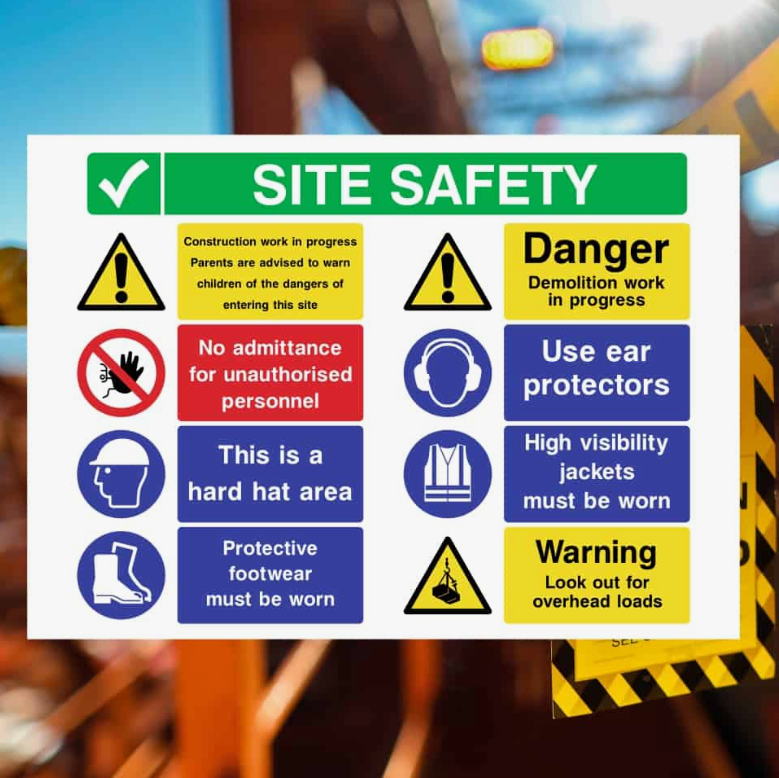
Construction sites are dynamic environments where workers, contractors, visitors, and equipment frequently move through areas with changing conditions. Clear communication is therefore essential for maintaining awareness and reducing avoidable confusion. Construction site safety signage provides an important visual communication system by identifying hazards, directing movement, marking restricted areas, and reminding personnel about required precautions. When signs are properly designed, positioned, and maintained, they can help people recognize potential risks before entering or interacting with a particular area.
Effective safety signage is not simply a collection of warning messages placed around a project. Signs need to be visible, understandable, appropriately positioned, and relevant to the hazards present at a specific location. Construction managers and site supervisors must consider changing work conditions, equipment movement, access points, temporary hazards, and the needs of different people entering the site. Well-planned construction site safety signage supports a broader safety program by providing information at the point where people need it most.
The Importance of Safety Signage on Construction Sites
Construction projects can involve excavation, heavy machinery, elevated work, electrical systems, temporary structures, vehicle traffic, and restricted work zones. Because hazards may change as a project progresses, workers cannot rely solely on familiarity with the site. Clearly displayed signs provide visual reminders and help communicate important information to people who may not be familiar with the area. Safety signs can identify hazardous zones, indicate mandatory protective equipment, provide emergency information, and direct personnel toward appropriate routes. They are particularly useful at entrances and transition points where workers and visitors need to understand site requirements before proceeding. Signage should complement training, supervision, and established safety procedures rather than replace them.
Different Types of Construction Safety Signs
A construction project may require several categories of signage depending on its activities and layout. Warning signs can alert people to hazards such as falling objects, moving equipment, electrical risks, or uneven surfaces. Mandatory signs can communicate requirements such as wearing hard hats, high-visibility clothing, eye protection, or hearing protection where applicable. Prohibition signs can help identify actions or areas that are not permitted, while directional signs can guide workers and visitors toward entrances, exits, emergency routes, assembly areas, and other important locations. Site identification signs can also communicate project information and access requirements. Selecting the appropriate sign for each situation is important because the message should match the actual condition and provide information that people can understand quickly.
Visibility and Placement Make a Difference
Even a well-designed safety sign has limited value if people cannot see it at the right time. Placement should take into account pedestrian routes, vehicle movement, entrances, work zones, viewing distance, lighting, and potential obstructions. Signs should generally be positioned where the intended audience naturally looks before encountering a hazard or decision point. For example, a warning placed after a hazardous area may be less useful than one positioned before entry. Temporary signs may also need to be moved as construction activities change. At larger sites, multiple signs may be necessary to ensure that important information remains visible from different approaches. Regular inspections can identify signs that have become blocked, damaged, faded, or difficult to read.
Designing Signs for Quick Understanding
Construction environments often require people to make decisions quickly, so safety messages should be easy to understand at a glance. Clear wording, strong contrast, appropriate symbols, and readable typography can make important information easier to process. A sign overloaded with unnecessary text may be ignored or misunderstood, particularly when workers are focused on active tasks. Symbols can support written instructions by providing visual recognition, although the meaning should remain clear to the intended audience. Color can also help distinguish different types of information when used consistently. The goal is not to make every sign visually complicated but to communicate the essential message as directly as possible.
Durable Materials for Challenging Environments
Construction sites can expose signage to dust, moisture, sunlight, wind, impacts, and frequent handling. Temporary signs may also be relocated as work progresses, while permanent or semi-permanent signs may remain outdoors for extended periods. Material selection should therefore reflect the expected environment and duration of use. A sign installed near heavy equipment may require a different construction and mounting method from one placed inside a protected site office. Signs should remain legible despite normal environmental exposure, and mounting systems should be appropriate for the location. Regular inspections are valuable because damaged or deteriorated signs can lose their ability to communicate essential information effectively.
Temporary Signage for Changing Site Conditions
One of the unique challenges of construction projects is that hazards and access routes can change frequently. Areas that are safe today may become restricted tomorrow because of excavation, demolition, deliveries, installation work, or changes in traffic flow. Temporary signage allows site managers to communicate these changes without waiting for permanent infrastructure to be installed. Portable warning signs, temporary directional markers, barrier signs, and access notices can help guide people around newly established hazards. However, temporary signs should be monitored carefully. Once a particular hazard has been removed, outdated signs should be taken down to prevent confusion. Maintaining current information is just as important as installing signs in the first place.
Integrating Signage With a Broader Safety Program
Safety signage works best when it forms part of a coordinated site safety strategy. Workers should receive appropriate training and understand the site's procedures, while supervisors should monitor whether those procedures are being followed. Signs can reinforce these expectations by providing visible reminders at relevant locations. Emergency information should also be presented clearly so that people know where to go and what procedures apply during an incident. Site managers should periodically review signage as construction phases change, asking whether existing signs remain accurate and whether new hazards require additional communication. This ongoing review helps keep the signage system aligned with actual site conditions rather than treating it as a one-time installation.
Conclusion
Effective construction site safety signage helps communicate hazards, requirements, restrictions, and directions in environments where conditions can change quickly. The strongest signage systems combine clear messaging, suitable symbols, strong visibility, appropriate placement, durable materials, and regular inspection. Construction companies should also remember that signage is one part of a wider safety program that includes training, supervision, protective equipment, planning, and established procedures. By reviewing signage throughout every stage of a project and ensuring that information remains accurate and visible, site managers can create a clearer working environment for employees, contractors, and visitors. Well-planned safety communication ultimately supports better awareness and helps people make informed decisions as they move through an active construction site.
 French
 English
 Arabic
 Spanish
 Portuguese
 Deutsch
 Turkish
 Dutch
Dutch
 Italiano
 Russian
 Romaian
 Portuguese (Brazil)
 Greek
Greek