


🏠 DIY Smart Home Upgrades: Easy Projects to Make Your Home Smarter
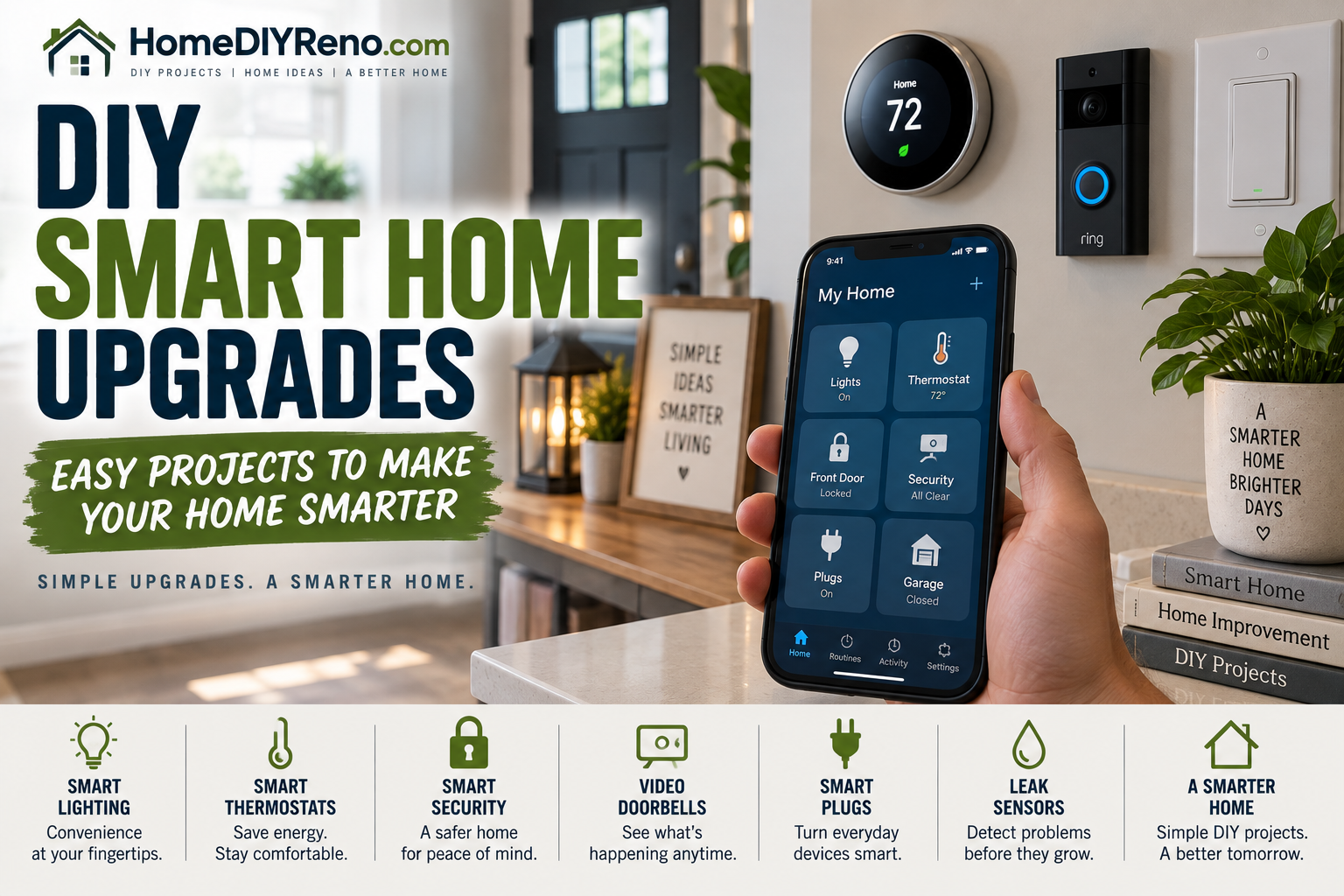
Smart home technology isn't just for newly built homes or expensive renovations. Today, many smart home upgrades are affordable, beginner-friendly, and can be installed in less than an hour.
From smart lighting and thermostats to leak sensors and security devices, these DIY smart home projects can make your home more convenient, energy-efficient, and easier to monitor.
💡 1. Upgrade to Smart Light Bulbs
Smart bulbs are one of the easiest ways to start building a smart home because most simply replace your existing light bulbs.
- Control lights from your phone
- Create automatic schedules
- Dim compatible bulbs without a traditional dimmer
- Turn lights off remotely when you forget
DIY Tip: Before buying, check whether the bulbs connect directly through Wi-Fi or require a separate hub.
🌡️ 2. Install a Smart Thermostat
A smart thermostat can automatically adjust your home's temperature based on schedules, occupancy, and your preferences.
- Create heating and cooling schedules
- Adjust temperatures remotely
- Track energy usage
- Reduce unnecessary heating and cooling
Important: Check your HVAC system and thermostat wiring for compatibility before purchasing or installing a smart thermostat. If you're unsure about the wiring, consider having an HVAC professional handle the installation.
🔌 3. Turn Regular Devices Into Smart Devices
Smart plugs are an inexpensive way to add automation without replacing appliances.
They're useful for devices such as:
- Lamps
- Fans
- Holiday decorations
- Coffee makers with compatible mechanical controls
You can create schedules or remotely switch compatible devices on and off.
🚪 4. Add a Video Doorbell
A video doorbell lets you see who's at your door even when you're away from home.
- Motion notifications
- Live video
- Two-way communication
- Package monitoring
Battery-powered models can be especially DIY-friendly because they don't necessarily require existing doorbell wiring.
🔐 5. Install a Smart Door Lock
Smart locks can eliminate the need to hide spare keys around your property.
- Unlock your door with a code or phone
- Create temporary access codes for guests
- Check compatible locks remotely
- Automatically lock the door on a schedule
Measure your existing deadbolt and check door compatibility before choosing a replacement.
💧 6. Add Smart Water Leak Sensors
Some of the most useful smart home devices aren't flashy at all. Small leak sensors can alert you when water is detected in places where it shouldn't be.
Consider installing sensors near:
- Water heaters
- Washing machines
- Dishwashers
- Under sinks
- Basement plumbing
Early detection can help you respond before a small leak turns into major water damage.
🚨 7. Upgrade Smoke and Carbon Monoxide Detection
Compatible smart alarms can provide phone notifications in addition to sounding an alarm inside the home.
Always choose properly listed alarms that meet applicable safety requirements, install them according to manufacturer instructions, and follow your local code requirements.
📷 8. Add Smart Security Cameras
Wireless cameras make it relatively easy to monitor areas around your property.
- Front entrance
- Driveway
- Garage
- Backyard
Before buying, compare whether video storage requires a subscription or can be stored locally.
🌳 9. Automate Your Outdoor Lighting
Smart outdoor lighting can improve convenience while making your home's exterior more welcoming at night.
- Schedule porch lights
- Automate landscape lighting
- Use motion-triggered fixtures
- Create sunset and sunrise routines
Only use devices and fixtures rated for outdoor use where required.
📱 10. Keep Your Smart Home Simple
One common mistake is buying devices from many different ecosystems without checking compatibility.
Before purchasing new devices, consider:
- Which smart home platform you already use
- Whether the device supports your preferred ecosystem
- Whether a separate hub is required
- Whether important features require a subscription
- How long the manufacturer provides software and security updates
A smaller collection of compatible devices is often easier to manage than dozens of unrelated smart products.
✔️ Final Thoughts
Making your home smarter doesn't require replacing everything at once. Start with one or two upgrades that solve an actual problem in your home, such as automating lights, controlling the temperature, detecting leaks, or improving security.
As you add more devices, focus on compatibility, reliability, privacy, and usefulness. The goal isn't simply to have more technology — it's to make everyday life at home easier.
💬 Share Your Thoughts
What's your favorite smart home upgrade — and which device would you never buy again? Share your experience in the comments below and help other DIY homeowners decide what's actually worth installing!
 French
 English
 Arabic
 Spanish
 Portuguese
 Deutsch
 Turkish
 Dutch
Dutch
 Italiano
 Russian
 Romaian
 Portuguese (Brazil)
 Greek
Greek