


Scaling an AI Agent Builder Project Across Teams
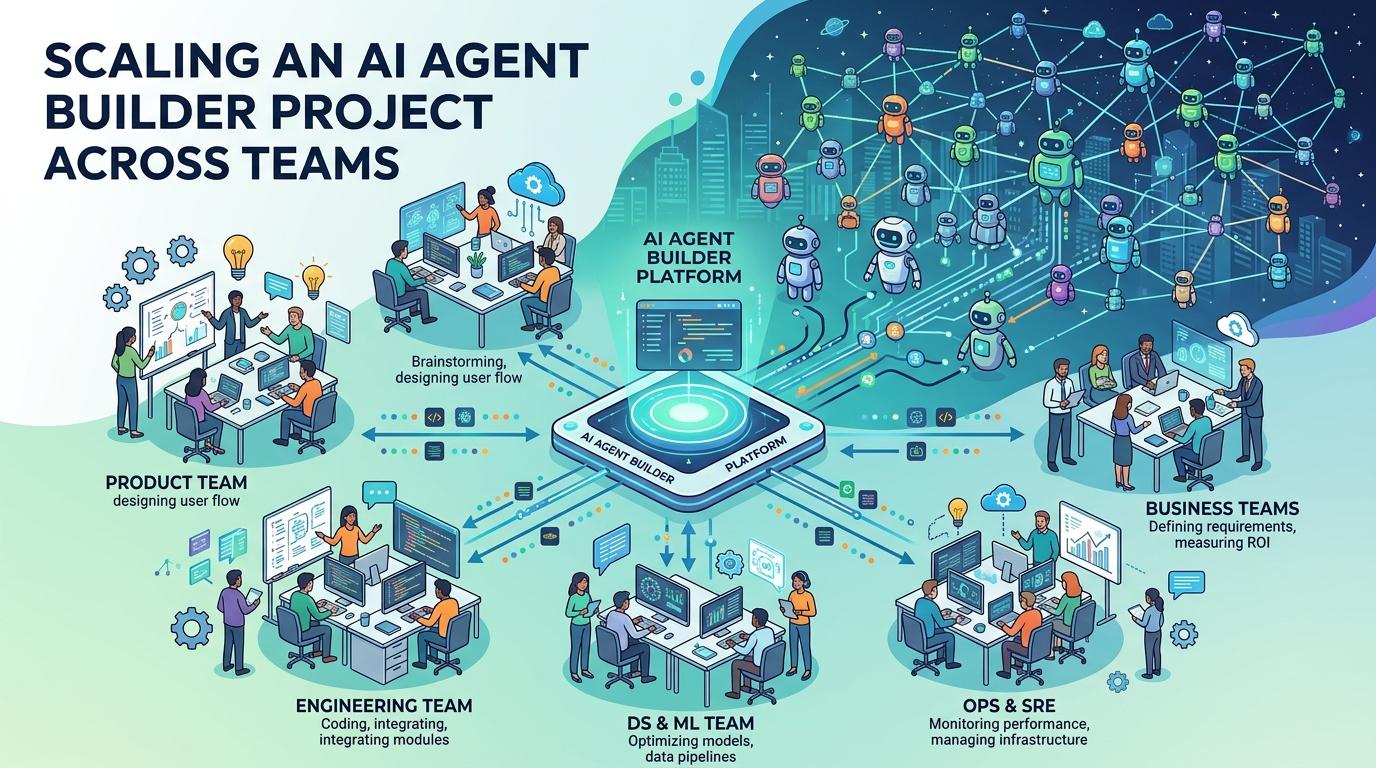
A successful pilot project is genuinely encouraging, but scaling an AI agent builder initiative from one well supported team to broader use across an organization introduces challenges that a single pilot rarely reveals. Different teams have different processes, different data quality, and different levels of comfort with agent based automation, all of which affect how smoothly a scaling effort actually goes. This guide covers how to approach this transition thoughtfully.
Why Scaling Is Genuinely Different From Piloting
A pilot project typically benefits from concentrated attention, a motivated team closely involved in the build, and a genuinely well understood, carefully scoped task. Scaling an AI agent builder project to additional teams removes many of these advantages simultaneously: the new team may be less involved in the original design, their specific process may differ in ways the original agent did not anticipate, and their data may carry quality issues the pilot team's data did not have. Recognizing these differences upfront prevents the common assumption that a successful pilot will translate directly into successful scaling without additional work.
Documenting What Actually Made the Pilot Successful
Before attempting to scale, it is worth explicitly documenting what specifically made the original pilot successful: which process characteristics made the task well suited to agent automation, what data quality was required, and what level of ongoing monitoring the pilot actually needed. This documentation, often skipped in the excitement of a successful initial result, becomes essential for evaluating whether a new team's similar seeming task actually shares the characteristics that made the original pilot work well.
Assessing Fit Before Extending to a New Team
Rather than assuming an agent successful in one context will work equally well elsewhere, evaluate each new team's specific process against the criteria that made the original AI agent builder project succeed. A process that looks superficially similar to the original pilot task can differ in ways that matter significantly, such as less consistent data formatting, more frequent genuine exceptions, or a different tolerance for occasional agent error. Teams whose processes genuinely differ from the original pilot's characteristics may need meaningful reconfiguration rather than simply copying the existing agent configuration wholesale.
Building Reusable Components Rather Than Starting Over
As an AI agent builder initiative scales, building genuinely reusable components, whether that is standardized integration configurations, common instruction patterns, or shared guardrail templates, meaningfully reduces the effort required for each additional team compared to building every new agent completely from scratch. This investment in reusability pays off increasingly as more teams adopt agent based automation, though it requires deliberate effort to extract and maintain these reusable elements rather than each team's agent evolving in complete isolation.
Establishing Governance Before Scope Expands Too Far
A single pilot project can reasonably operate with fairly informal oversight, but scaling across multiple teams genuinely benefits from more formal governance: a clear process for approving new agent projects, defined security and data access standards that apply consistently across teams, and a designated point of contact or small team responsible for maintaining shared standards as adoption grows. Establishing this governance structure before scope expands significantly prevents the kind of inconsistent, ungoverned proliferation that becomes genuinely difficult to manage once many teams have independently built agents without any coordination.
Training and Supporting New Teams
Teams new to building with an AI agent builder generally need more support than the original pilot team required, since they lack the hands on experience gained during the initial pilot process. Providing genuine training, whether through documentation, hands on workshops, or pairing new teams with experienced builders from the original pilot, significantly improves the odds that scaling efforts succeed rather than producing poorly configured agents built by teams without adequate guidance.
Monitoring Performance Across a Growing Portfolio
As more teams build and deploy agents, maintaining visibility into how each one performs becomes increasingly important and increasingly difficult without deliberate effort. Establishing consistent monitoring and reporting standards across all agent projects, rather than each team tracking performance in its own inconsistent way, allows an organization to genuinely understand its overall agent portfolio's health rather than only knowing about problems that happen to surface through informal channels.
Final Thought
Scaling an AI agent builder initiative successfully requires treating the transition from pilot to broader adoption as a genuine undertaking in its own right, not simply an automatic extension of initial success. Documenting what made the pilot work, honestly assessing fit for each new team, building reusable components, establishing appropriate governance, and providing genuine support for new teams together determine whether scaling produces a genuinely valuable, well managed portfolio of agents or a scattered, inconsistent collection of projects built without coordination.
 Dutch
Dutch
 English
 Arabic
 French
 Spanish
 Portuguese
 Deutsch
 Turkish
 Italiano
 Russian
 Romaian
 Portuguese (Brazil)
 Greek
Greek