


A Complete Guide to Estimating Transport Expenses
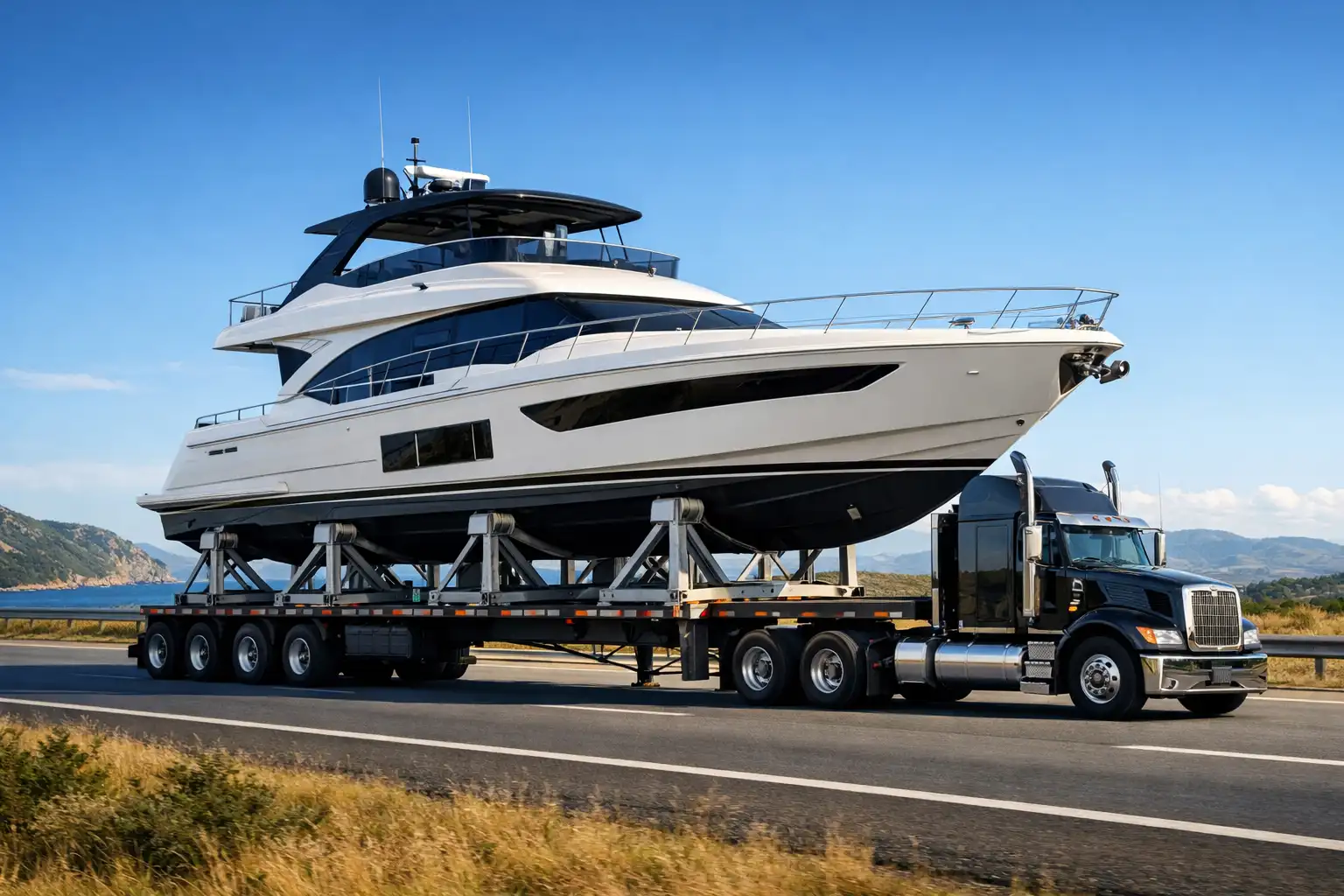
Transporting a boat over land can be a practical solution when relocating, purchasing a vessel from another state, selling a boat to an out-of-state buyer, or moving it to a seasonal destination. Unlike driving a car, moving a boat requires careful consideration of its dimensions, weight, trailer requirements, route accessibility, and loading arrangements .
A boat shipping calculator can help customers develop an initial understanding of potential transportation expenses before arranging a shipment. However, the final transportation price depends on several details that should be reviewed with a professional marine transport provider.
How Boat Transportation Works
Professional boat transportation generally involves securing the vessel to a suitable trailer or specialized carrier before moving it along an established route. Depending on the boat's dimensions and condition, the transportation provider may use a boat trailer, flatbed equipment, hydraulic trailer, or another suitable solution. Before transportation begins, the vessel is inspected and prepared for loading. The carrier then follows the planned route while considering road restrictions, bridge clearances, permits, and other logistical requirements. Proper preparation helps reduce complications during pickup, transit, and delivery.
Factors That Determine Boat Shipping Costs
Several factors can influence the overall cost of transporting a vessel. The most important considerations typically include boat size, weight, overall dimensions, transportation distance, pickup location, delivery destination, route conditions, seasonal demand, and the type of equipment required. Oversized vessels may require special permits or route planning, while larger boats can require specialized trailers and additional handling. The vessel's height, beam, length, and weight should therefore be provided accurately when requesting a transportation estimate.
Why Boat Dimensions Matter
Dimensions are particularly important because transportation equipment must safely accommodate the vessel. Boat length is only one part of the calculation; beam width and overall height can also significantly affect logistics. A vessel with an unusually wide beam may require additional permits or specialized routing, while excessive height can create clearance concerns around bridges, tunnels, and utility infrastructure. Customers should provide accurate measurements rather than relying on approximate specifications. Manufacturers, registration documents, or a marine survey may provide useful measurements when exact dimensions are uncertain.
Understanding Distance and Shipping Routes
Transportation distance naturally affects the cost of moving a vessel. A shipment traveling a few hundred miles may have different logistics from a cross-country move. However, price does not always increase in a simple per-mile pattern because carriers consider route availability, fuel expenses, equipment positioning, return trips, road restrictions, and overall demand. Popular transportation corridors may have more carrier activity, while remote pickup points can require additional planning. Providing complete origin and destination information helps the transporter evaluate the practical route.
Types of Boats That Can Be Transported
Professional boat transport services can accommodate many types of recreational and commercial vessels, depending on their dimensions and equipment requirements. Common examples include sailboats, fishing boats, pontoons, speedboats, yachts, cabin cruisers, and personal watercraft. Each type may require a different loading or securing approach. A large yacht, for example, may require specialized equipment and route planning, while a smaller fishing boat may be transported using a conventional trailer. Customers should disclose the vessel type and dimensions before receiving a final transportation arrangement.
Preparing a Boat Before Transportation
Proper preparation is an important part of safe vessel transportation. Owners should remove loose personal belongings, secure doors and compartments, disconnect or protect batteries when required, and remove items that could become damaged during transit. Depending on the transportation method, antennas, canvas covers, radar equipment, or other accessories may need to be removed or secured. Fuel and fluid requirements should also be discussed with the carrier. Customers should photograph the vessel from multiple angles before loading so its condition can be compared after delivery.
Choosing the Right Transportation Equipment
The appropriate equipment depends on the vessel's size, weight, shape, and transportation requirements. A standard trailer may be suitable for some smaller boats, while larger vessels can require a specialized boat trailer or hydraulic transport equipment. Professional carriers evaluate the vessel's specifications and determine how it should be supported during transit. Proper weight distribution is also important because an incorrectly supported vessel can create safety and handling issues. Customers should never assume that one trailer configuration is suitable for every type of boat.
Local, Regional, and Cross-Country Boat Moves
Boat transportation can involve short regional trips or long-distance interstate routes. A local move may require less logistical planning, while a cross-country shipment can involve multiple states, changing weather conditions, fuel considerations, and route restrictions. Customers relocating from coastal areas to inland destinations may also need to consider marina access, launch facilities, and final unloading arrangements. Planning these details in advance allows the transportation provider to coordinate pickup and delivery more efficiently.
Why a Professional Boat Transport Company Matters
Working with a qualified transportation provider can simplify the process by coordinating equipment, route planning, pickup, delivery, and communication. Customers should review the company's insurance coverage, carrier credentials, service terms, and experience with similar vessels before booking. It is also useful to understand what is included in the quoted transportation price. A transparent provider should explain potential additional charges instead of leaving customers uncertain about the final invoice.
How to Compare Boat Transport Quotes
When comparing transportation estimates, customers should look beyond the advertised price. Two companies may provide different prices because they use different equipment, transportation methods, service levels, or delivery arrangements. Customers should compare transportation quotes, insurance information, estimated timelines, pickup procedures, and cancellation terms. An unusually low estimate may not represent the complete cost if additional services or requirements are excluded. A detailed quote gives customers a clearer basis for understanding what they are paying for.
Using a Boat Shipping Cost Estimator Effectively
An online boat transport cost estimator can provide a useful starting point when planning a move. To receive a more meaningful estimate, users should enter accurate information about the vessel's length, width, height, weight, pickup location, destination, and preferred transportation method. The calculator provides an approximate figure rather than a guaranteed final price because real-world transportation conditions can change. Once the basic estimate is available, customers can contact a transportation specialist to verify the requirements and receive a more specific quotation.
Seasonal Demand and Transportation Timing
The time of year can influence transportation availability and pricing. Boat owners often move vessels before boating seasons, vacations, relocation periods, or storage schedules, which can increase demand for carriers. Weather conditions can also affect certain routes and transportation schedules. Booking early can provide more time to coordinate equipment and delivery arrangements. Customers with flexible dates may have additional scheduling options, while urgent transportation may require specialized arrangements depending on carrier availability.
Safe Loading and Delivery Procedures
Loading is one of the most important stages of vessel transportation. The carrier must position the boat correctly, distribute its weight appropriately, and secure it using suitable equipment. During delivery, the vessel should be inspected carefully before final acceptance. Customers should compare its condition with the photographs and inspection documentation created before transportation. If an issue is discovered, it should be documented promptly and reported according to the carrier's claims procedure.
Questions to Ask Before Booking Boat Transport
Before confirming a shipment, customers should ask the transportation provider about the equipment being used, insurance coverage, estimated pickup window, expected transit time, loading requirements, delivery procedure, and potential additional charges. It is also important to confirm whether the quoted service covers only transportation or includes additional handling. Clear communication at the beginning can help prevent misunderstandings later in the process.
Planning a Smooth Boat Transportation Experience
Successful vessel transportation depends on accurate measurements, proper preparation, suitable equipment, realistic scheduling, and clear communication. Customers should collect the boat's specifications, determine the pickup and delivery requirements, compare transportation options, and request a detailed estimate before making a final decision. Understanding how boat transport costs are calculated makes it easier to plan a realistic budget and avoid surprises during the shipment.
Ship A1 Auto Transport provides transportation solutions for customers who need to move boats and other specialty vehicles across different locations. By discussing vessel specifications, route requirements, equipment needs, and delivery preferences before booking, customers can establish a clearer transportation plan. Whether the shipment involves a regional move or a long-distance interstate journey, careful preparation and professional coordination can make the entire process more organized and predictable.
 Greek
Greek
 English
 Arabic
 French
 Spanish
 Portuguese
 Deutsch
 Turkish
 Dutch
Dutch
 Italiano
 Russian
 Romaian
 Portuguese (Brazil)