


How Microfiber Cleaning Cloths Make Everyday Cleaning Easier
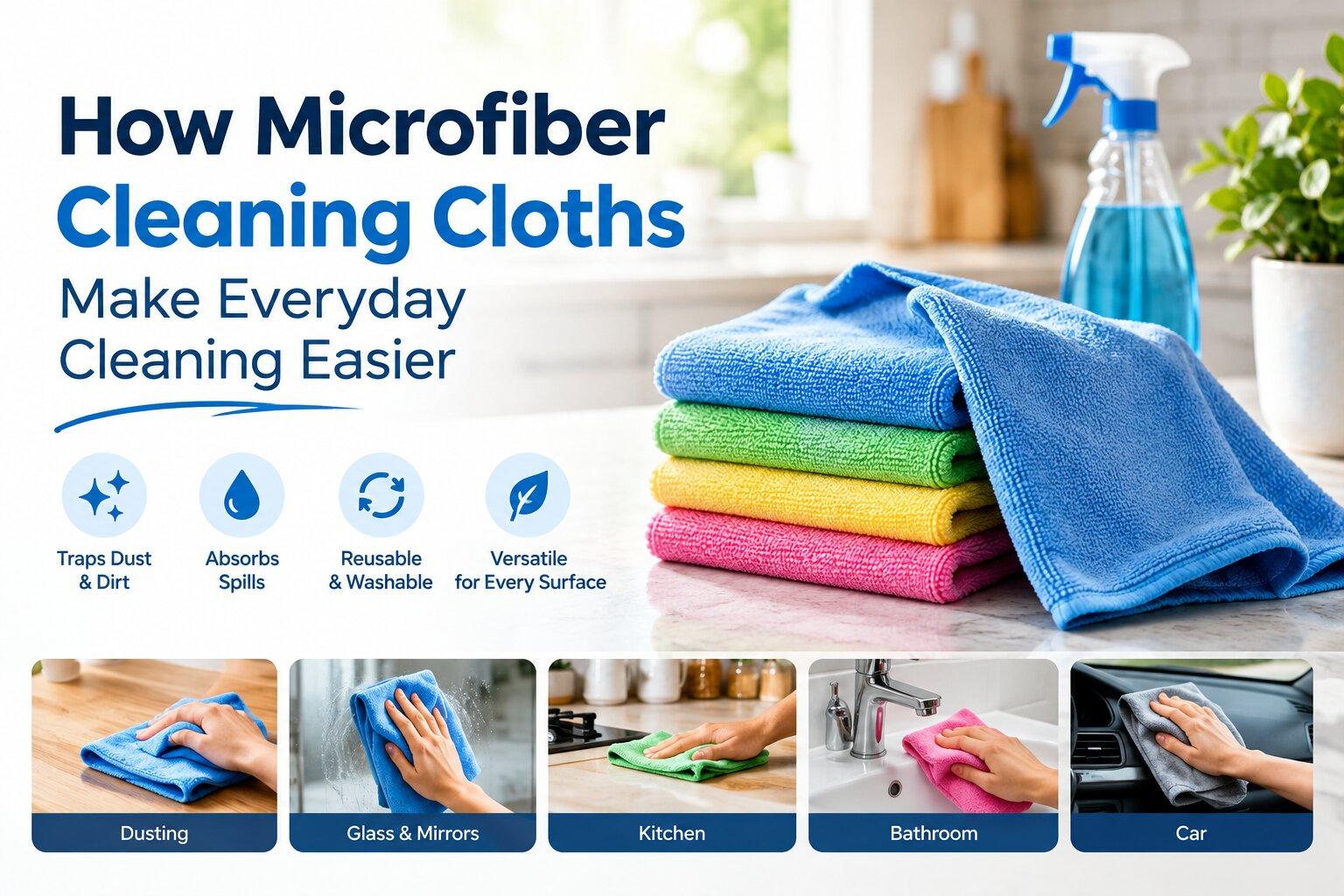
Cleaning the house does not always require a cabinet full of products. Sometimes, a simple change in the tools you use can make routine chores faster and less frustrating. One example is the humble microfiber cloth.
Microfiber cleaning cloths have become common in kitchens, bathrooms, cars, offices, and living rooms because they can handle many everyday cleaning jobs with little effort. They can wipe away dust, pick up crumbs, clean glass, remove fingerprints, and absorb spills. When used correctly, they can also reduce the need for disposable paper towels.
But what makes microfiber different from an ordinary cotton rag? And why does the material work so well for daily cleaning?
The answer comes down to the structure of the fibers, the way they interact with dirt and moisture, and how easily the cloth can be reused. Understanding these simple details can help you get more from a cleaning routine without making it more complicated.
What Are Microfiber Cleaning Cloths?
Microfiber is a synthetic material made from extremely fine fibers. Most microfiber cloths use a blend of polyester and polyamide, although the exact composition can vary between products.
The fibers are much finer than those found in many traditional fabrics. Manufacturers split the fibers into tiny strands, creating a material with a large amount of surface area.
That structure gives microfiber its useful cleaning properties.
Instead of simply pushing dust or liquid across a surface, the tiny fibers can catch and hold particles. The cloth can also absorb moisture and spread it across its surface, which helps with wiping and drying.
This does not mean every microfiber cloth performs exactly the same way. Weave, fiber quality, thickness, and construction all affect how a cloth behaves.
Still, the basic idea remains simple: very fine fibers create a fabric that can collect and move dirt efficiently.
Why Microfiber Works Differently From Ordinary Cloth
Think about cleaning a dusty table with an old cotton towel. If the towel is dry, it may move some dust around before you pick it up. If it is damp, it can remove more dirt, but it may leave moisture behind.
Microfiber approaches the task differently.
Its fine fibers create many small spaces where dust and particles can become trapped. The material also has a texture that gives it plenty of contact with the surface being cleaned.
This makes microfiber useful for both dry and damp cleaning.
A dry cloth can work well for collecting loose dust and pet hair. A slightly damp cloth can help remove fingerprints, food residue, and everyday grime.
The key is using the right amount of moisture. A soaking-wet cloth is not automatically more effective. In many situations, a lightly dampened cloth provides better control and leaves less water behind.
1. They Make Dusting Faster
Dusting can feel repetitive because dust quickly settles on furniture, shelves, electronics, and other surfaces.
A microfiber cloth can make this job easier because its fibers can collect fine particles instead of simply pushing them around.
For routine dusting, use the cloth dry. Fold it into sections so you can turn to a clean portion as you work.
Start with higher surfaces and move downward. This prevents dust that falls from shelves or cabinets from landing on areas you have already cleaned.
There is also no need to press extremely hard. Gentle passes usually work better than aggressive scrubbing when the goal is simply to remove loose dust.
2. They Handle Fingerprints and Smudges
Fingerprints are especially noticeable on glass, mirrors, stainless steel, appliances, and screens.
Microfiber is useful for these surfaces because the fine fibers can pick up oils and small particles left behind by hands.
For a quick cleanup, a dry cloth may be enough for light marks. For more stubborn residue, lightly dampen the cloth and wipe the surface using gentle, even movements.
The cloth should not be dripping wet, particularly when cleaning around electronics.
For screens and delicate devices, always follow the manufacturer's cleaning instructions. Avoid spraying liquid directly onto a screen or device.
3. They Are Useful for Glass and Mirrors
Few things are more annoying than cleaning a mirror only to discover streaks afterward.
A clean, appropriate microfiber cloth can help reduce lint and streaking. Use one cloth to remove dirt and another dry cloth for a final polish if necessary.
The condition of the cloth matters. A cloth containing leftover detergent, fabric softener, grease, or trapped debris may leave marks.
For this reason, keeping separate cloths for different cleaning tasks can make a noticeable difference.
You might have one group for windows and mirrors, another for kitchen surfaces, and another for bathrooms or general dusting.
4. They Absorb Spills Quickly
A small spill can turn into a bigger cleaning job if liquid spreads across a counter or table.
Microfiber can absorb moisture efficiently, making it useful for quick spills. Instead of reaching for several paper towels, you can use a reusable cloth to soak up the liquid and wipe the area clean.
For larger spills, start by absorbing the liquid rather than immediately rubbing it around.
Once most of the moisture is gone, use a clean section of the cloth to finish the surface.
This simple approach can save time during everyday accidents, especially in busy kitchens.
5. They Work Well in the Kitchen
Kitchens collect many different types of messes. There may be water around the sink, crumbs on counters, grease near the stove, and fingerprints on appliances.
A microfiber cloth can handle many of these jobs.
For light cleaning, a damp cloth can remove crumbs and everyday residue from suitable surfaces. For grease or stuck-on food, you may need an appropriate cleaner and more mechanical action.
Microfiber should not be treated as a replacement for every cleaning method. Its real advantage is versatility.
One cloth can handle several simple tasks without requiring a separate disposable towel for every small mess.
6. They Can Make Bathroom Cleaning More Convenient
Bathrooms require frequent wiping because water spots, toothpaste, soap residue, and dust can accumulate quickly.
A microfiber cloth can help with sinks, faucets, mirrors, counters, and other compatible surfaces.
After showering, a cloth can also be useful for wiping water from suitable surfaces. Removing excess moisture can help keep the area looking cleaner between deeper cleaning sessions.
However, hygiene matters in bathrooms. Do not use the same cloth for the toilet area and kitchen surfaces.
Wash cleaning cloths regularly, and keep them separated according to their intended use.
7. They Are Handy for Cleaning Cars
Microfiber has become popular in car care for a reason. The material can be used for interior dusting, wiping dashboards, cleaning windows, and drying appropriate exterior surfaces.
Different automotive tasks may require different types of microfiber cloths.
A softer cloth can be suitable for delicate surfaces, while a more textured towel may be better for certain cleaning jobs.
When cleaning a vehicle's exterior, make sure the cloth is free from trapped grit. Small particles caught in the fabric can potentially scratch sensitive finishes when dragged across a surface.
For this reason, clean cloths are particularly important when working on cars.
8. They Reduce the Need for Disposable Towels
One of the most practical advantages of microfiber cleaning cloths is that they can be washed and reused.
Instead of reaching for a new paper towel every time you wipe a small spill, you can use a washable cloth.
That can make a difference in households that clean frequently.
The environmental impact of any reusable product depends on factors such as how long it lasts, how often it is washed, and how it is disposed of at the end of its useful life. Washing also requires water and energy.
So the best approach is not simply to assume that reusable always means environmentally superior in every situation. Instead, use reusable cloths thoughtfully and keep them in service for as long as they remain effective.
How to Use Microfiber Cleaning Cloths Correctly
Using the right technique can make a microfiber cloth much more effective.
Use a Dry Cloth for Dust
For loose dust, start with a dry cloth. Move it gently across the surface rather than shaking dust into the air.
Slightly Dampen for General Wiping
For fingerprints and light residue, lightly dampen the cloth with water.
A cloth that is damp rather than soaked gives you better control and usually dries the surface faster.
Fold the Cloth
Folding a cloth into quarters gives you several usable cleaning surfaces.
When one section becomes dirty, rotate to another section instead of immediately grabbing another cloth.
Do Not Overuse Cleaning Solution
More cleaner does not always mean a cleaner surface.
Too much product can leave behind residue and may make surfaces look dull or sticky. Follow the directions for the particular cleaning product and surface.
How to Wash Microfiber Cleaning Cloths
Proper washing helps maintain the cloth's performance.
First, check the care instructions supplied with the cloth. In general, washing microfiber separately or with other lint-free items can help prevent it from collecting loose fibers.
Avoid fabric softener when the care instructions advise against it. Fabric softener can coat the fibers and reduce their ability to absorb moisture or collect particles.
Heavy grease and chemicals can also affect microfiber, so heavily contaminated cloths may need special handling.
After washing, dry the cloth according to its care instructions. High heat can damage some synthetic materials, so do not assume that the hottest dryer setting is the best choice.
A clean, well-maintained cloth will generally perform better than one that has accumulated detergent, grease, or dirt.
When Should You Replace a Microfiber Cloth?
Microfiber cloths are reusable, but they are not permanent.
A cloth may eventually become less effective because of worn fibers, permanent staining, damage, or contamination that cannot be properly removed.
If the fabric develops rough areas, tears, or a texture that could damage a delicate surface, retire it from sensitive cleaning tasks.
You can sometimes move an older cloth to a less delicate job. For example, a cloth that is no longer suitable for glass polishing might still work for wiping garage shelves.
This approach can extend its useful life.
Common Mistakes to Avoid
Even a good cleaning cloth can perform poorly when used incorrectly.
Using One Cloth for Everything
Kitchen counters, bathroom surfaces, toilets, windows, and electronics should not automatically share the same cloth.
Use separate cloths for different areas to reduce cross-contamination.
Cleaning With a Dirty Cloth
A cloth filled with dust or grease cannot clean effectively.
Rotate to a clean section while working and wash heavily soiled cloths before using them again.
Using Too Much Water
Excess moisture can create streaks and may damage surfaces that should stay dry.
Use only enough moisture for the task.
Using the Wrong Cleaner
Some surfaces can react badly to certain chemicals. Always check whether a cleaning product is appropriate for the material.
Microfiber itself does not make every cleaner safe.
Scrubbing Too Aggressively
More pressure is not always better. On delicate surfaces, excessive force combined with trapped particles can cause damage.
Let the fabric and suitable cleaning solution do the work.
How Many Cloths Do You Actually Need?
There is no universal number.
A small household might keep a handful of cloths for general cleaning, while a larger home may need more because several areas require cleaning at the same time.
A practical system is to assign cloths to specific jobs.
For example:
- Glass and mirrors
- Kitchen surfaces
- Bathroom cleaning
- General dusting
- Electronics and delicate surfaces
- Car cleaning
You can also use different sizes or textures for different tasks.
The important thing is not having dozens of cloths. It is having enough clean cloths to avoid mixing jobs and to prevent you from using a dirty one when a fresh one is needed.
Microfiber vs. Paper Towels
Paper towels remain useful, especially for messy spills, food-related cleanup, or situations where disposal is preferable.
Microfiber offers a different advantage: reusability.
For routine dusting, wiping, and polishing, a washable cloth can be convenient. For particularly unpleasant or contaminated messes, disposable materials may sometimes make more practical sense.
There is no requirement to choose one option for every situation.
A balanced cleaning routine can use reusable cloths for everyday work while reserving disposable materials for jobs where they are genuinely useful.
Microfiber vs. Cotton Cloths
Cotton cloths have been used for cleaning for generations and still have practical uses.
The main difference is the structure of the material.
Microfiber contains extremely fine synthetic fibers that can create a large surface area and provide strong particle-trapping characteristics. Cotton tends to have a different texture and absorbency profile.
For dusting, glass, polishing, and many general wiping tasks, microfiber can be particularly convenient.
Cotton may still be useful when you want a heavier fabric or a cloth with a different level of absorbency.
The right choice depends on the surface and the type of mess.
A Simple Everyday Cleaning Routine
You do not need to spend hours cleaning every day.
A short routine can prevent small messes from becoming bigger ones.
Start by keeping clean cloths somewhere easy to reach. When you notice dust, fingerprints, or a small spill, deal with it immediately if possible.
Use a dry cloth for dust. Switch to a lightly damp cloth for marks or residue.
After cleaning, place used cloths in a designated laundry container instead of leaving them damp in a pile. This makes it easier to wash them properly later.
Once or twice a week, depending on your household, you can perform deeper cleaning of areas that need more attention.
The goal is not perfection. It is reducing the amount of work required later.
The Bigger Benefit: Less Friction in Daily Cleaning
Perhaps the biggest advantage of microfiber is not one specific cleaning ability. It is convenience.
When a cleaning tool is reusable, washable, lightweight, and suitable for several tasks, you are more likely to use it when a small mess appears.
That matters because cleaning becomes easier when you deal with problems before they build up.
A dusty shelf takes seconds to wipe. A neglected shelf covered in months of dust may require much more effort.
The same principle applies to fingerprints, water spots, kitchen residue, and other everyday messes.
Final Thoughts
Microfiber cleaning cloths are not a magic solution for every cleaning problem, but they can make many everyday tasks simpler.
Their fine fibers help collect dust and particles, while their absorbency makes them useful for wiping spills and moisture. They can also work well for mirrors, glass, kitchens, bathrooms, vehicles, and many other suitable surfaces.
The most important factor is not simply buying a microfiber cloth. It is using it correctly.
Choose the appropriate cloth for the task, keep cleaning areas separate, avoid unnecessary chemicals, wash the cloths properly, and replace them when they become worn.
Once those habits become part of your routine, cleaning can feel less like a major chore and more like a series of quick, manageable tasks.
Sometimes, making everyday cleaning easier does not require a complicated system. It simply requires having the right tool within reach when you need it.
 Portuguese (Brazil)
 English
 Arabic
 French
 Spanish
 Portuguese
 Deutsch
 Turkish
 Dutch
Dutch
 Italiano
 Russian
 Romaian
 Greek
Greek