


Low Platelet Count: What It Can Mean and What to Do Next
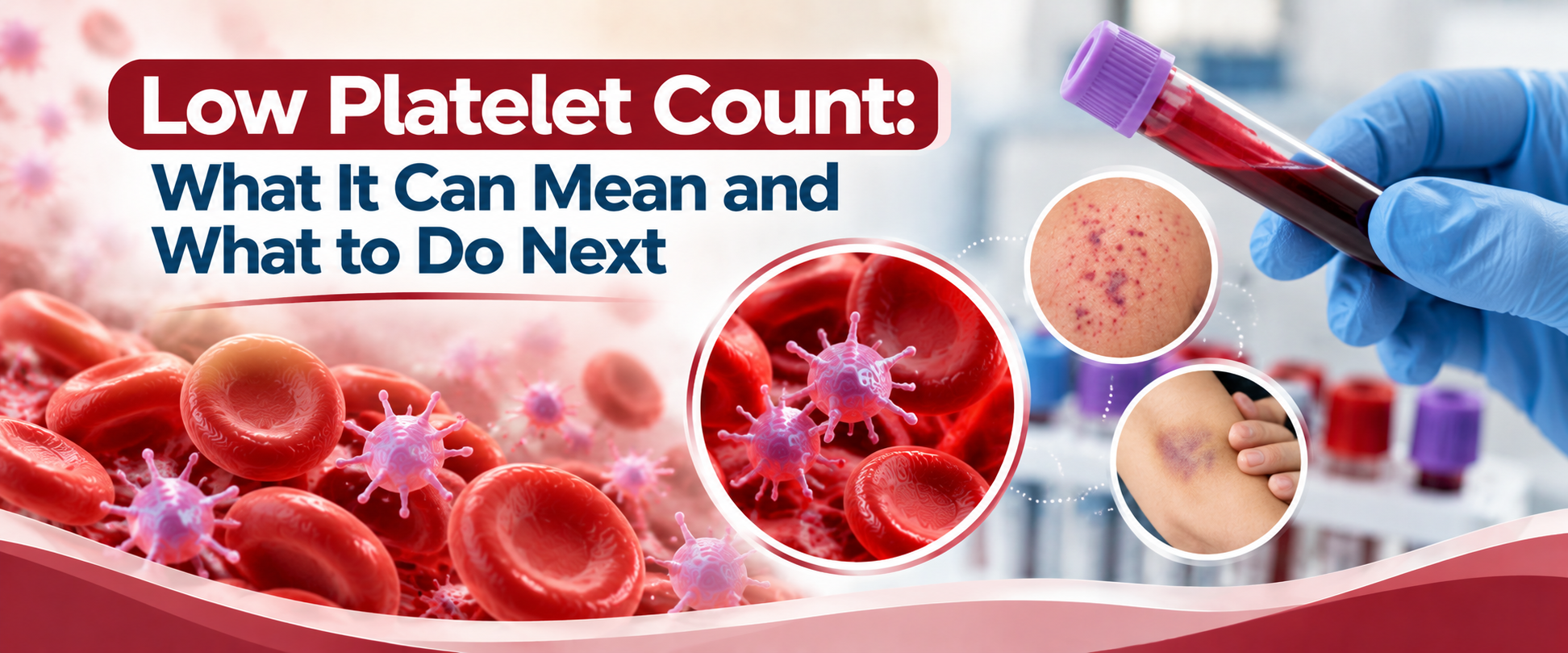
A low platelet count can sound worrying when you first see it on a blood report. But it does not always mean something serious is happening. Sometimes platelets drop temporarily after an infection. In other cases, the count may be linked to a medicine, an immune condition or a problem affecting blood cell production.
Platelets are tiny blood cells that help stop bleeding by forming a plug at an injured blood vessel. When their number falls below the usual range, the condition is called thrombocytopenia.
The next step depends on how low the count is, whether it is changing, and whether you have symptoms. So, rather than focusing on one number alone, it helps to understand what may be causing it and what to do next.
What Is a Normal Platelet Count?
A typical platelet count in adults is around 150,000 to 450,000 platelets per microlitre of blood. The exact reference range can vary slightly between laboratories.
A count below 150,000 is generally considered low. Still, the level itself does not tell the whole story. Someone with a mildly low count and no symptoms may only need repeat testing, while a person with a much lower count or active bleeding may need prompt medical attention.
Doctors also look at earlier blood reports. Has the count been low for years, or has it dropped suddenly? Is it the only abnormal result, or are haemoglobin and white blood cells low too? These details can help narrow down the cause.
Common Causes of a Low Platelet Count
There are several reasons platelet levels can fall. Some are temporary, while others need ongoing medical care.
1. Recent infections
Viral infections can cause a temporary drop in platelets. Dengue, for example, can lower platelet levels, but it is not the only infection that can do this. Other viral illnesses may also affect platelet production or increase platelet removal.
If the count is low during an infection, doctors may monitor it along with symptoms and other blood results.
2. Medicines
Some medicines can affect platelet production or cause the immune system to destroy platelets. Certain antibiotics, anti-seizure medicines and other drugs may be involved.
Do not stop a prescribed medicine on your own. Tell your doctor about all medicines, supplements and recently started treatments so they can review whether any could be contributing.
3. Immune-related conditions
In immune thrombocytopenia (ITP), the immune system mistakenly targets platelets. The platelet count may become low even when other blood cell counts are normal.
Some people have no symptoms, while others develop bruising, small red or purple spots on the skin, nosebleeds, or gum bleeding. The need for treatment depends on factors such as the platelet count, bleeding symptoms, and overall health.
4. Reduced platelet production
Platelets are made in the bone marrow. Conditions that affect the marrow, including some blood disorders, can reduce platelet production.
Doctors may investigate this possibility when platelet levels remain low, when other blood cell counts are abnormal, or when symptoms and examination findings suggest a broader problem.
5. Other health conditions
Liver disease and an enlarged spleen can affect how platelets are stored or removed from circulation. Some autoimmune conditions and nutritional deficiencies may also contribute.
Because causes can overlap, a low platelet count should be interpreted alongside the person’s history and other test results.
What Symptoms Should You Watch For?
A mildly low platelet count may not cause any noticeable symptoms. When symptoms do occur, they can include:
-
Bruising more easily than usual
-
Small red or purple spots on the skin, called petechiae
-
Nosebleeds or bleeding gums
-
Heavier or longer menstrual bleeding
-
Bleeding that takes longer than expected to stop
Seek urgent medical care if you have heavy or persistent bleeding, blood in vomit or stool, severe headache, confusion, fainting or a sudden change in vision. These symptoms need prompt assessment, especially if your platelet count is known to be low.
What Tests May Be Needed?
A doctor will usually start by reviewing the CBC report and asking about recent infections, medicines, bleeding symptoms, and previous platelet counts.
Further tests may include:
-
Repeat CBC: Checks whether the low count persists or is changing.
-
Peripheral blood smear: Allows the laboratory to examine blood cells and check for unusual features or platelet clumping.
-
Liver function tests: May help identify liver-related causes.
-
Other targeted blood tests: Depending on symptoms, these may look for infection, immune conditions, or nutritional problems.
Sometimes a platelet count appears low because platelets have clumped together in the blood sample. A repeat test or blood smear can help check whether this is a laboratory-related issue rather than a true reduction.
A bone marrow test is not needed for everyone. It may be considered if the cause remains unclear or other blood results raise concern about bone marrow function.
What Should You Do Next?
If your report shows a low platelet count, try not to panic or start treatment based on the number alone. The right response depends on the cause and whether you have symptoms.
A few practical steps can help:
-
Arrange a medical review. Share the full blood report, not just the platelet value.
-
Keep previous reports handy. A trend over time may be more useful than one result.
-
Mention recent infections and medicines. Include supplements and any medicine you have recently stopped.
-
Avoid self-medicating. Do not start supplements or stop prescribed medicines without medical advice.
-
Follow the recommended repeat testing. Your doctor may want to check whether the count is improving, stable, or falling.
If the count is very low, dropping quickly, or accompanied by bleeding, do not wait for a routine appointment.
When Should You See a Haematologist?
A haematologist may be involved when the platelet count remains low, keeps falling, or occurs alongside changes in haemoglobin or white blood cells. Specialist review can also help when the cause is unclear, or treatment decisions depend on the underlying condition.
If you are looking for a Hematologist in Nagpur, take your CBC reports, previous platelet counts, and medicine list to the appointment. These details can help the specialist understand the pattern and decide which tests are needed.
Can You Increase Platelets Naturally?
There is no single food or home remedy that reliably treats every cause of low platelets. Eating balanced meals supports general health, but it cannot replace medical assessment when the count is low.
If a deficiency is found, your doctor may recommend correcting it. If the cause is an infection, immune condition, or medication reaction, management will be different. Avoid relying on food remedies or supplements without finding out why the platelet count has dropped.
Understanding the Result Before Taking Action
A low platelet count can happen for many reasons, from a temporary infection to a condition that needs specialist care. The number matters, but so do symptoms, other blood test results, and whether the count is changing.
Review the report with a doctor, follow the recommended tests, and seek urgent care if serious bleeding or warning symptoms occur. Finding the cause is the first step toward choosing the right care.
 Portuguese
 English
 Arabic
 French
 Spanish
 Deutsch
 Turkish
 Dutch
Dutch
 Italiano
 Russian
 Romaian
 Portuguese (Brazil)
 Greek
Greek