

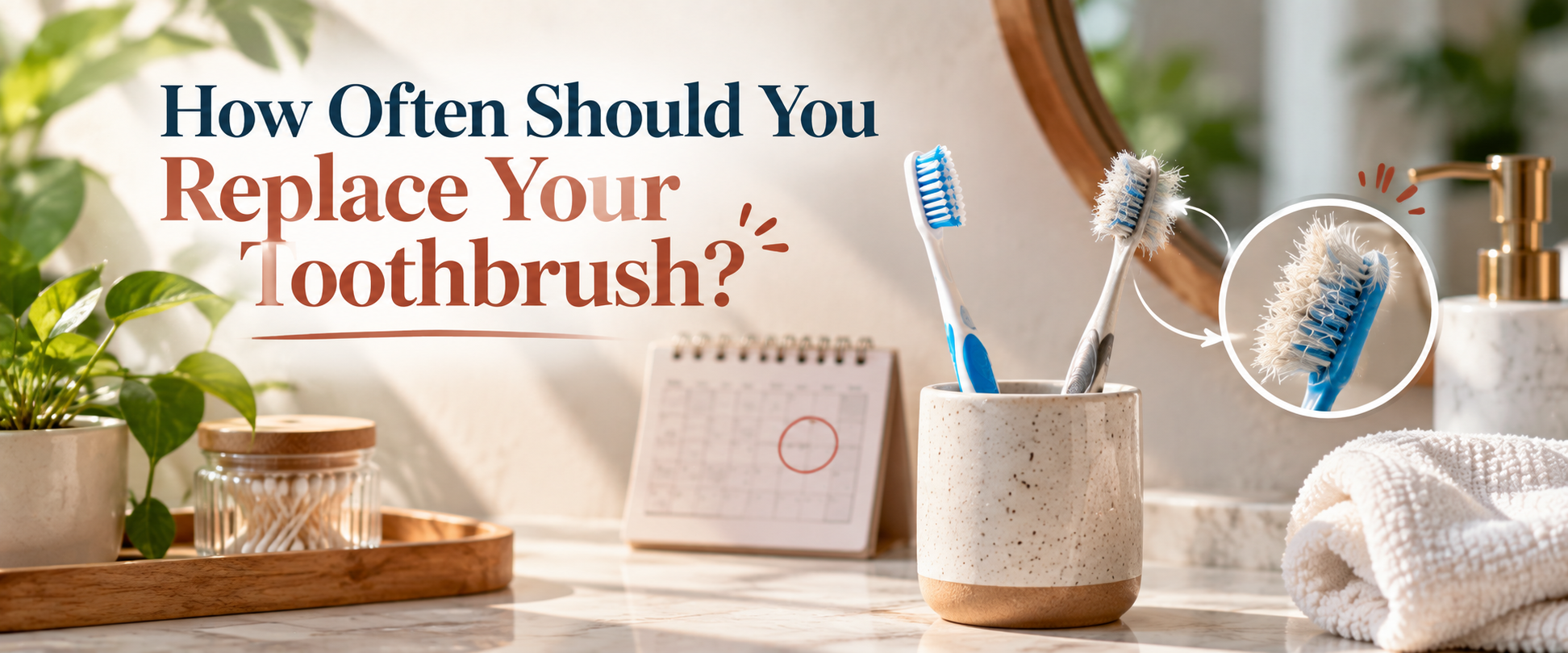
How Often Should You Replace Your Toothbrush?
A toothbrush is something most people use every day without giving it much thought. You brush your teeth in the morning, maybe before bed, rinse the brush, and put it back in its holder. Simple enough.
But have you ever checked how long you have been using the same toothbrush? The bristles may look fine at first, even after months of use. Still, a worn toothbrush may not clean your teeth as well as it used to.
Knowing when to replace your toothbrush helps you maintain good oral hygiene without changing it too often. Here’s what to look for and how to keep your toothbrush clean between replacements.
How Often Should You Replace Your Toothbrush?
Most people should replace a manual toothbrush about every three to four months. This is a general guideline, not a strict deadline. If the bristles become frayed or bent earlier, replace the brush sooner.
The same idea applies to electric toothbrushes, though you usually replace the brush head rather than the entire device. Check the instructions for your toothbrush model, as replacement timing can vary.
If you are unsure when you last changed your brush, take a look at the bristles. A toothbrush that looks worn may already be past its useful stage.
1. The Bristles Start to Fray
The condition of the bristles is one of the easiest ways to tell when your toothbrush needs replacing.
A new toothbrush has bristles that stand neatly in place. With regular use, they may begin to spread outward, bend, or look uneven. This can happen sooner if you brush with too much pressure.
Frayed bristles may not reach the tooth surfaces as effectively, especially around the gumline and between teeth. They can also feel rough against your gums.
If your toothbrush looks like it has been through a lot, do not wait for the three-month mark. Replace it.
2. Your Toothbrush No Longer Feels Comfortable
A toothbrush should clean your teeth without making your gums sore. If the bristles feel rough or uncomfortable, it may be time for a new one.
Some people assume that brushing harder gives them cleaner teeth. In reality, using too much pressure can wear down the bristles and irritate the gums. It may also contribute to gum recession or tooth wear over time.
Choose a soft-bristled toothbrush and use gentle, short strokes. You do not need to scrub aggressively to remove plaque.
If brushing causes ongoing pain or bleeding, do not simply blame the toothbrush. A dental professional can check whether another issue is contributing.
3. You Have Been Sick
Many people wonder whether they should throw away their toothbrush after having a cold, flu, or another infection.
For most otherwise healthy people, there is no need to replace a toothbrush after every illness. Rinsing it thoroughly and allowing it to air-dry is usually enough. The risk of becoming sick again from your own toothbrush is generally low.
Still, replacing it after an illness is a reasonable personal choice, especially if the brush is already old or worn. If you have a weakened immune system or a specific infection, ask your healthcare professional whether you need any additional precautions.
Never share a toothbrush with another person. It can transfer saliva and microorganisms between users.
4. The Toothbrush Has Been Stored Poorly
Where you keep your toothbrush matters. A brush that stays damp in a closed container may not dry properly between uses.
After brushing, rinse the bristles under running water to remove toothpaste and debris. Shake off excess water and store the brush upright in an open area where it can air-dry.
Try to keep toothbrushes from touching one another. Avoid storing a wet toothbrush in a sealed travel case for long periods. If you need to carry it, let it dry before placing it in the case whenever possible.
You do not need to use special disinfectants or boil your toothbrush. High heat and harsh cleaning products can damage the bristles.
5. Your Toothbrush Has Fallen or Become Damaged
If your toothbrush falls into a dirty sink, toilet, or another contaminated area, replacing it is a sensible choice. The same applies if the handle cracks or the bristles become damaged.
A toothbrush that has fallen onto a clean bathroom surface is not automatically unsafe. Rinse it well and check that it is still in good condition. Use your judgement, especially if it has been exposed to cleaning chemicals or other contaminants.
Manual Toothbrush vs Electric Toothbrush: When Should You Replace Them?
-
Manual toothbrush: Replace the entire toothbrush every 3–4 months, or sooner if the bristles become frayed.
-
Electric toothbrush: Replace the brush head around every 3 months, or follow the manufacturer’s instructions.
-
Damaged toothbrush: Replace it as soon as you notice bent, worn, or damaged bristles.
-
Electric brush head indicators: Some heads have coloured bristles that fade to signal when replacement is due.
-
Electric toothbrush handle: You usually keep the handle and replace only the brush head. Follow the manufacturer’s care instructions.
How to Make Your Toothbrush Last Until Replacement
A toothbrush does not need complicated care. A few small habits can help keep it in good condition.
-
Brush twice a day with fluoride toothpaste.
-
Use gentle pressure instead of scrubbing hard.
-
Rinse the brush thoroughly after each use.
-
Store it upright and allow it to air-dry.
-
Avoid sharing your toothbrush.
-
Keep it away from direct contact with other toothbrushes.
-
Replace it when the bristles become worn, even if three months have not passed.
If you have children, check their toothbrushes regularly. Kids may chew on the bristles or press too hard while brushing, so their brushes may need replacing sooner.
Does Replacing Your Toothbrush Prevent Cavities?
Replacing your toothbrush helps you maintain effective cleaning, but it does not prevent cavities on its own.
To reduce the risk of tooth decay, brush twice a day with fluoride toothpaste, clean between your teeth daily, limit frequent sugary snacks and drinks, and attend regular dental check-ups.
If you are brushing consistently but still notice bleeding gums, sensitivity, or repeated cavities, ask a dental professional to review your technique and oral health routine. A Dental Clinic in Hor Al Anz can help you understand what may be contributing to these concerns and whether you need a different toothbrush or cleaning method.
Frequently Asked Questions
Can I use the same toothbrush for six months?
It is better to replace a toothbrush around every three to four months. If the bristles become frayed earlier, change it sooner. A brush that looks worn may not clean as effectively.
Should I replace my toothbrush after every cold?
Most healthy people do not need to replace their toothbrush after every cold. Rinse it well, let it air-dry, and replace it if it is old or damaged. Ask a healthcare professional if you have a specific infection or immune-related concern.
Is an expensive toothbrush better?
Not necessarily. A soft-bristled toothbrush that fits comfortably in your mouth and allows you to clean every tooth can work well. The way you brush matters more than the price.
Should I replace my toothbrush if the bristles look fine?
If the brush is still in good condition and has been used for less than three to four months, you may not need to replace it yet. Keep track of when you started using it and check the bristles regularly.
A Simple Habit That Supports Better Oral Hygiene
You do not need to replace your toothbrush every few weeks, but you should not keep using the same one indefinitely. For most people, changing it every three to four months is a useful routine.
Look at the bristles, pay attention to how the brush feels, and replace it sooner if it becomes worn or damaged. Combined with regular brushing, daily cleaning between teeth, and dental check-ups, this small habit can help you take better care of your smile.
 French
 English
 Arabic
 Spanish
 Portuguese
 Deutsch
 Turkish
 Dutch
Dutch
 Italiano
 Russian
 Romaian
 Portuguese (Brazil)
 Greek
Greek