


What UK Businesses Should Know Before Buying Custom Boxes Wholesale
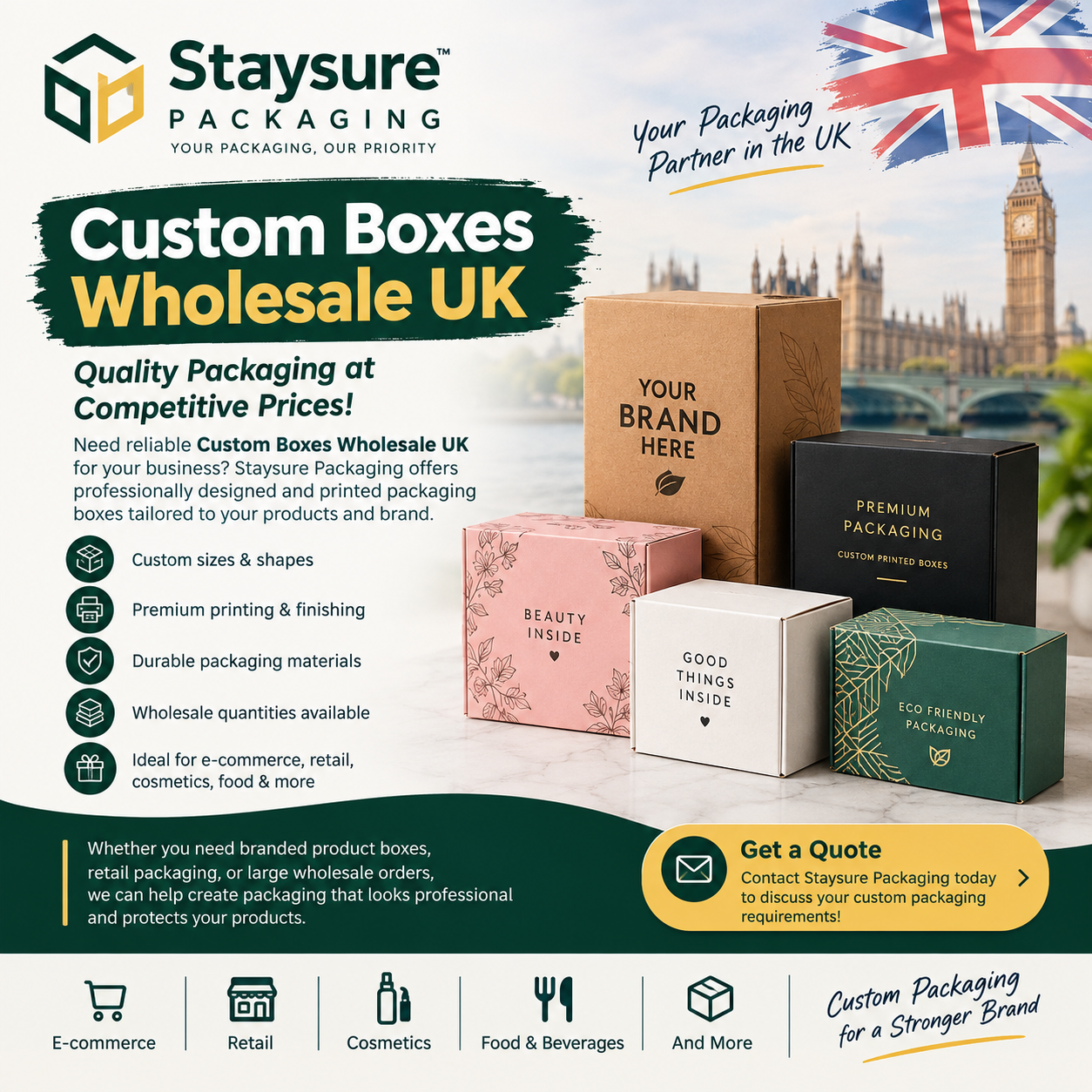
Wholesale packaging can transform margins and brand perception. For UK businesses, choosing the right custom boxes isn’t just a cost line—it’s a trust signal. Getting the balance between cost, quality, and timing matters more than ever in competitive markets. This guide walks you through practical steps, real-world checks, and simple strategies you can apply this quarter.
From product protection to unboxing moments, the right box does more than hold a product. It tells your story, supports your fulfillment, and helps you scale. Below you’ll find a practical roadmap built from years of working with UK brands across retail, ecommerce, and subscription services.
What UK Businesses Should Know Before Buying Custom Boxes Wholesale
Think of custom wholesale packaging as a tool in your growth kit. It should fit your product, your brand, and your budget. The choices you make early on set the pace for design, production, and even returns. This guide helps you map those decisions with clarity.
To get started, explore a straightforward overview of key considerations. The right partner will match your needs with clear pricing, reliable lead times, and strong quality checks. You’ll find those traits unfold in the sections below.
Understanding Your Packaging Needs
Different box types suit different jobs. Subscription boxes emphasize consistency and unboxing delight. Retail boxes focus on shelf presence and protection. Transit boxes prioritize durability and stackability. Your product mix often requires a mix of these formats.
Estimate quantity, sizes, and weights by mapping your SKUs to standard box dimensions. A practical approach is to group by product family and run a quick fit test using mockups. Tracking expected weight ensures you pick cartons that survive shipping and handling.
Branding requirements and on-package messaging should be defined early. Decide where logos, legal text, and care instructions live. If you plan inserts or protective padding, map those needs to the box style and inner layout. A simple dieline with guidance margins can save revisits later.
Cost Considerations and Pricing Models
Unit price versus bulk discounts matters a lot when you scale. Start with a clear break-even calculation that includes storage, returns, and potential waste. Small order changes can swing margins, so keep a tight view on yield per box.
Minimum order quantities (MOQs) are common. They reflect setup work and production line readiness. If MOQs block your smaller tests, ask for tiered options or split runs with a partner who can absorb some risk.
Setup fees, plate charges, and dieline costs are real. Ask for a transparent line item in every quote. Early agreement on art preparation helps prevent delays and last-minute surcharges.
Hidden costs sneak in through storage, shipping, and returns. Factor in warehousing if boxes arrive ahead of peak demand. For returns, consider reworkable packaging or reuse programs to minimize waste and expense.
Materials, Sustainability, and Compliance
Common box materials include corrugated board, paperboard, and laminated finishes. Each has a best-fit use: corrugated for protection in transit, paperboard for presentation, and duplex boards for lightweight, premium looks. Match material to product needs and cost targets.
Sustainability rules in the UK keep tightening. You’ll want packaging that supports recyclability and straightforward disposal. Look for certifications or test data that confirm performance without compromising end-of-life options. Clear labeling helps customers recycle correctly too.
Recyclability, compostability, and certifications matter. Certifications like FSC or PEFC confirm responsible sourcing. Ask suppliers for documentation and examples of compliant shipments to retailers who require circular economy assurances.
Design and Production Process
Work with designers who understand print-ready files and dielines. A smooth handoff reduces back-and-forth during production. Your goal is a clean file with correct bleed, safe margins, and color instructions that translate well to print.
Turning artwork into print-ready dielines is a shared effort. Provide precise dimensions for every variation and confirm fold lines, glue areas, and any inserts. A simple mockup helps catch issues before plates are cut.
Proofing, color accuracy, and lead times vary by printer. Request a physical proof when possible, or a high-fidelity digital proof with color metadata. Align lead times with your fulfillment calendar to avoid delays during peak periods.
Printing Options and Finishings
Litho versus digital printing affects cost, color depth, and setup time. For large runs with elaborate finishes, litho often wins. Digital printing suits smaller runs or frequent refreshes with quicker turnarounds.
Finishings shape the unboxing experience. Matte or gloss finishes change the feel and glare. Lamination and soft-touch add tactile appeal but come at a cost. Choose finishes that align with product protection and brand personality.
Coatings for moisture and scuff resistance protect boxes in transit and on shelves. If your product is damp or oily, a protective coating can prevent label damage and preserve presentation. Check compatibility with inks and adhesives used in your process.
Sourcing and Supplier Evaluation
Vet UK and EU suppliers by asking for references, factory capabilities, and compliance records. A reputable supplier will share production capacity, current lead times, and sample options. Don’t shy away from asking for real customer outcomes and timelines.
Factory visits and audit checklists offer deep insight. Observe workflow, storage conditions, and quality control stations. A short, focused audit can reveal hidden bottlenecks or misalignments with your standards.
Import considerations matter if you look further afield. Understand duties, VAT, and incoterms. Clear communication about packaging specifications and documentation keeps shipments moving smoothly.
Lead Times, Capacity, and Planning
Typical production timelines depend on volume and complexity. Plan for proofing, production, and transit, plus any seasonal spikes. Build a realistic calendar that includes buffers for unexpected delays.
Seasonality affects stock planning. Have a contingency plan for sudden demand shifts, like a gift season or a new product launch. Your backup options might include alternate SKUs or secondary suppliers to keep shelves stocked.
Contingency planning helps you weather delays. Consider extra stock of critical sizes or a mini-portfolio of standard boxes you can ship quickly while custom runs catch up.
Quality Assurance and Packaging Testing
Box strength testing and drop tests verify that packaging performs under real-world handling. A simple test plan can prevent damaged goods at reception or during transit.
Structural validation ensures the box behaves as expected under load and stacking. Use repeatable methods so you can compare batches and catch deviations early.
Sampling protocols and acceptance criteria keep QA predictable. Define sample size, inspection criteria, and how you handle non-conforming units. Consistency here saves headaches later.
Ordering, Customization, and Logistics
Customization options include sizes, prints, and finishes. A robust spec sheet helps you capture all choices in one place, reducing back-and-forth with suppliers.
Warehouse and fulfillment considerations matter for e-commerce. Decide if you’ll store boxes in a dedicated space or ship directly from the printer. Clear labeling and packaging can reduce picking errors in fulfillment.
Shipping methods, transit risk, and insurance protect your investment. Ask about carton damage rates, protective packaging options, and insurance coverage for transit losses.
Cost Saving Strategies for UK Buyers
Consolidating orders can trim freight and setup costs. Grouping SKUs by supplier and by box family often yields better pricing and simpler administration.
Pre-press optimization and dieline reuse save time and money. Reusing common dielines for variations reduces artwork effort and plate charges. Maintain a shared library of approved dielines for quick changes.
Long-term supplier relationships and renegotiation pay off. Regular reviews of pricing, terms, and service levels help you stay competitive and fix issues before they escalate.
Practical Checklist Before You Buy
Pre-purchase questions to ask suppliers include lead times, MOQs, and post-purchase support. A clear set of questions helps you compare apples to apples across quotes.
Example request-for-quote outline covers specs, volumes, timelines, and required tests. A structured RFQ reduces back-and-forth and speeds up decision-making.
Red flags to watch for include vague spec details, unclear costs, and inconsistent sample quality. If a supplier can’t provide clear documentation, it’s wise to probe further or look elsewhere.
Case Studies
Small retailer margins improve when packaging is aligned with brand and fulfillment needs. By choosing sturdy, well-branded boxes, they reduced returns and boosted customer satisfaction.
E-commerce brands refine their unboxing experience through thoughtful box design and finishing. A memorable first impression translates into repeat purchases and better social shares.
Next Steps
Prepare internal specs by gathering product data, dimensions, and desired finishes. A central brief streamlines supplier conversations and keeps quotes consistent.
Bring a concise list of questions to supplier meetings. Focus on lead times, MOQs, and proofing processes to avoid surprises later.
Plan a realistic timeline from brief to delivery. Include design, proofs, production, and shipping, plus buffers for any hiccups.
Appendix
Glossary of common packaging terms helps keep conversations clear. A sample RFQ template offers a practical starting point for your first supplier outreach. A quick-reference packaging material cheat sheet keeps your team aligned on materials and uses.
FAQs
What should I include in an RFQ for custom boxes?
List product dimensions, quantities, finishes, and whether you need pre-press proofs. Include any compliance notes and target delivery dates to get accurate quotes.
How do I judge if a supplier is right for my UK business?
Look for clear communication, documented samples, and reasonable lead times. A supplier who offers straightforward pricing and a transparent process tends to be reliable.
What is a dieline and why does it matter?
A dieline is the print template that defines where cuts, folds, and glue lines will be. A correct dieline reduces errors in production and keeps packaging consistent across runs.
Are there cheaper alternatives to litho printing for large runs?
Digital printing can be faster for small to medium runs. For very large volumes, litho typically offers better color stability and cost per unit.
How can I improve sustainability without sacrificing protection?
Choose recyclable materials and minimize coatings that hinder recyclability. Work with suppliers who can provide material specs and end-of-life guidance.
 Romaian
 English
 Arabic
 French
 Spanish
 Portuguese
 Deutsch
 Turkish
 Dutch
Dutch
 Italiano
 Russian
 Portuguese (Brazil)
 Greek
Greek