


Does Root Canal Treatment Remove Damaged Tooth Pulp?
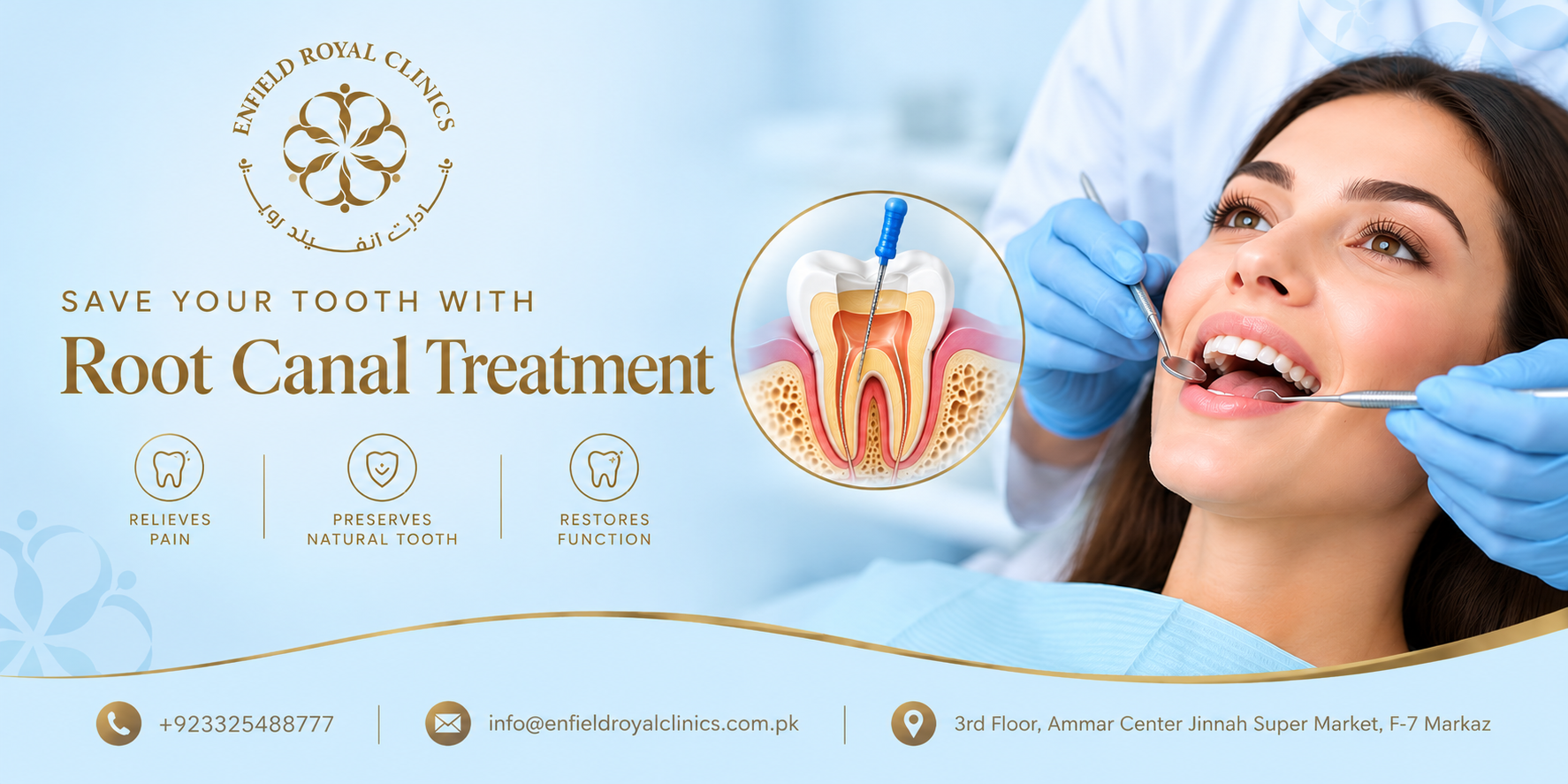
Tooth pain can make everyday activities such as eating, drinking, and sleeping uncomfortable. One common cause is damage to the dental pulp, the soft tissue inside a tooth that contains nerves and blood vessels. Deep tooth decay, cracks, or dental injuries can cause the pulp to become inflamed or infected. When the damage is severe, root canal treatment may help preserve the natural tooth and relieve the discomfort.
Yes, root canal treatment removes damaged or infected tooth pulp when the procedure is indicated. The dentist removes the affected tissue, cleans and disinfects the root canal system, and seals it to help prevent bacteria from entering again. The tooth is then restored with a suitable filling or crown, depending on how much healthy structure remains.
For patients considering Root Canal Treatment in Islamabad, understanding how the procedure works, why pulp damage occurs, and what happens afterward can help them make informed decisions about their dental health.
1. What Is Tooth Pulp, and Why Can It Become Damaged?
Tooth pulp is the soft tissue located inside the pulp chamber and root canals. It contains nerves, blood vessels, and connective tissue that support tooth development and help the tooth respond to certain stimuli.
Although the outer enamel and dentin protect the pulp, bacteria can reach it when decay becomes deep or the tooth develops a crack. Injuries that damage the tooth may also affect the pulp, even when the damage is not immediately visible.
Common causes of pulp damage include:
-
Deep tooth decay: Bacteria move through the tooth's hard tissues and reach the pulp.
-
Dental trauma: A blow to the mouth may damage the pulp or interrupt its blood supply.
-
Cracked teeth: Fractures can create pathways for bacteria to enter the inner tooth.
-
Repeated dental procedures: Extensive dental work may irritate or damage the pulp in some cases.
-
Advanced infection: Untreated decay may cause inflammation that progresses to irreversible pulp damage.
When the pulp becomes irreversibly inflamed or infected, the tooth may develop persistent pain, sensitivity, tenderness when biting, or swelling around the gums. However, some damaged teeth cause few noticeable symptoms.
A dental examination helps determine whether the pulp is healthy, reversibly inflamed, irreversibly damaged, or no longer vital. Not every painful tooth requires root canal treatment; the appropriate procedure depends on the diagnosis.
2. How Does Root Canal Treatment Remove Damaged Pulp?
Root canal treatment is designed to remove the affected pulp while preserving the remaining natural tooth. The dentist first examines the tooth and may take X-rays to assess the root structure and surrounding tissues.
Once treatment is considered appropriate, the process generally involves several steps.
Accessing the pulp: The dentist creates a small opening in the tooth to reach the pulp chamber and root canals.
Removing the damaged tissue: The infected or irreversibly inflamed pulp is removed from the chamber and canals. In a tooth where the pulp has died, the dentist removes the remaining tissue and addresses the infection.
Cleaning and shaping the canals: Special instruments and disinfecting solutions help clean the canal system and prepare it for filling.
Filling and sealing: The cleaned canals are filled with a suitable material and sealed to help prevent bacteria from entering the space again.
Restoring the tooth: A temporary or permanent filling closes the access opening. Depending on the tooth's condition, a permanent filling or crown may be needed to restore its strength and function.
The procedure is generally performed under local anesthesia to minimize pain during treatment. The exact process can vary according to the tooth's anatomy, the extent of infection, and whether additional procedures are necessary.
3. Does Root Canal Treatment Remove All of the Tooth?
No. Root canal treatment does not remove the entire tooth. It removes the damaged pulp from inside the tooth while preserving the outer structure and root whenever possible.
This distinction is important because the goal is to save a natural tooth rather than extract it. After the pulp is removed and the canals are sealed, the tooth can often continue to function during chewing.
The outer enamel, dentin, and root remain in place unless other damage makes additional treatment necessary. However, a tooth that has undergone root canal treatment no longer has living pulp tissue inside it. It can still function because the surrounding ligament, bone, and gums remain living tissues.
The treated tooth may need additional protection if deep decay or previous dental work has weakened its structure. A crown may be recommended for some molars and premolars because these teeth experience substantial chewing pressure.
Preserving the natural tooth can help maintain the bite and reduce the need for replacement options associated with tooth loss. Nevertheless, root canal treatment is not suitable for every tooth. Severe fractures, extensive structural damage, or certain other complications may make extraction a more appropriate choice.
4. What Symptoms May Indicate That Tooth Pulp Needs Treatment?
Symptoms of pulp damage vary depending on the cause and stage of the condition. Some patients experience intense pain, while others notice only occasional sensitivity or discomfort when chewing.
Possible warning signs include:
-
Toothache that continues or returns repeatedly
-
Sensitivity to hot or cold foods that lingers
-
Sharp pain when biting down
-
Throbbing discomfort that occurs without an obvious trigger
-
Swelling or tenderness around the gums
-
A darkened tooth following an injury
-
A pimple-like bump on the gum near the affected tooth
These symptoms do not automatically mean that root canal treatment is required. For example, brief sensitivity may result from exposed dentin, while pain during chewing may be caused by a cracked tooth or an uneven filling.
A dentist may use a clinical examination, temperature tests, percussion tests, and dental X-rays to determine the likely cause. These findings help guide treatment and avoid unnecessary procedures.
Patients exploring Root Canal Treatment in Islamabad should seek assessment when tooth pain persists rather than relying on painkillers alone. Early diagnosis may help prevent further damage and clarify whether the pulp can be preserved or needs to be removed.
Facial swelling, fever, or rapidly worsening symptoms require urgent dental attention. Difficulty breathing or swallowing, or significant swelling of the face or neck, requires emergency medical care.
5. What Happens to the Tooth After the Damaged Pulp Is Removed?
After root canal treatment, the tooth is cleaned internally, filled, and sealed. The next priority is to restore the tooth so it can withstand chewing forces and remain protected against bacterial contamination.
Some tenderness around the treated tooth may occur for several days. This can happen because the tissues surrounding the root were already inflamed or have been irritated during treatment. The discomfort should generally improve as recovery progresses.
The final restoration depends on the amount of healthy tooth structure remaining. A filling may be sufficient for a tooth with limited structural damage, while a crown may be more appropriate for a weakened tooth that needs additional support.
During recovery, patients should:
-
Follow the dentist's instructions about temporary restorations.
-
Avoid chewing hard foods on a tooth that has not received its final restoration.
-
Brush twice daily with fluoride toothpaste.
-
Clean between the teeth every day.
-
Attend recommended follow-up appointments.
-
Contact the dentist if pain increases or the restoration becomes loose.
Removing the damaged pulp addresses the problem inside the tooth, but it does not make the tooth immune to future decay or fracture. Regular oral hygiene and dental checkups remain important for long-term success.
6. Can a Tooth Remain Healthy Without Its Pulp?
A properly treated and restored tooth can continue to function for many years without living pulp tissue. Once the root canals have been cleaned and sealed, the tooth can remain anchored in the jawbone and participate in normal chewing.
However, the tooth may be more vulnerable to fracture if it has lost substantial structure through decay, cracks, or previous restorations. This is why the final filling or crown plays an important role in protecting the tooth.
Long-term maintenance includes daily brushing, cleaning between the teeth, avoiding habits such as biting ice, and seeking prompt care when symptoms return. Patients who grind their teeth may also benefit from a professionally recommended night guard.
Although root canal treatment has a high success rate in suitable cases, no treatment guarantees a permanent result. Persistent infection, new decay, cracks, or problems with the restoration can sometimes require further care.
For individuals considering Root Canal Treatment in Islamabad, a personalized dental assessment can explain whether the tooth is suitable for treatment, what restoration it may need, and how to protect it afterward.
Frequently Asked Questions
1. Does root canal treatment remove the nerve from a tooth?
Yes. The pulp contains the nerves and blood vessels inside the tooth. During root canal treatment, the affected pulp tissue is removed from the pulp chamber and root canals, while the remaining tooth structure is preserved when possible.
2. Does removing damaged pulp stop tooth pain?
Root canal treatment can relieve pain caused by irreversibly inflamed or infected pulp. Some tenderness may remain temporarily after the procedure, but worsening or persistent discomfort should be assessed by a dentist.
3. Can a tooth function normally after its pulp is removed?
Yes. A properly treated and restored tooth can often continue to support chewing for many years. The surrounding tissues keep the tooth anchored, although a suitable restoration is important to protect weakened areas.
4. Is root canal treatment better than extracting the tooth?
When a tooth can be restored successfully, root canal treatment may preserve the natural tooth and its chewing function. Extraction may be necessary when the tooth is too damaged to save. The dentist evaluates the condition of the tooth before recommending the appropriate option.
 Turkish
 English
 Arabic
 French
 Spanish
 Portuguese
 Deutsch
 Dutch
Dutch
 Italiano
 Russian
 Romaian
 Portuguese (Brazil)
 Greek
Greek