


How Can You Calculate Monthly Payments With a Heavy Equipment Financing Calculator?
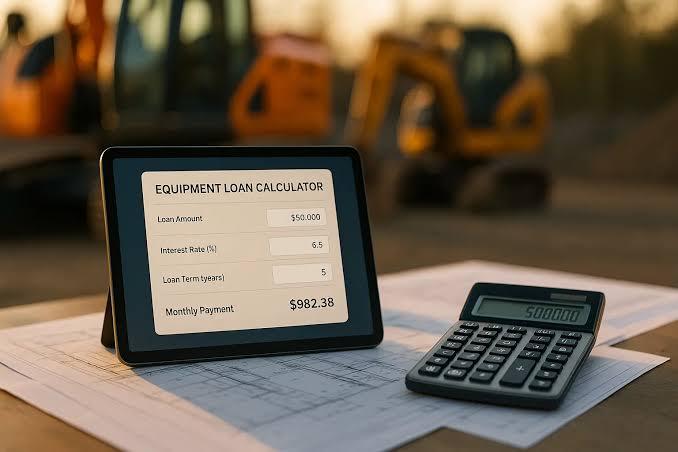
Buying heavy equipment is a major investment for construction companies, contractors, and other businesses. Machines such as excavators, bulldozers, cranes, loaders, and graders can help businesses complete projects faster and take on more work. However, these machines can cost thousands of dollars, making it difficult for some business owners to pay the full price upfront.
Financing can help you spread the cost of equipment over a set period. Before choosing a financing option, you need to understand how much you may have to pay each month. This is where a heavy equipment financing calculator becomes useful.
A calculator allows you to estimate monthly payments by entering details such as the amount borrowed, interest rate, and repayment period. It can also help you compare different financing options and prepare a budget that fits your business needs.
Smart Business Credit can be a starting point for business owners who want to learn about business credit and prepare for equipment financing decisions. Understanding how monthly payments work can help you make more informed choices before purchasing heavy machinery.
What Is a Heavy Equipment Financing Calculator?
A heavy equipment financing calculator is an online financial tool that estimates the payments you may need to make when financing heavy machinery. It uses information about your planned purchase and financing terms to calculate an estimated monthly payment.
For example, suppose you want to purchase an excavator for $80,000. You have enough savings to make a down payment, but you need to finance the remaining amount. By entering the loan amount, interest rate, and repayment period, you can estimate your monthly payment.
The calculator helps you understand how much money you may need to set aside each month. This makes it easier to decide whether the equipment purchase fits your business budget.
However, the result is an estimate rather than a guaranteed financing offer. Your actual payment may depend on additional fees, the lender's terms, and the type of financing agreement you choose.
What Information Do You Need to Calculate Monthly Payments?
Before using a heavy equipment financing calculator, you should collect a few important details about your planned purchase.
The first detail is the equipment price. Find out how much the machine costs and whether the price includes delivery or other charges.
Next, determine the down payment you can afford. This is the amount you pay upfront toward the purchase. Subtracting your down payment from the equipment price gives you an estimate of the amount you need to finance, before any additional charges.
You also need the interest rate and repayment period. If you have received a financing offer, use the figures provided in that offer. If you are still exploring your options, you can enter different figures to compare possible payments.
Finally, check whether the financing agreement includes additional fees or a large final payment. A basic calculator may not include these costs, so you may need to consider them separately.
Step 1: Determine the Amount You Need to Borrow
The amount you borrow is one of the main factors affecting your monthly payment. In general, a larger loan results in higher monthly payments when the interest rate and repayment period remain the same.
Start by identifying the full price of the heavy equipment you want to purchase. Then subtract the amount you plan to pay upfront.
For example, imagine that a construction machine costs $100,000 and you can make a down payment of $20,000.
Your estimated financing amount would be:
Equipment price: $100,000
Down payment: $20,000
Amount to finance: $80,000
You would enter $80,000 as the loan amount in the calculator, assuming no additional costs are being financed.
Knowing the correct amount to borrow helps you get a more accurate estimate. It also helps you understand how a larger or smaller down payment may affect your monthly payments.
Step 2: Enter the Interest Rate
The interest rate represents the cost of borrowing money. It is usually expressed as a percentage per year.
A higher interest rate generally increases both your monthly payment and the total amount you repay. A lower rate can reduce borrowing costs when other loan terms remain the same.
For example, you may want to finance a loader and compare two possible interest rates. You can enter each rate separately while keeping the loan amount and repayment period unchanged.
The calculator will show how the estimated payments differ.
Your actual interest rate may depend on your business credit history, financial position, income, time in operation, and the financing provider's requirements. If you already have a financing offer, use its quoted rate rather than relying on a general estimate.
Also, check whether the rate is fixed or variable. A fixed rate generally stays the same throughout the agreed period, while a variable rate may change according to the agreement.
Step 3: Choose the Repayment Period
The repayment period is the amount of time you have to repay the financing. It may be measured in months or years.
A shorter repayment period usually means higher monthly payments because you repay the amount over less time. However, it may reduce the total interest you pay.
A longer repayment period can lower monthly payments by spreading the cost across more months. However, you may pay more interest over the full term.
For example, you could compare financing the same machine over three years and five years. Enter each repayment period into the calculator and review the results.
Do not choose a longer repayment period simply because the monthly payment looks smaller. Consider the total repayment cost and how long you expect the equipment to remain useful.
The right repayment period should balance affordable monthly payments with the overall cost of financing.
Step 4: Calculate Your Estimated Monthly Payment
Once you have the loan amount, interest rate, and repayment period, enter the information into the heavy equipment financing calculator.
The calculator uses these details to estimate how much you may need to pay each month. If it includes a field for fees or a down payment, enter those figures as well.
For a standard loan with fixed monthly payments, the calculation commonly uses a formula based on the principal, monthly interest rate, and number of payments.
For example, consider an $80,000 loan with a fixed annual interest rate of 8% and a repayment period of five years.
Assuming monthly payments, a standard amortizing loan, and no additional fees, the estimated monthly payment would be about $1,622.
This is an illustration, not a financing offer. The actual amount may differ depending on the agreement and any additional costs.
The result gives you a starting point for deciding whether the monthly payment fits your business budget.
Step 5: Review the Total Repayment Cost
Monthly payments are important, but they do not tell you the entire cost of financing. You should also review the total amount you will repay over the full loan term.
For the example above, a monthly payment of approximately $1,622 over 60 months would result in total payments of about $97,320. This means the interest would be approximately $17,320, assuming the stated terms and excluding fees.
The calculation shows why it is important to consider both the monthly payment and the total repayment amount.
A longer repayment period may lower your monthly payment but increase the total interest paid. A shorter period may cost less in interest but require more money each month.
If the calculator does not show the total repayment amount, multiply the estimated monthly payment by the number of payments to get an approximate total. Remember that this calculation does not include fees or other charges unless they are already reflected in the payment.
How Can You Use the Calculator to Compare Financing Options?
A heavy equipment financing calculator can help you compare different financing offers before deciding which one best suits your business.
For a fair comparison, enter the details of each offer separately. Review the loan amount, interest rate, repayment period, monthly payment, and total repayment cost.
For example, one financing option may have a lower interest rate but a shorter repayment period. Another may offer lower monthly payments over a longer period.
Comparing the results helps you understand the trade-off between monthly affordability and total borrowing costs.
You should also review fees, down payment requirements, early repayment conditions, and any final payment required under the agreement. A calculator may not include all these details.
The best option is not always the one with the lowest monthly payment. It is the one that fits your budget and offers suitable terms for your business needs.
How Do Monthly Payments Affect Your Business Budget?
Heavy equipment financing payments become part of your regular business expenses. You need to make sure that your expected income can cover the payment along with other operating costs.
These costs may include fuel, maintenance, repairs, insurance, employee wages, transportation, and storage.
For example, an excavator may help you complete more construction projects, but it will also require money to operate and maintain. If you spend too much on the monthly financing payment, you may struggle to cover these other expenses.
Use the calculator to estimate the payment and then compare it with your expected monthly cash flow.
It is also wise to prepare for slower business periods. Construction projects can be delayed because of weather, customer schedules, or other unexpected events. Keeping some money available for emergencies can help you manage your financial responsibilities more comfortably.
Smart Business Credit can serve as a starting point for business owners who want to understand business credit and prepare for financing decisions.
Common Mistakes to Avoid When Calculating Payments
One common mistake is entering the full equipment price instead of the amount you actually need to borrow. If you plan to make a down payment, remember to account for it.
Another mistake is using an interest rate that does not match your financing offer. The result may look useful, but it will not accurately reflect your expected payment.
You should also avoid ignoring additional fees. Application fees, origination charges, and other costs may increase the total amount you pay.
Some buyers focus only on monthly payments and forget to review the total repayment cost. Always consider both figures before choosing a financing option.
Finally, do not assume that the calculator guarantees approval or confirms your final payment. It provides an estimate based on the information entered. Review the official financing agreement to confirm the actual terms.
Conclusion
Calculating monthly payments with a heavy equipment financing calculator is a practical way to prepare for purchasing construction machinery. By entering the loan amount, interest rate, and repayment period, you can estimate your payments and understand how different financing terms affect your budget.
 Portuguese (Brazil)
 English
 Arabic
 French
 Spanish
 Portuguese
 Deutsch
 Turkish
 Dutch
 Italiano
 Russian
 Romaian
 Greek