


Deaf Bonce Speakers: How to Achieve Powerful Sound Pressure, Distinct Vocal Detail, and Competition-Inspired Car Audio Performance
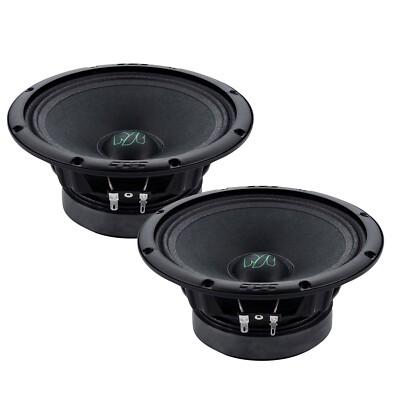
A competition-inspired car audio system must do more than produce an impressive burst of volume. It should deliver strong acoustic impact while keeping vocals, instruments, and musical transitions recognizable. Reaching that balance requires a system designed around the vehicle, the listener's goals, and the capabilities of every component.
Deaf bonce speakers may suit enthusiasts who want an energetic, high-output sound system, but the final performance depends on more than speaker selection. Amplifier compatibility, enclosure design, mounting quality, electrical supply, and crossover configuration all influence the result.
Before buying equipment, decide whether your priority is maximum sound pressure, a forward vocal presentation, or a combination of both. This decision shapes the entire build, from the speaker arrangement to the way the system is tuned.
Understand What Sound Pressure Really Means
Sound pressure level, commonly measured in decibels (dB), describes the strength of sound at a particular location. In car audio, achieving a high sound pressure level depends on several interacting factors, including speaker sensitivity, amplifier output, enclosure design, cabin acoustics, and frequency.
More electrical power does not translate into an equal increase in perceived loudness. Under idealized conditions, doubling amplifier power produces approximately a 3 dB increase in output, provided the speaker can handle the additional power and other limitations do not intervene. Real systems may behave differently because of compression, distortion, thermal limits, and the vehicle's acoustic environment.
Speaker sensitivity can help you compare potential output efficiency when manufacturers use comparable testing methods. However, sensitivity ratings alone do not determine which speaker will deliver the best results in your vehicle.
For a serious high-output build, evaluate the entire system instead of focusing on a single impressive specification. This approach helps you distinguish equipment that genuinely suits your goals from equipment that simply advertises a large number.
Select Speakers That Fit Your Performance Target
Choosing the right speaker starts with understanding its intended role. Dedicated midrange drivers emphasize the frequencies that carry much of the energy in vocals, guitars, snare drums, and other familiar musical elements. Tweeters extend the system's high-frequency detail, while subwoofers handle the lowest frequencies.
When comparing Deaf Bonce speakers, examine the specifications of each exact model. Useful details include RMS power handling, nominal impedance, sensitivity, frequency response, mounting dimensions, and the manufacturer's recommended operating conditions.
Consider these questions before making a purchase:
-
Does the speaker cover the frequency range required for your system?
-
Can the selected amplifier drive it safely at the intended impedance?
-
Is its sensitivity suitable for your output goals?
-
Will it fit securely in the vehicle without obstructing factory components?
-
Does it integrate well with your planned tweeters and subwoofers?
Avoid treating peak wattage as the primary measure of performance. RMS ratings generally provide more useful guidance for sustained power planning, although ratings should always be interpreted according to the manufacturer's specifications.
The best component is the one that performs its intended role effectively within the complete system.
Build a Front Stage That Keeps Vocals in Focus
High-output systems can make music exciting, but excessive volume across the wrong frequency range can reduce clarity. Vocals may become harsh, guitars may lose definition, and instruments can blend together when the system is poorly balanced.
A well-designed front stage helps maintain a clear presentation from the driver's seat. Start with suitable speaker placement, consistent left-to-right output, and correct polarity. Differences between the two sides can pull vocals away from the center and make the soundstage feel uneven.
Pay particular attention to the relationship between midrange drivers and tweeters. If their frequency ranges do not blend properly, the result may sound hollow in one region and excessively bright in another.
Use familiar music to assess vocal quality. Recordings with clear singing, layered harmonies, and distinct instruments can reveal problems that bass-heavy tracks conceal. Listen for intelligibility and natural tone rather than judging the system solely by how forcefully it plays.
If the vocals become sharp at higher levels, check for clipping and excessive equalization before changing components. If they seem weak, inspect crossover settings, speaker placement, and the balance between the front stage and subwoofer.
A properly configured front stage can deliver strong presence without making every recording sound aggressive.
Choose Amplification for Controlled Output
Amplifier selection should follow the electrical requirements of the speakers, not simply the desired wattage advertised on a product listing.
Check the nominal impedance and RMS power handling of the selected drivers. Then compare those specifications with the amplifier's continuous output at the relevant load. If multiple speakers share an amplifier channel, calculate the resulting impedance and confirm that the amplifier supports it.
An amplifier that cannot deliver the required clean output may limit performance. However, installing a more powerful amplifier without adjusting the rest of the system can introduce new risks.
Set gain correctly to match the incoming signal to the amplifier's input sensitivity. Gain is not a control for increasing the amplifier's maximum rated power. Excessive gain can cause clipping, which introduces distortion and can damage connected speakers.
For high-output applications, also consider amplifier efficiency, heat management, and ventilation. Class D amplifiers are often used in demanding car audio systems because of their efficiency, but the appropriate amplifier still depends on the application and its electrical requirements.
Good amplification delivers usable power with predictable operation, allowing the speakers to produce strong output without unnecessary distortion.
Treat Enclosure Design as a Performance Tool
Enclosure design is particularly important when subwoofers form part of a sound-pressure-focused build. The enclosure affects acoustic output, frequency response, cone movement, and how effectively the subwoofer interacts with the vehicle cabin.
A sealed enclosure can provide controlled bass response and may suit installations where space is limited. A properly engineered ported enclosure can produce greater output around its tuning region, making it useful for some high-output applications. Neither design is universally superior.
The correct enclosure depends on the subwoofer's specifications, internal volume requirements, port dimensions, intended tuning frequency, and available vehicle space.
Poorly designed port dimensions or inadequate internal volume can undermine performance, even when the subwoofer and amplifier are capable components. Structural rigidity and secure construction also matter because panel flex and air leaks can introduce noise and reduce consistency.
Remember that enclosure design primarily concerns the subwoofer's low-frequency performance. It should complement the midrange and front stage rather than overwhelm them.
For builds intended to reach extreme sound pressure levels, professional enclosure design and measurement can help identify improvements that trial and error may miss.
Strengthen the Vehicle's Electrical Foundation
High-output amplifiers can draw substantial current, especially during demanding musical passages. If the battery, alternator, wiring, or connections cannot support that demand, the system may experience voltage drop, reduced performance, or protective shutdowns.
Start by inspecting the condition of the battery and charging system. Check power and ground connections, confirm that wiring is appropriate for the amplifier, and use correctly rated fuses installed according to the equipment requirements.
Potential warning signs include repeated amplifier shutdowns, excessive heat, unstable operation, or significant voltage changes under load. These symptoms require diagnosis rather than simply increasing amplifier power.
Some installations may benefit from upgraded power and ground connections. More demanding builds may require a charging-system upgrade based on actual electrical demand. Additional wiring can reduce losses in the connections it improves, but it cannot increase an alternator's generating capacity.
Plan the electrical system before adding multiple amplifiers or other power-hungry components. Doing so can help prevent expensive troubleshooting and support more consistent output.
Eliminate Installation Problems That Reduce Performance
A speaker's acoustic performance can suffer when the mounting surface vibrates, the installation contains gaps, or the driver lacks adequate clearance.
Use a suitable mounting adapter and secure the speaker firmly. Check that the cone can move freely and that the installation does not interfere with windows, wiring, door panels, or protective grilles.
Sound treatment can help reduce unwanted panel resonance. Appropriate sound-deadening materials may make door panels less prone to vibration, while carefully sealing the mounting area can improve installation consistency where suitable.
These changes should preserve factory drainage paths, airbag systems, wiring routes, and moving components. A louder system should never come at the expense of vehicle safety or functionality.
Once the speakers are installed, test them before completing the interior assembly. Listen for rattles at several frequencies and inspect any areas that appear to vibrate. A loose trim panel can create noise that sounds like a damaged driver, so identifying the source matters.
Secure installation provides a stable foundation for tuning and helps the system deliver its intended output more consistently.
Coordinate Crossovers Across the Entire System
Crossovers divide the audio signal into frequency ranges that different speakers can reproduce effectively. Incorrect settings can create weak transitions, harshness, or distortion when a driver receives frequencies outside its comfortable operating range.
Begin with the manufacturer's guidance for each component. Set suitable high-pass filtering for midrange drivers, configure the tweeter crossover according to its requirements, and establish a low-pass setting for the subwoofer that blends with the front stage.
Pay attention to both crossover frequency and slope. These settings determine how the signal transitions between drivers and influence how smoothly their outputs combine.
If vocals sound hollow, there may be an imbalance around the transition between the midrange and tweeter. If bass sounds detached from the rest of the music, the subwoofer may be playing too high or may not be integrating properly with the front speakers.
Make changes gradually and listen to the same recordings after each adjustment. This makes it easier to identify improvements and avoid creating new tonal problems.
A properly integrated system should sound cohesive, with no obvious gap between bass, midrange, and high frequencies.
Use Measurement and Listening Together
Competition-inspired systems benefit from a methodical tuning process. Listening reveals whether the system sounds engaging, while suitable measurement tools can help identify frequency-response problems and verify performance changes.
Begin with a clean source signal and conservative equalization. Confirm that the amplifier is not clipping and that crossover settings protect each driver. Then evaluate the system from the primary listening position.
A real-time analyzer can help reveal peaks and dips across the frequency range. An appropriate sound pressure level meter can measure output at a defined location, while a microphone and suitable software can support more detailed acoustic analysis.
Measurements need consistent conditions to be meaningful. Microphone placement, background noise, vehicle position, windows, doors, and the selected test signal can all affect readings.
For sound-pressure testing, follow appropriate safety precautions and competition rules. Extremely high sound levels can cause permanent hearing damage, and exposure risk increases with both intensity and duration. Do not use hearing discomfort as a tuning reference or repeatedly expose yourself to extreme output.
Use measurement to guide adjustments, then listen at safe levels to confirm that the system remains balanced and enjoyable.
Preserve Reliability as Output Increases
A high-output system must withstand vibration, heat, and repeated electrical demand. Maintaining performance means checking more than the speakers themselves.
Inspect amplifier ventilation, wiring insulation, electrical terminals, mounting hardware, and enclosure construction periodically. Look for loose connections, signs of excessive heat, or new rattles that develop after regular use.
Listen for distortion as the volume rises. If vocals become rough or bass loses definition, reduce the level and check source settings, amplifier gain, crossover configuration, and component limits. Continuing to increase the volume can worsen the problem and place equipment at risk.
Review the setup after replacing any major component. Different speakers or amplifiers may have different sensitivity, impedance, or frequency-response characteristics, requiring adjustments to the system.
Reliable performance comes from operating components within their intended limits and addressing problems early rather than treating every limitation as a reason to add more power.
Build for the Experience, Not Just the Numbers
A successful competition-inspired car audio setup balances output, clarity, and reliability. The speakers need to suit the intended frequency range, the amplifier must provide appropriate clean power, and the installation must support effective acoustic performance.
Deaf Bonce speakers can be part of that approach when the selected models match the system's goals and work well with the supporting equipment. Focus on sound pressure where it matters, distinct vocals, a properly designed bass foundation, and smooth integration between components.
Set priorities before spending money, correct the weakest part of the system first, and use careful installation and tuning to make each upgrade count. For competition builds, measurements and professional guidance can help refine performance beyond what specifications alone can predict.
The result should be more than a loud vehicle. It should be a thoughtfully engineered audio system that delivers powerful impact, recognizable musical detail, and dependable performance while respecting the limits of both the equipment and your hearing.
 Romaian
 English
 Arabic
 French
 Spanish
 Portuguese
 Deutsch
 Turkish
 Dutch
 Italiano
 Russian
 Portuguese (Brazil)
 Greek