


💰 How to Create a Home Renovation Budget You Can Actually Stick To
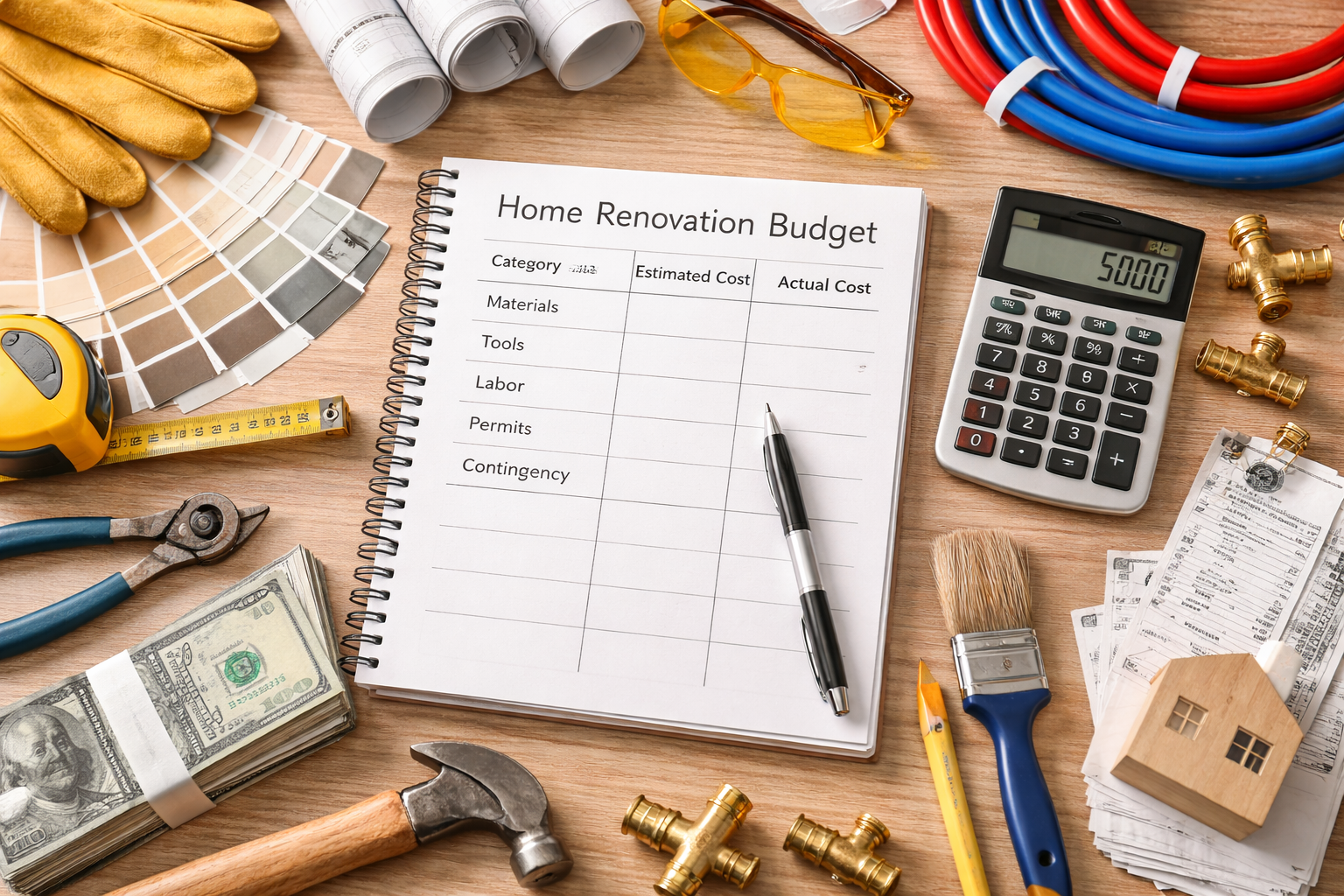
One of the biggest reasons home renovation projects fail isn’t poor workmanship — it’s poor budgeting. Without a clear plan, costs can spiral quickly, leaving projects unfinished or far more expensive than expected.
This guide walks you through a realistic, step-by-step approach to building a home renovation budget you can actually stick to — even if it’s your first DIY project.
🧠 Step 1: Define the Scope of Your Renovation
Before you think about numbers, be crystal clear about what you’re renovating. Ask yourself:
- Which room(s) are included?
- Cosmetic upgrades or structural changes?
- DIY-only or partial professional help?
The more specific your scope, the more accurate your budget will be.
📋 Step 2: Break Costs Into Clear Categories
A smart budget is broken down into manageable sections:
- Materials: paint, flooring, tile, fixtures
- Tools: purchases or rentals
- Labor: electricians, plumbers, contractors
- Permits & fees: inspections or local requirements
- Disposal: debris removal, dumpster rental
This prevents hidden costs from sneaking up on you.
💸 Step 3: Research Real Prices (Not Estimates)
Don’t rely on guesses. Check actual prices from:
- Local hardware stores
- Online retailers
- Contractor quotes
Write down real numbers — not best-case scenarios.
⚠️ Step 4: Add a Contingency Buffer
Unexpected issues are almost guaranteed in renovations. Always add:
- 10–15% for small projects
- 15–20% for older homes
This buffer protects your project from delays and stress.
🛒 Step 5: Separate “Must-Haves” From “Nice-to-Haves”
Prioritize spending by creating two lists:
- Must-Haves: structural repairs, plumbing, electrical
- Nice-to-Haves: decor, upgraded finishes, luxury items
If costs rise, you’ll know exactly what can be postponed.
📆 Step 6: Budget in Phases
You don’t have to do everything at once. Breaking projects into phases allows you to:
- Spread costs over time
- Avoid debt
- Adjust plans as you go
Phased renovations are more sustainable and realistic.
📊 Step 7: Track Every Expense
Track spending using:
- A spreadsheet
- Budgeting apps
- A simple notebook
Update it after every purchase — not later.
🚫 Common Budgeting Mistakes to Avoid
- Underestimating labor costs
- Skipping permits
- Forgetting tax and delivery fees
- Spending too much early in the project
✔️ Final Thoughts
A realistic renovation budget isn’t about cutting corners — it’s about planning smart. When you know where your money is going, you stay in control, reduce stress, and actually finish your project.
💬 Share Your Thoughts
What’s the hardest part of budgeting for a renovation — materials, labor, or unexpected costs? Share your experience or questions in the comments below!
 Greek
Greek
 English
 Arabic
 French
 Spanish
 Portuguese
 Deutsch
 Turkish
 Dutch
Dutch
 Italiano
 Russian
 Romaian
 Portuguese (Brazil)