


How Ampcera’s Isostatic Pouch Cell Testing Vessel Supports Battery R&D?
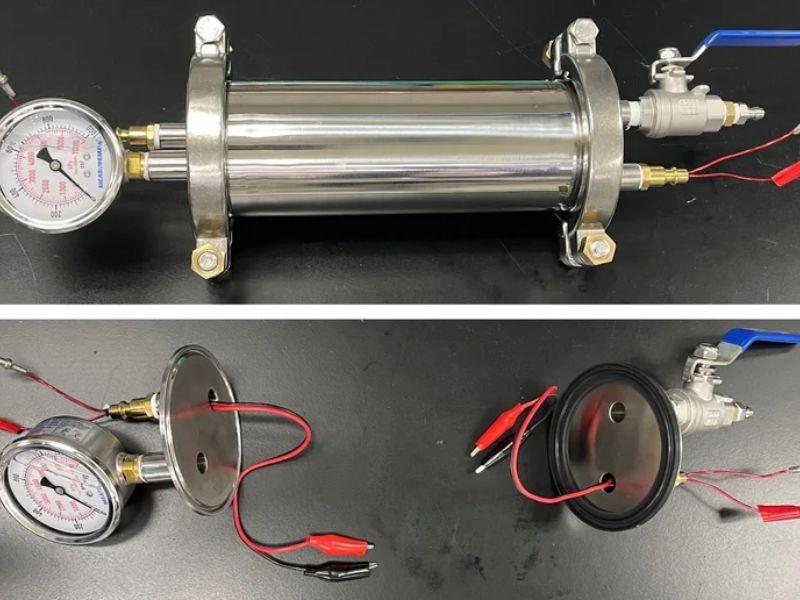
Solid-state battery research requires ways to assemble cells and evaluate them under controlled conditions. Pressure can influence contact between solid components, making it a variable in pouch-cell testing. Ampcera offers an Isostatic Pouch Cell Testing Vessel designed to apply controlled pressure during all-solid-state pouch-cell cycling. It uses compressed air to distribute pressure around the cell. Researchers can use it to investigate pressure-related effects during electrochemical testing. Its features, connections, and operating limits help laboratories assess whether it fits their setup.
What Is an Isostatic Pouch Cell Testing Vessel?
An Isostatic Pouch Cell Testing Vessel is a pressure-testing enclosure for all-solid-state battery pouch cells. Ampcera describes it as a tool for applying uniform cycling pressure up to 5 MPa, using compressed air rather than torque-based mechanical adjustment.
Contact between electrode and electrolyte layers can affect measured cell behaviour. Controlled pressure lets researchers study this variable during electrochemical testing and investigate solid-state battery interfaces.
Why Is Pressure Important in Solid-State Battery Testing?
Solid-state batteries need effective contact across their solid interfaces. Contact, stack design, material properties, and cycling conditions can influence impedance and cell response, so pressure is an important research variable.
Too little pressure may not provide the contact a cell design requires; too much can create risks or change test conditions. The appropriate pressure depends on cell construction and the research plan. The vessel helps apply a controlled pressure, but researchers must establish suitable conditions through cell-specific testing.
How Does the Equipment Work?
The Isostatic Pouch Cell Testing Vessel uses compressed air to apply pressure around the pouch cell. Ampcera describes this as true isostatic loading, intended to distribute pressure uniformly rather than relying on torque adjustment. The product uses a leak-tight steel vessel and replaceable O-rings.
Pressure Application
Compressed air is supplied through an 8 mm quick-disconnect port. The specified pressure range is up to 5 MPa. The manufacturer warns that operation above 5 MPa may lead to leakage and/or explosion of the vessel. Users must follow the stated limit and the manufacturer's operating instructions.
Electrical Connections
The design includes two electrical feedthroughs for cycling connections. The product specification lists alligator clips for connection to the cell and 4 mm male banana plugs for connection to a battery cycler. Researchers should confirm that their cell format, wiring, and cycler setup are compatible before using the equipment.
Compact Design
The vessel measures 3 inches in diameter and 8 inches long. An optional portable air compressor is listed at 6 × 10 × 9 inches.
Key Features to Review Before Purchase
Ampcera lists several design features for the Isostatic Pouch Cell Testing Vessel:
-
Uniform pressure distribution using compressed air, up to 5 MPa.
-
Leak-tight steel construction.
-
Replaceable O-rings.
-
Two electrical feedthroughs.
-
Cell connections using alligator clips.
-
Cycler connections using 4 mm male banana plugs.
-
An 8 mm quick-disconnect compressed-air port.
-
A stated temperature range of 10–30°C.
-
An optional compact air compressor.
Researchers should compare these specifications with their test requirements and confirm the selected configuration with Ampcera.
Applications in Battery Research
The product lists two channels. For teams planning measurements, the channel count and connection arrangement should be checked against the cycler and experimental wiring. Ask Ampcera whether the configuration suits the planned test sequence and whether other equipment is needed. The Isostatic Pouch Cell Testing Vessel should be integrated only after these compatibility checks.
The Isostatic Pouch Cell Testing Vessel is intended for all-solid-state pouch-cell cycling and studies where pressure is an experimental variable.
Interface and Impedance Studies
Researchers can study how controlled pressure relates to interfaces within a solid-state cell. Impedance measurements may show resistance changes as test conditions vary. The research team remains responsible for the measurement plan and interpretation.
Pressure-Dependent Performance Evaluation
Battery developers may compare cell responses at pressure settings within the approved range to characterize a design.
Durability Testing
The product is also listed for pressure-dependent durability testing. Researchers can monitor electrochemical changes over repeated cycling, with test duration, protocol, temperature, and pressure chosen for the specific cell.
An Isostatic Pouch Cell Testing Vessel is a research tool, not a guarantee of improved battery performance.
Operating Conditions and Safety Considerations
Users should read the current manufacturer documentation and establish a laboratory procedure. Pressure vessels require inspection and operation by trained personnel.
Important points include:
-
Never exceed the stated maximum pressure of 5 MPa.
-
Inspect the vessel, seals, O-rings, ports, and connections before use.
-
Use a compatible compressed-air supply and fittings.
-
Confirm that electrical connections are secure and appropriate for the cycler.
-
Stay within the stated temperature range of 10–30°C.
-
Follow laboratory rules for pressurized equipment and battery testing.
-
Stop testing if leakage, damage, or abnormal behaviour is observed.
Ampcera warns that operation above 5 MPa may cause leakage and/or explosion. Do not exceed this limit; follow the manufacturer's instructions and laboratory safety rules.
How to Decide Whether It Fits Your Laboratory?
When evaluating an Isostatic Pouch Cell Testing Vessel, start with cell dimensions and research goals. Check pouch format, cycler connections, and the pressure range required for your experiments. Plan the compressed-air supply, vessel placement, and monitoring procedure. Ask whether you need the optional compressor or already have a compatible air source. Confirm the package, accessories, documentation, and support before purchase.
How Ampcera Supports Battery R&D?
Ampcera works in advanced battery materials and equipment for solid-state battery research. Alongside electrolyte and cathode materials, it lists tools for laboratory and development work. The vessel may interest teams studying interfaces, impedance, and pressure-dependent cycling. Review the specifications and discuss cell dimensions, connections, pressure needs, and compressor options with Ampcera to confirm fit.
Frequently Asked Questions
What is the maximum pressure?
The listed maximum operating pressure is 5 MPa. Ampcera warns that operating above this level may cause leakage and/or explosion. The limit must be followed.
What temperature range is specified?
The product specification lists a temperature range of 10–30°C.
How does it connect to a battery cycler?
The listed cycler connection is a 4 mm male banana plug. The cell connection is specified as an alligator clip. Confirm compatibility with your equipment before testing.
What does the Isostatic Pouch Cell Testing Vessel connect to?
The listed setup uses alligator clips at the cell and 4 mm male banana plugs at the cycler. Check cable and channel compatibility before testing.
Is an air compressor included?
A compact air compressor is offered as an optional configuration. Confirm the selected package and included components when requesting a quote.
Conclusion
Controlled pressure is an important variable in the evaluation of all-solid-state pouch cells. Ampcera's vessel is designed to apply compressed-air pressure uniformly, with electrical feedthroughs for cycling connections and a specified operating range up to 5 MPa. Its listed applications include pouch-cell cycling, interface and impedance studies, and pressure-dependent performance and durability evaluation.
For laboratories considering an Isostatic Pouch Cell Testing Vessel, check cell compatibility, pressure and temperature limits, connections, and safety procedures. Contact Ampcera to confirm the configuration for your research.
 Deutsch
 English
 Arabic
 French
 Spanish
 Portuguese
 Turkish
 Dutch
 Italiano
 Russian
 Romaian
 Portuguese (Brazil)
 Greek