


Building a Strong Foundation for a Pilot Career
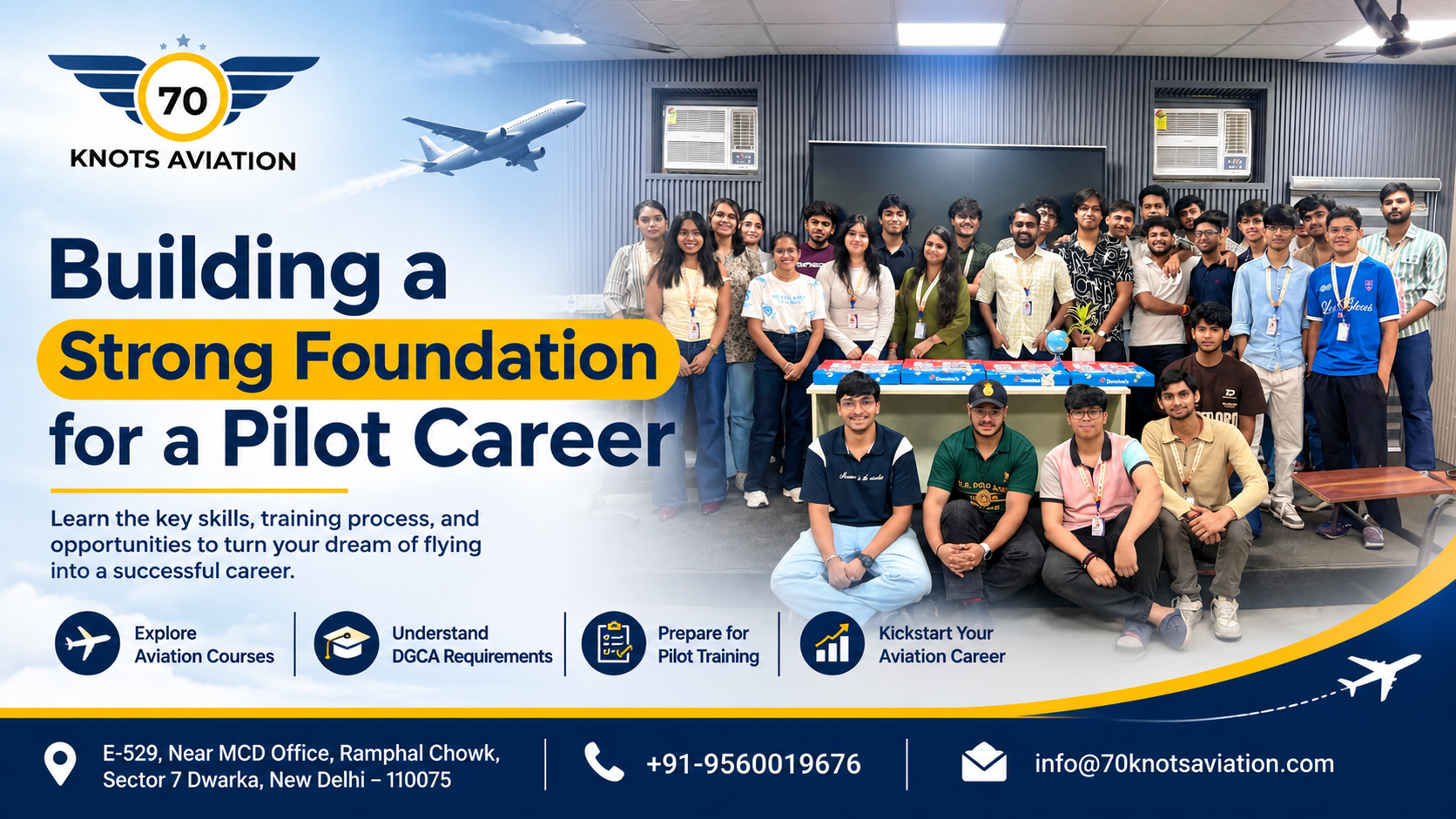
A professional career in aviation requires a combination of technical knowledge, practical skills, discipline and responsibility. For aspiring pilots in India, the journey begins with understanding the applicable eligibility requirements and preparing for the different stages of pilot training.
Students often focus on the excitement of flying an aircraft, but the theoretical learning process is equally important. Understanding navigation, meteorology, aircraft systems and aviation regulations helps future pilots develop the knowledge needed for professional flight operations.
At 70Knots Aviation, we believe that informed preparation can make aviation education easier to understand. We focus on helping students build a strong academic foundation through structured DGCA ground training and guidance.
Starting with the Right Information
Before enrolling in a pilot training programme, students should understand the requirements for pursuing a Commercial Pilot Licence (CPL). These include educational qualifications, medical fitness, theoretical examinations and practical flight training.
Students exploring How to become a pilot should begin by reviewing the relevant DGCA requirements. Understanding the process early can help students prepare their documents, plan medical assessments and identify the training stages they need to complete.
Educational eligibility is an important starting point. Students generally require Class 12 Physics and Mathematics or an accepted equivalent qualification. They must also meet the applicable medical standards established by the DGCA.
Students should refer to the latest official requirements when planning their training because licensing procedures and regulatory instructions may change.
Developing Knowledge Through Aviation Ground Classes
Ground training introduces students to the scientific, technical and regulatory principles behind aviation. It prepares them for the theoretical examinations required during their professional pilot training journey.
At 70Knots Aviation, we emphasise the importance of understanding each subject rather than relying entirely on memorisation. Aviation concepts often connect with one another, so developing a clear understanding of the fundamentals can support more effective learning.
Students generally study several important subjects during their CPL theoretical preparation:
- Air Navigation: Introduces navigation calculations, flight planning, charts, maps and positioning principles.
- Aviation Meteorology: Explains weather systems, atmospheric behaviour, visibility, wind and other weather-related factors affecting flight operations.
- Air Regulations: Covers aviation legislation, operational rules and the responsibilities associated with flight crew duties.
- Technical General: Explores aircraft structures, engines, systems, aerodynamics and technical principles.
- Technical Specific: Focuses on aircraft-specific technical knowledge relevant to the applicable examination requirements.
Each subject has its own learning requirements. Air Navigation involves numerical practice, while Meteorology requires students to understand atmospheric processes and weather patterns. Technical subjects require attention to aircraft systems and operating principles.
Finding an Academy That Supports Academic Preparation
Selecting a training academy involves evaluating several factors. Students should understand the teaching methodology, available study material, faculty experience and academic support before enrolling.
When considering a Pilot training institute in Delhi, aspiring aviators should examine whether the learning programme covers the subjects required for DGCA examination preparation. They should also enquire about classroom schedules, doubt-clearing opportunities and the approach used to explain technical topics.
At 70Knots Aviation, we aim to provide an organised learning environment where students can strengthen their aviation fundamentals. We encourage learners to participate in discussions, ask questions and practise concepts regularly.
Students should also understand that a ground training academy and a flying training organisation may provide different services. Ground classes focus on theoretical learning, while practical flight training takes place through the appropriate flying training arrangements.
How to Approach DGCA Examination Preparation
Preparing for DGCA examinations requires more than completing the syllabus. Students need to develop the ability to understand aviation concepts, apply formulas and interpret technical information.
We encourage students to create a realistic study routine. Dividing the syllabus into smaller sections can make large subjects easier to manage. Regular revision also helps students identify areas that need additional attention.
Some useful preparation methods include:
- Reviewing class notes after each lesson.
- Practising numerical questions and calculations regularly.
- Using diagrams to understand aircraft systems and technical processes.
- Revising aviation terminology and regulatory concepts.
- Solving relevant practice questions to assess understanding.
- Discussing difficult subjects with instructors.
Students should also become familiar with the DGCA Pariksha portal and its examination-related services. It supports processes such as registration, scheduling, admit cards and result access. The portal itself is not an examination or an academic subject.
Understanding CPL Ground Training Options
Students have different learning requirements and may need varying levels of academic support. Some may find navigation calculations challenging, while others may need additional time to understand meteorological processes or aircraft systems.
When comparing the Best CPL Ground Classes in India, students should assess whether the programme offers comprehensive subject coverage and a suitable teaching approach.
They should also consider the availability of experienced instructors, structured classroom sessions, study resources and opportunities to clarify doubts.
At 70Knots Aviation, we believe that effective theoretical preparation should connect classroom learning with practical aviation knowledge. Students should understand why a concept matters and how it relates to flight operations.
For example, learning about weather patterns helps students understand the conditions that influence flight planning. Similarly, understanding navigation principles provides a foundation for interpreting charts, calculations and aircraft positioning.
Preparing a Realistic Pilot Training Budget
Financial planning should be part of the decision-making process from the beginning. Pilot training involves different expenses, and the overall investment can vary according to the flying school and training arrangements.
Students researching pilot course fees in india should understand what different training expenses cover instead of depending on a single estimated amount.
Common expense categories include:
- Ground training and academic preparation.
- Practical flight training and flying hours.
- DGCA medical examinations.
- Examination and licensing-related charges.
- Learning materials and other academic resources.
- Accommodation and transportation, depending on the training location.
Flying training expenses can differ depending on aircraft type, availability, location, flying school arrangements and the time required to complete training. Students should request an itemised estimate directly from their chosen flying school.
It is also important to ask whether the quoted amount includes additional requirements or whether certain expenses will be charged separately. Clear financial planning can help families make better decisions and prepare for the different stages of training.
Developing the Professional Approach of a Pilot
Technical knowledge is only one part of becoming a professional pilot. Aviation also requires responsibility, communication, discipline and the ability to follow procedures carefully.
Students should develop good learning habits from the beginning of their training journey. Punctuality, regular study, attention to detail and a willingness to learn are useful qualities throughout aviation education.
We encourage aspiring pilots to approach their studies with curiosity. Instead of memorising every topic without understanding it, students should try to identify the principles behind each concept. This can help them develop a more meaningful understanding of aviation.
They should also remain updated about applicable DGCA instructions and licensing requirements. Referring to official sources helps students avoid relying on outdated information or assumptions.
A Conversation Between a Student and an Aviation Counsellor
Student: I am interested in becoming a commercial pilot. Is theoretical preparation difficult?
Counsellor: Some subjects involve technical concepts and calculations, but structured learning and regular practice can help you understand them. The key is to remain consistent and clarify your doubts.
Student: Which subjects should I pay particular attention to?
Counsellor: Give attention to every required subject. Air Navigation requires calculation practice, Meteorology needs conceptual understanding, and Technical General requires familiarity with aircraft systems and principles.
Student: Can ground classes replace practical flying training?
Counsellor: No. Ground training provides theoretical knowledge, whereas practical flying training develops the skills required to operate an aircraft. Both serve different purposes in the CPL pathway.
Student: How should I compare different academies?
Counsellor: Review faculty experience, subject coverage, teaching methods, class schedules and academic support. Make sure you understand exactly what the training programme includes.
Student: What should I consider before finalising my budget?
Counsellor: Consider ground training, flying hours, medical assessments, examination expenses and licensing-related charges. Ask your chosen flying school for a detailed cost breakdown.
Questions Aspiring Pilots Often Ask
1. What is the first step towards a CPL in India?
Students should review their educational eligibility, understand the applicable medical requirements and learn about the DGCA licensing process before planning their training.
2. Why are aviation ground classes important?
Ground classes help students understand the theoretical principles of navigation, meteorology, regulations and aircraft systems required for professional pilot preparation.
3. Does completing ground training mean that a student has obtained a CPL?
No. Ground training covers theoretical preparation. Students must also complete the required practical flight training, examinations, skill tests and other applicable licensing requirements.
4. Can pilot training expenses vary between flying schools?
Yes. Costs can differ depending on location, aircraft availability, training arrangements, flying hours and other services included in the programme.
5. How can students improve their DGCA examination preparation?
Students can follow a structured timetable, practise questions, revise regularly and seek guidance when they find technical concepts difficult.
Conclusion
Building a career in aviation requires a combination of theoretical knowledge, practical experience and consistent preparation. Students who understand the licensing requirements and different stages of training can approach their aviation journey with greater clarity.
At 70Knots Aviation, we focus on helping aspiring pilots strengthen their academic foundation through structured DGCA ground training. We believe that informed decisions, regular learning and professional guidance can help students prepare responsibly for the challenges and opportunities of an aviation career.
 Greek
 English
 Arabic
 French
 Spanish
 Portuguese
 Deutsch
 Turkish
 Dutch
 Italiano
 Russian
 Romaian
 Portuguese (Brazil)