


What to Look for in Property Management Accounting Software Before You Choose
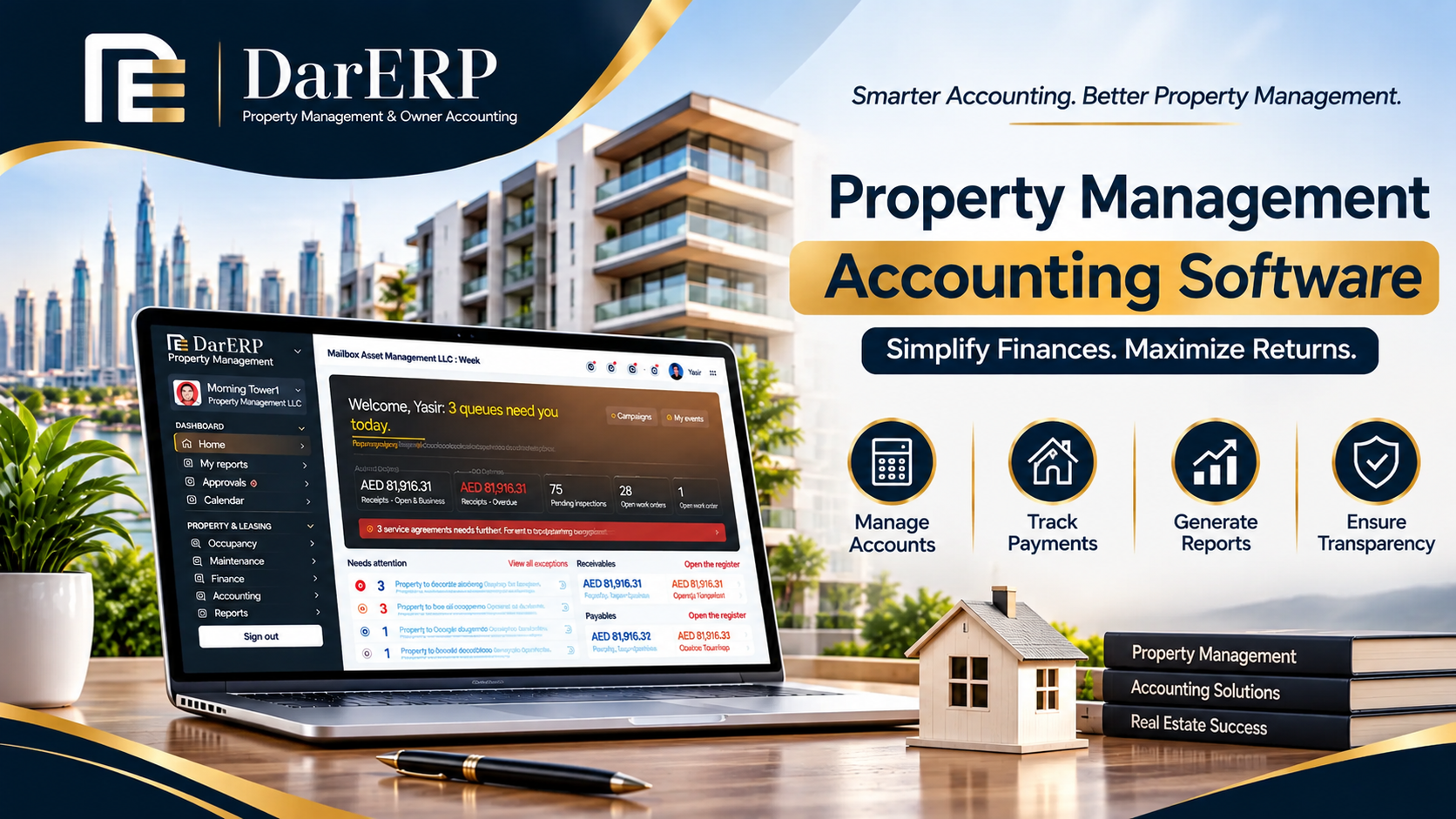
Choosing property accounting software is a significant decision for landlords, real estate companies, and property managers. The wrong system can introduce complicated workflows, create reporting limitations, and make everyday accounting more difficult. A platform that looks impressive during a demonstration may not necessarily handle the financial situations your team encounters regularly.
That is why evaluating Property Management Accounting Software requires more than comparing prices or reading feature descriptions. Businesses need to examine how a solution handles real transactions, supports their accounting responsibilities, and fits into their existing operations. This guide explains the most important factors to investigate before selecting software for a residential or commercial property portfolio.
Start With Your Accounting Problems, Not the Software Features
Before comparing platforms, identify the accounting tasks that currently cause the most difficulty.
Perhaps your finance team spends too much time resolving differences between tenant balances and payment records. Your property managers may struggle to identify expenses associated with individual buildings. Alternatively, preparing landlord statements might require information from several departments.
These situations point to different software requirements.
A business facing collection problems should closely evaluate rental receivables and payment recording. A company managing assets for multiple investors should prioritize ownership accounting and statement preparation.
Write down your most important accounting problems and use them to guide every software demonstration. This prevents attractive but unnecessary features from distracting you from the functionality your business actually needs.
1. Check Whether the Software Handles Real Rental Transactions
Rental accounting involves more than entering payments into a ledger. Financial records must reflect the terms of tenancy agreements, including rental periods, payment schedules, outstanding obligations, and adjustments.
For UAE property businesses, it is particularly useful to examine how a system handles rent collected through installments and post-dated cheques.
Ask the vendor to demonstrate what happens when a tenant pays late, a cheque is returned, or a tenancy agreement changes during its term.
Can the accountant identify the original charge and subsequent payment activity? Can adjustments be recorded without losing the history of the transaction?
Reliable rental accounting software should make these situations manageable through clear accounting records.
The goal is to confirm that the system works with real rental arrangements rather than only straightforward payment scenarios.
2. Understand How Owner Accounting Actually Works
If your business manages properties for landlords, owner accounting deserves particular attention.
Consider a property management company that administers several apartments belonging to different investors. Each owner expects information about rental collections, property expenses, management charges, and amounts available for remittance.
A suitable property owner accounting system should maintain these financial relationships accurately.
During evaluation, investigate how the platform handles expenses paid on behalf of an owner, adjustments to owner balances, and preparation of financial statements.
Also examine whether a single landlord can have multiple properties without losing visibility into individual asset performance.
Owner accounting should reflect actual management agreements. A system that cannot represent your ownership arrangements may create considerable manual work after implementation.
3. Test the Accounting Depth, Not Just the Dashboard
Attractive dashboards can make software appear comprehensive, but the underlying accounting capabilities are more important.
A property business may require general ledger management, accounts receivable, accounts payable, journal entries, financial statements, and bank and cash records.
Ask the vendor how transactions are classified and whether accountants can review the entries behind reported balances.
For example, when a supplier invoice is corrected, the finance team should understand how the change affects the relevant liability and expense accounts.
DarERP includes core property administration and financial accounting functions, making it one option for UAE real estate businesses evaluating an integrated ERP approach.
Regardless of the provider, assess accounting functionality through actual transactions instead of relying on dashboard screenshots or promotional claims.
4. Look Closely at Reconciliation and Error Correction
Accounting records rarely remain perfect throughout everyday operations. Payments may be recorded against the wrong tenant, supplier invoices may require corrections, and bank entries may need investigation.
The important question is how easily your team can identify and resolve these issues.
A suitable real estate accounting system should support dependable reconciliation procedures and appropriate transaction adjustments.
Ask the software provider to demonstrate an incorrect payment allocation and show how an authorized accountant would correct it.
Also investigate whether the platform preserves a sufficient history of financial changes.
Avoid assuming that reconciliation is fully automatic. Bank imports, matching assistance, and approval controls vary between solutions and should be verified individually.
5. Evaluate Reports Based on Decisions You Actually Make
Many platforms advertise extensive reporting libraries, but the number of available reports is not necessarily an indication of usefulness.
Start by identifying the decisions your organization makes regularly.
A landlord may need an understandable statement showing rental income and property expenditure. An accountant may require a detailed general ledger. A portfolio manager may want to compare operating results across different buildings.
Before selecting property management accounting software in UAE, request sample reports using realistic property data.
Check whether employees can filter information by property, accounting period, and other relevant categories. Also determine whether reports can be exported for further analysis.
Useful reporting should answer specific business questions without requiring accountants to rebuild financial information manually.
6. Consider Usability Across Different Departments
Software is rarely used by accountants alone.
Leasing employees may need to review tenancy-related financial information, while property managers may need access to approved expense details. Senior management may require financial summaries without permission to modify accounting entries.
A complicated interface can increase training requirements and create avoidable mistakes.
Evaluate how easily different employees can complete their assigned responsibilities.
Rather than allowing only senior management to attend demonstrations, involve the people who will use the platform every day.
A leasing coordinator and a finance manager may identify entirely different usability problems. Their feedback can reveal whether the software is practical for your organization.
A Practical Software Evaluation Checklist
Use this checklist when comparing shortlisted solutions:
-
Rental accounting: Can it handle your actual tenancy schedules, payment arrangements, and corrections?
-
Owner accounting: Does it support the ownership relationships and landlord statements you need?
-
Financial functionality: Are the required ledger, receivables, payables, and reconciliation functions available?
-
Reporting: Can users retrieve information by property, owner, company, and accounting period where needed?
-
Permissions: Can financial responsibilities be separated appropriately?
-
Data management: Are historical records, exports, and backup arrangements suitable?
-
Implementation: Can existing information be migrated and verified without disrupting essential operations?
Each requirement should be tested rather than accepted solely from a sales presentation.
7. Investigate Data Migration Before Signing a Contract
Moving from spreadsheets or an existing accounting system can be one of the most demanding parts of implementation.
Your current records may contain incomplete tenant information, duplicate property references, inconsistent account classifications, or unreconciled balances.
A new platform cannot automatically make inaccurate historical information reliable.
Ask the provider which records can be imported, what preparation is required, and how opening balances will be verified.
For example, outstanding tenant receivables should be checked against existing accounting records before migration. Owner balances and supplier liabilities also require careful review.
Confirm who is responsible for testing imported information and resolving discrepancies before the system becomes the primary accounting environment.
8. Ask About UAE Accounting Requirements and Business Structure
For real estate businesses operating in Dubai, Abu Dhabi, or other Emirates, local business practices can affect software suitability.
Your evaluation may need to consider VAT-related accounting, financial record retention, rental collection arrangements, and reporting across separate legal entities.
Importantly, residential and commercial property transactions may receive different tax treatment depending on their circumstances.
The software should accommodate the accounting classifications and documentation required by your organization, but regulatory compliance remains the business's responsibility.
If your real estate group operates through several companies, verify whether the platform maintains appropriate separation between their financial records.
DarERP includes multi-company and financial accounting capabilities that businesses can assess against their organizational requirements.
9. Understand the Total Cost of Ownership
A subscription price tells only part of the financial story.
The overall cost of implementing property accounting software can include initial configuration, data migration, employee training, customization, technical support, and ongoing system administration.
A lower-priced application may become expensive if essential accounting tasks require repeated manual work. Conversely, a comprehensive ERP may be unnecessary for an independent landlord with straightforward requirements.
Ask providers to explain which capabilities are included in the proposed package and which services involve additional charges.
Also consider the internal staff time required during implementation.
The best-value solution is not automatically the cheapest. It is the one that meets essential requirements at a sustainable overall cost.
10. Run a Realistic Trial Before Making Your Decision
A carefully planned demonstration is one of the most effective ways to uncover software limitations.
Prepare a small set of realistic scenarios from your own business. These might include recording a tenancy with several payment installments, processing an expense against the correct building, correcting a payment allocation, and generating an owner statement.
Ask the provider to demonstrate each process from beginning to end.
Observe how many steps are required, which employees need access, and whether the resulting financial records are understandable.
Pay attention to situations where the vendor suggests using external spreadsheets or manual adjustments. These may be reasonable for occasional tasks, but they should not become unavoidable parts of routine accounting.
A realistic trial offers stronger evidence of suitability than a general product presentation.
Final Thoughts
Choosing Property Management Accounting Software should be a practical business evaluation rather than a decision based on feature counts or marketing promises.
The most important considerations include rental transaction handling, owner accounting, core financial functionality, reconciliation, useful reporting, usability, data migration, and implementation costs.
For UAE property businesses, compatibility with local accounting responsibilities and organizational structures is equally important.
The right solution should fit the financial procedures your company needs to perform, accommodate realistic accounting exceptions, and remain manageable for the employees responsible for daily operations.
Careful testing before purchase can help avoid expensive changes and establish a more dependable accounting environment.
Frequently Asked Questions
1. What is the most important feature to check in property management accounting software?
The most important feature depends on your business model. Property management companies handling third-party assets may prioritize owner accounting, while landlords managing their own properties may focus on rental receivables, expenses, and financial statements. Core accounting accuracy is essential in either case.
2. How can I tell whether property accounting software is suitable for my UAE business?
Evaluate the platform using actual tenancy arrangements, ownership structures, financial records, and reporting requirements. Confirm its handling of relevant UAE accounting practices, access permissions, and any required multi-company functionality.
3. Should I choose property accounting software with built-in financial management?
If your business requires formal bookkeeping, financial statements, receivables, payables, and reconciliation, integrated accounting functionality can be valuable. However, you should test the depth of these features rather than assuming every property management platform offers comprehensive accounting.
4. What should I ask during a property accounting software demo?
Ask the provider to demonstrate a complete rental transaction, an incorrect payment correction, a supplier expense, an owner statement, and a financial report. Also discuss data migration, user permissions, technical support, system limitations, and the full implementation cost.
Quellen
 Deutsch
 English
 Arabic
 French
 Spanish
 Portuguese
 Turkish
 Dutch
 Italiano
 Russian
 Romaian
 Portuguese (Brazil)
 Greek