


Why Consumers Are Choosing Organic Shampoo for Healthier Hair Care Routines
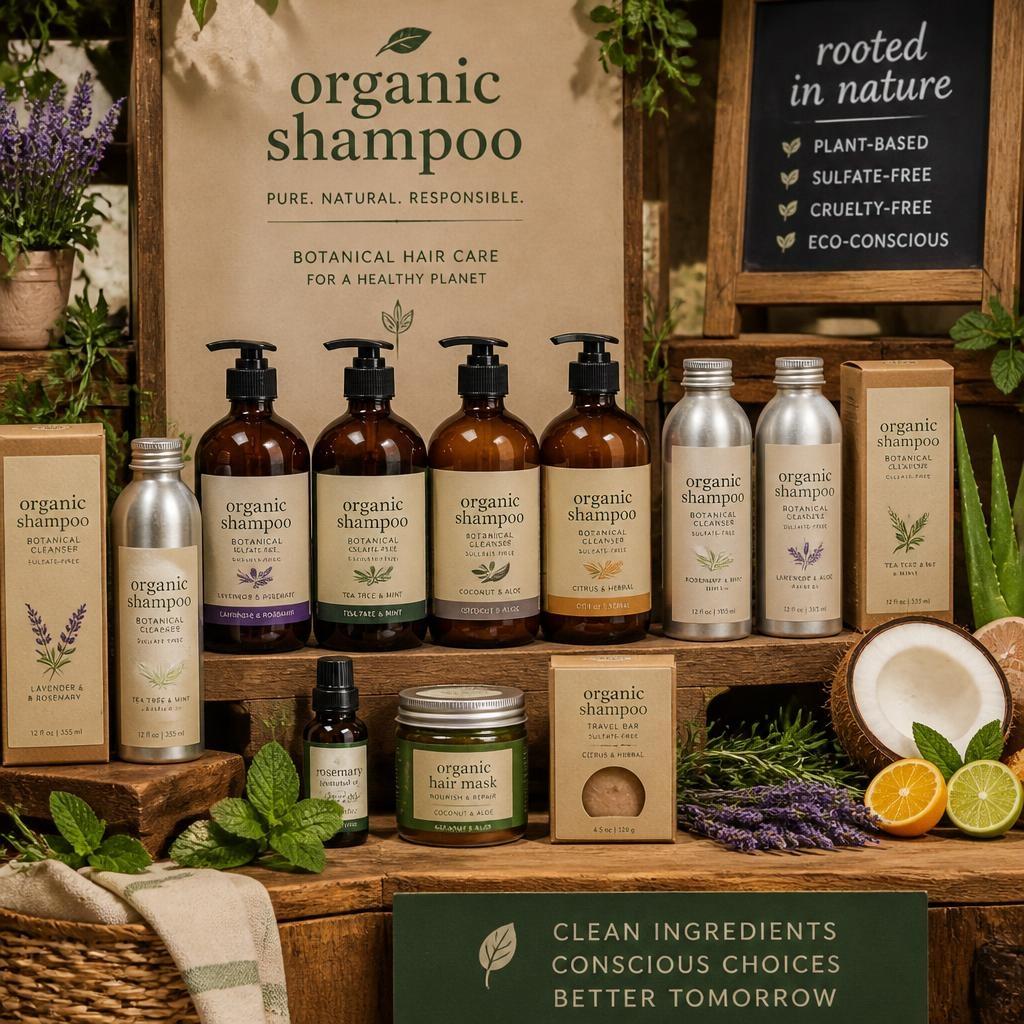
Consumers are becoming increasingly thoughtful about the products they use in their everyday personal care routines. Hair care, in particular, has become an area where shoppers are exploring different formulations according to their hair types, scalp conditions, and ingredient preferences. Organic shampoo has attracted interest among individuals looking for products associated with botanical ingredients and naturally derived formulations. This changing approach reflects a wider movement toward understanding personal care products rather than choosing them based only on packaging or brand recognition.
The growing interest in botanical hair care shampoo reflects consumers' increasing attention to ingredient selection and natural beauty preferences. Many shoppers are exploring products containing plant extracts, herbal components, and naturally derived oils. They are also comparing product descriptions and looking for formulations that fit their personal grooming requirements. This shift is encouraging shampoo manufacturers to develop more specialized products and communicate their ingredient choices clearly.
Growing Awareness of Personal Care Ingredients
Ingredient awareness is an important reason consumers explore organic shampoo.
People increasingly examine product labels and descriptions to understand what they are applying to their hair and scalp.
This interest may encourage consumers to compare conventional shampoo products with organic-focused alternatives.
Ingredient information can also help shoppers identify products that match their personal preferences or avoid components to which they are sensitive.
Manufacturers can support informed decisions by providing clear ingredient lists and understandable product descriptions.
Preference for Botanical Ingredients
Botanical ingredients are widely associated with natural hair care formulations.
Organic shampoo products may include plant extracts, herbal components, and naturally derived oils as part of their formulation.
Different ingredients serve different purposes, such as cleansing, conditioning, fragrance, and formulation support.
Consumers may be attracted to these ingredients because they align with their interest in plant-based personal care.
However, natural ingredients can also cause sensitivity in some individuals. Product selection should consider personal scalp requirements and ingredient compatibility.
Personalized Hair Care Routines
Hair care requirements vary according to hair texture, scalp condition, lifestyle, and grooming habits.
Some individuals prefer moisturizing formulations, while others seek products designed for oily scalp conditions or everyday cleansing.
Organic shampoo brands are responding to these differences through specialized product collections.
Consumers can select products based on their personal requirements rather than assuming that every shampoo formulation works in the same way.
Understanding product descriptions and following appropriate usage instructions can support better hair care decisions.
Interest in Natural Beauty Products
The natural beauty movement is influencing consumer behavior across different personal care categories.
Shoppers may prefer products that feature botanical ingredients and clearly communicate their formulation characteristics.
Organic shampoo fits into this broader category by offering alternatives for individuals interested in ingredient-conscious hair care.
Brands are also using packaging and product communication to highlight their natural beauty positioning.
Consumers should distinguish between marketing terms and verified product characteristics when comparing available options.
Scalp Care and Everyday Hair Maintenance
Scalp care is becoming an important part of modern hair care routines.
Consumers are increasingly interested in products that consider both hair and scalp requirements.
Organic shampoo formulations may be designed for different cleansing and conditioning preferences.
Some products focus on moisturizing characteristics, while others are developed for particular scalp conditions or hair textures.
Choosing a suitable product requires attention to individual needs. Persistent scalp irritation or hair concerns may require guidance from a qualified healthcare professional.
Influence of Online Reviews and Social Media
Digital platforms play an important role in helping consumers discover organic shampoo products.
Online reviews, beauty discussions, product demonstrations, and ingredient-focused content can introduce shoppers to new brands.
Social media creators often share their experiences with different shampoo formulations, making product discovery more interactive.
However, individual experiences do not guarantee identical results for other users.
Consumers should consider product ingredients, suitability, and reliable product information rather than depending only on promotional content.
Sustainable Personal Care Choices
Environmental awareness is another factor influencing personal care purchasing decisions.
Some consumers prefer brands that use recyclable packaging, reduce unnecessary materials, or communicate responsible sourcing practices.
Organic shampoo manufacturers may respond by exploring more environmentally conscious packaging and production approaches.
Sustainability can become part of the overall brand experience when supported by genuine business practices.
Role of Brands in Consumer Education
Brands can help consumers make informed decisions by providing clear information about formulations and product usage.
Educational content may explain ingredient characteristics, differences between shampoo categories, and suitable hair care routines.
Companies should avoid exaggerated claims and communicate product benefits responsibly.
Transparent information can help build trust and encourage consumers to make decisions based on their actual needs.
Future of Organic Shampoo Preferences
Consumer interest in organic shampoo may continue to develop through personalized hair care, botanical formulations, ingredient transparency, and sustainable product choices.
Manufacturers may introduce more specialized formulations to address different consumer requirements.
Online distribution and digital product education may also influence how shoppers discover and evaluate shampoo products.
Conclusion
Consumers are exploring organic shampoo because of growing interest in botanical ingredients, ingredient awareness, personalized hair care, and natural beauty preferences.
As shoppers become more informed about personal care formulations, manufacturers have opportunities to develop products that address different requirements while maintaining transparency and product quality.
FAQs
Q1. Why do consumers prefer organic shampoo?
Some consumers prefer organic shampoo because they are interested in botanical ingredients, naturally derived formulations, ingredient transparency, and natural beauty routines.
Q2. Is organic shampoo suitable for every hair type?
Not necessarily. Suitability depends on the formulation, hair type, scalp condition, and individual ingredient sensitivities.
 Romaian
 English
 Arabic
 French
 Spanish
 Portuguese
 Deutsch
 Turkish
 Dutch
 Italiano
 Russian
 Portuguese (Brazil)
 Greek