


🦺 Home Renovation Safety: Gear, Precautions, and Tips Every DIYer Should Know
DIY home renovation can be exciting and rewarding — but it also comes with real risks if safety is overlooked. From power tools to dust and debris, many injuries happen simply because basic precautions weren’t taken.
This guide covers the essential safety gear, precautions, and smart habits every DIYer should follow to stay safe and confident during home renovation projects.
🧤 1. Essential Safety Gear You Should Always Use
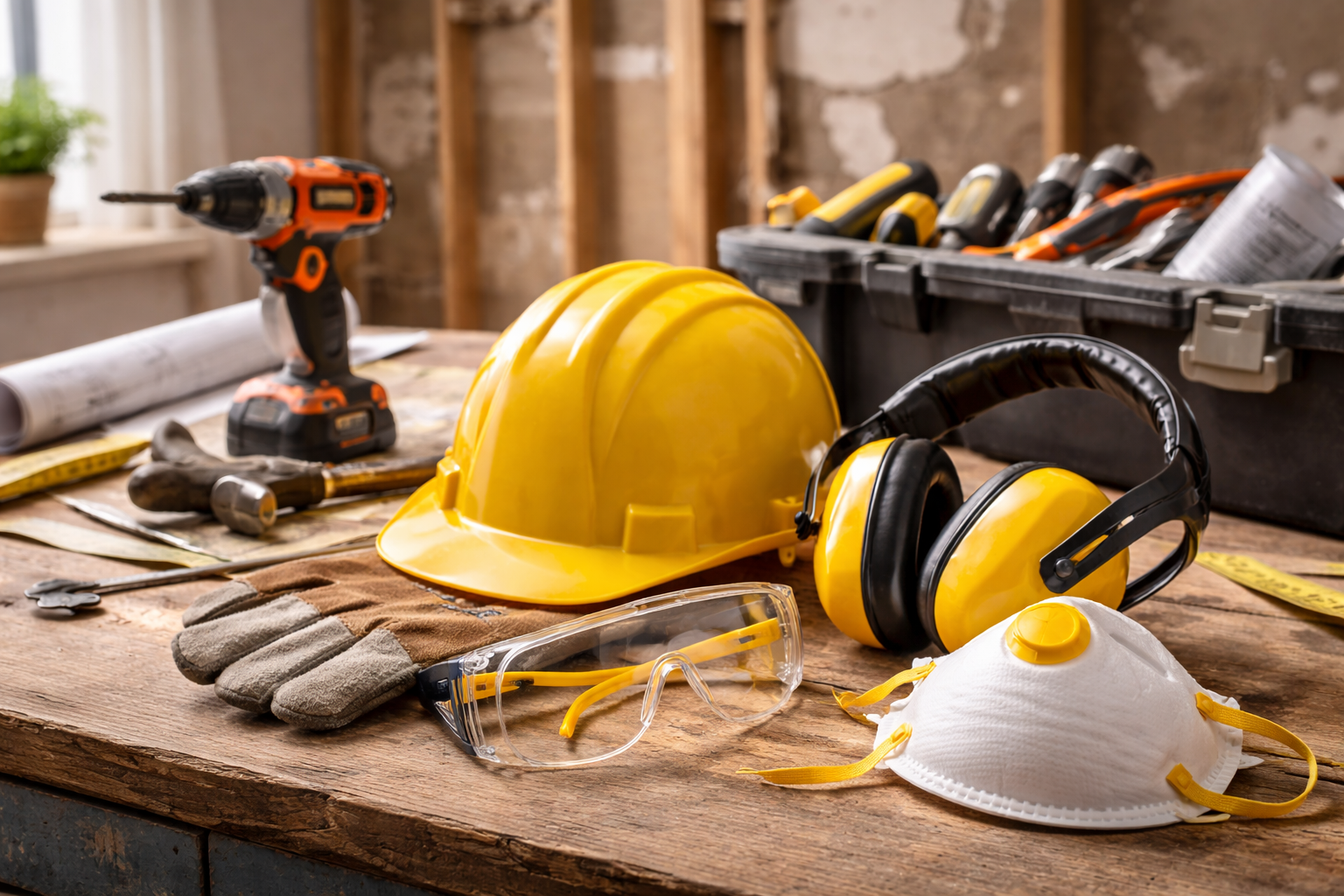
Never start a renovation project without proper protection. At minimum, you should have:
- Safety glasses or goggles – protect eyes from dust and debris
- Work gloves – prevent cuts, splinters, and blisters
- Hearing protection – essential when using loud power tools
- Dust mask or respirator – critical for sanding, demolition, or painting
Investing in quality safety gear is far cheaper than dealing with injuries.
⚡ 2. Power Tool Safety Basics
Power tools are incredibly useful — and dangerous if misused.
- Read the manufacturer’s instructions before use
- Inspect tools for damage before starting
- Never remove safety guards
- Keep cords away from blades and moving parts
Tip: Unplug tools when changing blades or bits.
🪜 3. Ladder and Height Safety
Falls are one of the most common DIY injuries.
- Use the correct ladder height for the task
- Always place ladders on stable, level ground
- Never overreach — climb down and reposition instead
- Have someone spot you when possible
🧱 4. Dust, Debris & Air Quality
Renovation dust can contain harmful particles, especially in older homes.
- Seal off work areas with plastic sheeting
- Ventilate rooms by opening windows or using fans
- Vacuum with a HEPA filter
Important: Homes built before 1978 may contain lead paint — test before sanding or demolition.
🚿 5. Plumbing & Electrical Safety
Water and electricity can be dangerous if mishandled.
- Turn off power at the breaker before electrical work
- Shut off water supply before plumbing projects
- Use GFCI outlets in kitchens, bathrooms, and garages
If you’re unsure — stop and consult a professional.
🧠 6. Know Your Limits
One of the smartest safety decisions is knowing when to ask for help.
- Structural changes
- Major electrical upgrades
- Gas line work
Hiring a professional for complex tasks can prevent serious accidents and costly mistakes.
✔️ Final Thoughts
DIY renovations should be rewarding — not risky. By wearing the right gear, following basic safety practices, and respecting your limits, you can complete projects confidently while protecting yourself and your home.
💬 Share Your Thoughts
What safety tip do you never skip during DIY projects? Share your advice or experiences in the comments below — it might help another renovator stay safe.
 Portuguese
 English
 Arabic
 French
 Spanish
 Deutsch
 Turkish
 Dutch
Dutch
 Italiano
 Russian
 Romaian
 Portuguese (Brazil)
 Greek
Greek